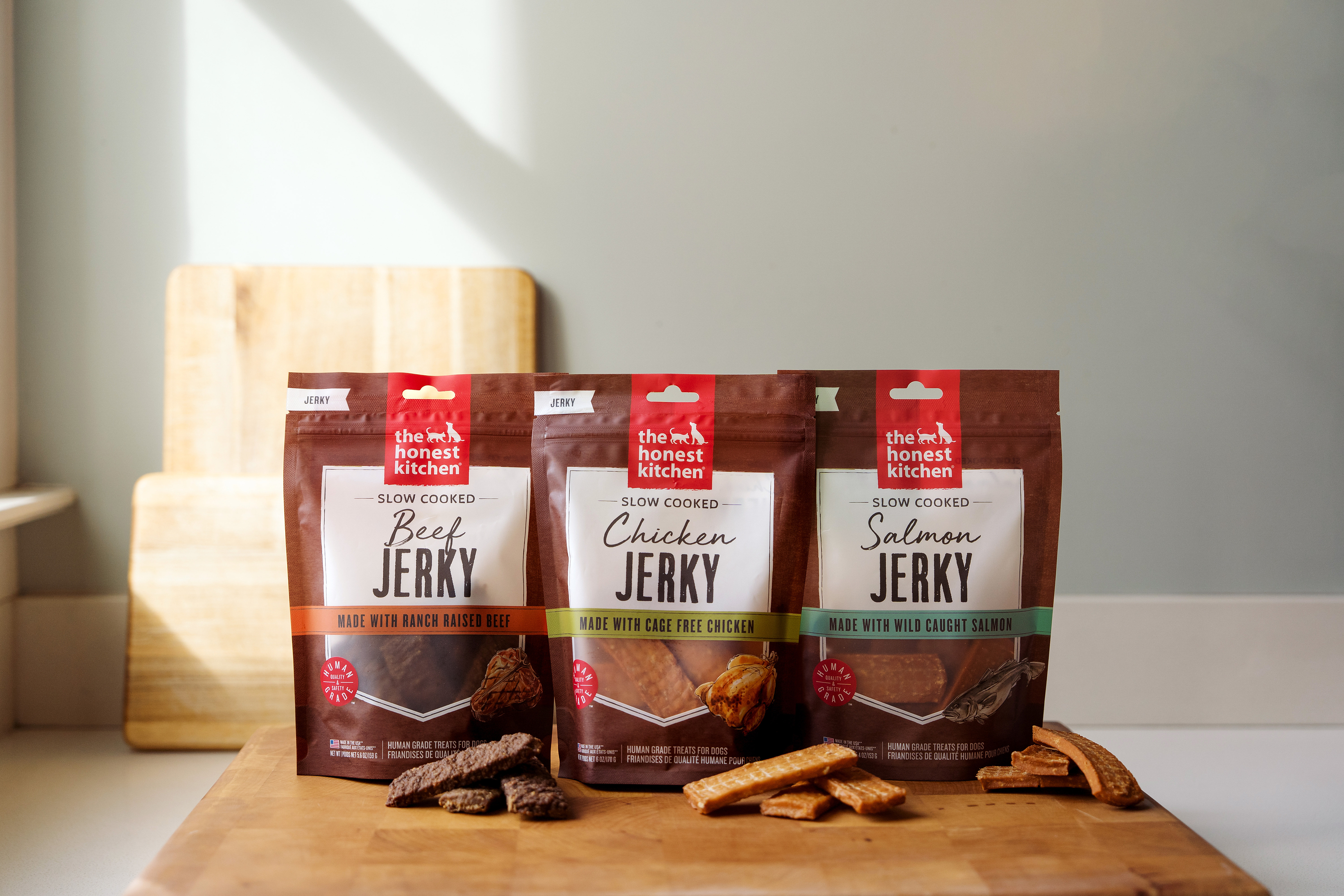
The Honest Kitchen, the San Diego company that helped pioneer human-grade pet food, is moving into the jerky segment with the launch of Slow Cooked Jerky Chews for dogs, a line built on four sourced ingredients and positioned at the premium end of the dog-treat aisle. The products became available June 10, timed to the brand's promotion around Jerky Day on June 12.
The company did not disclose pricing, retail distribution breadth, or projected first-year revenue for the line. What it did outline is a product architecture centred on ingredient minimalism — four components per SKU — and the human-grade certification that has distinguished the brand since its founding. The slow-cooking process is presented as the primary differentiation from conventional jerky chews, which the company argues typically rely on higher heat and more processing aids.
The launch arrives as the broader pet-treat category continues to attract outsized investment from both established players and challenger brands. Consumer research across the pet specialty channel consistently shows that ingredient transparency and protein density rank among the top two purchase drivers for dog-treat buyers, particularly in the $15-and-above price tier where human-grade claims carry the most margin leverage. The Honest Kitchen's move deepens its presence in that tier without requiring a new manufacturing platform, extending existing slow-cook infrastructure into a format that competes directly with jerky lines from brands such as Vital Essentials and Redbarn.
The treat segment represents a strategically important growth vector for mid-sized pet food operators. Unlike complete-and-balanced diets, treats carry lighter regulatory review cycles and faster shelf-placement timelines at specialty and e-commerce retailers, allowing brands to test new protein formats and sourcing stories with comparatively low capital outlay. For The Honest Kitchen, the jerky line also reinforces a recurring-purchase model the company has cultivated through subscription channels on its direct-to-consumer site.
The company did not provide guidance on additional SKUs or protein varieties beyond the initial chicken offering, nor did it comment on whether national mass-market retail placement is planned for the remainder of 2026. Industry observers will watch whether the four-ingredient positioning sustains pricing discipline as the line scales, given that raw-material costs for human-grade poultry have remained elevated relative to feed-grade equivalents. For context on how clean-label claims are reshaping pet food investment dynamics, and the broader premium treat pricing environment, see recent F&B Industry News coverage.
Written by Michael Politz, Author of Guide to Restaurant Success: The Proven Process for Starting Any Restaurant Business From Scratch to Success (ISBN: 978-1-119-66896-1), Founder of Food & Beverage Magazine, the leading online magazine and resource in the industry. Designer of the Bluetooth logo and recognized in Entrepreneur Magazine's "Top 40 Under 40" for founding American Wholesale Floral, Politz is also the Co-founder of the Proof Awards and the CPG Awards and a partner in numerous consumer brands across the food and beverage sector.