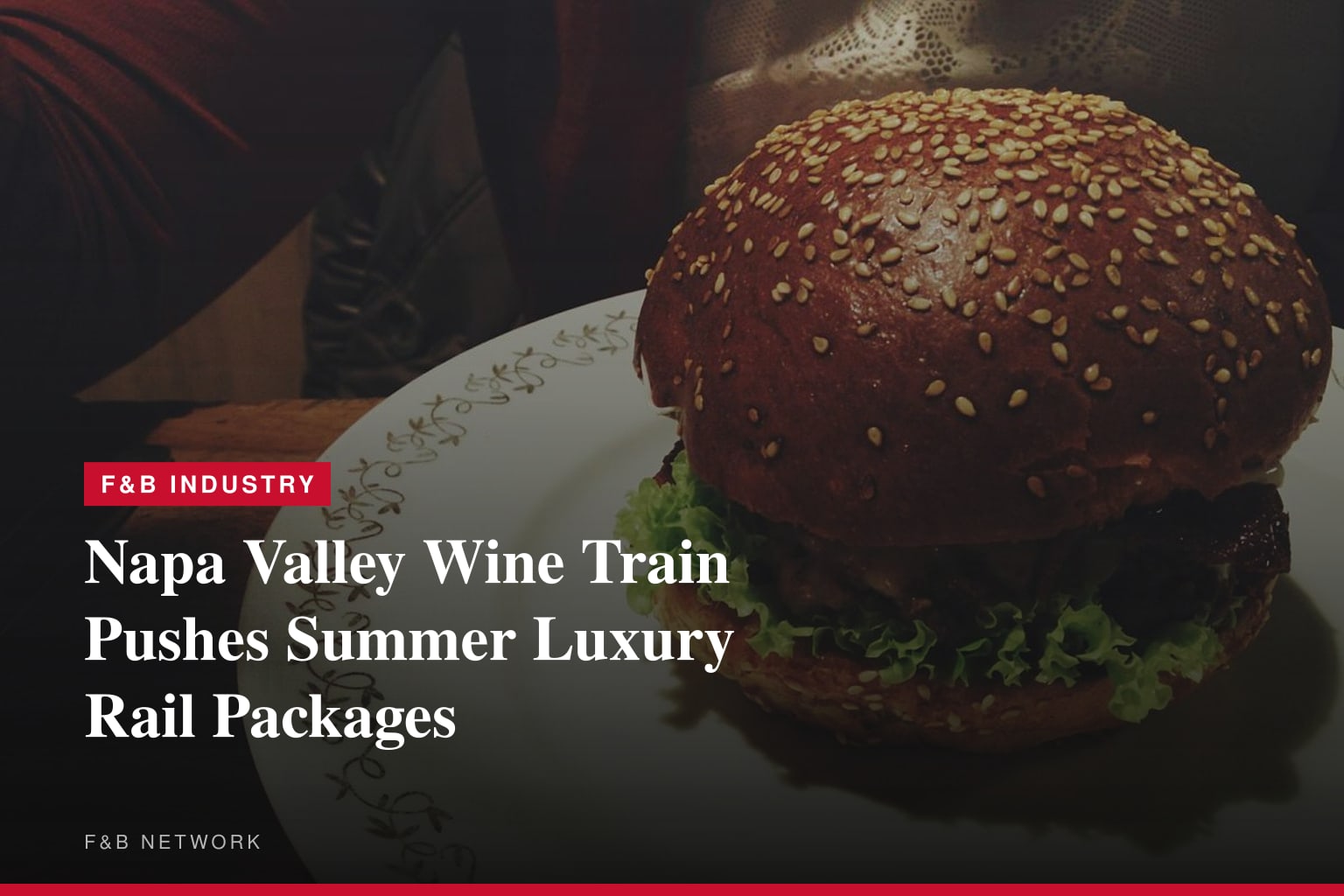
The Napa Valley Wine Train is promoting its Legacy Experience as a centerpiece summer offering, betting that demand for premium experiential travel will sustain pricing power in California's wine-country corridor through the peak June-to-August window.
The six-hour rail journey runs through the heart of Napa Valley aboard restored vintage railcars, bundling gourmet multi-course dining with curated tastings at select wineries along the route. The operator has not disclosed per-ticket pricing in the current release, but comparable luxury rail dining experiences in the region have historically commanded rates ranging from $150 to upward of $300 per guest before wine pairings and add-on excursions.
The move aligns with a broader industry pivot toward experience-led revenue in the food and beverage hospitality segment. Operators from agritourism estates to urban tasting rooms have increasingly packaged food, beverage, and transportation into single high-ticket SKUs, insulating margin from the unit-volume pressure that has weighed on standalone restaurant and retail wine channels. According to the Wine & Spirits Wholesalers of America, on-premise and experiential wine consumption has outpaced off-premise volume growth for three consecutive years, a trend accelerating post-pandemic as consumers redirect discretionary spending toward memorable occasions over commodity purchases.
For the Napa Valley Wine Train specifically, the summer calendar represents its highest-capacity utilization period, with the operator running multiple daily departures from its Napa depot. The Legacy Experience competes not only with other wine-train concepts but with a widening field of helicopter vineyard tours, private cave dinners, and chef-in-residence weekends that have proliferated across the valley as winery owners seek to monetize land assets beyond bottle sales. Observers tracking the agritourism and luxury-travel intersection have noted that rail-based experiences carry a structural advantage in scenery-to-cost ratio, given fixed infrastructure and the scenic density of the Napa corridor. The company's positioning echoes a pattern seen across experiential dining operators who have leaned into nostalgia and exclusivity as differentiating levers against casual-dining headwinds.
The operator has not issued formal forward guidance or disclosed occupancy targets for the summer season. Industry analysts covering California wine tourism expect overall visitor spending in the Napa-Sonoma region to rise modestly in 2026, supported by domestic leisure travel holding firm even as international inbound flows remain below 2019 peaks.
Written by Michael Politz, Author of Guide to Restaurant Success: The Proven Process for Starting Any Restaurant Business From Scratch to Success (ISBN: 978-1-119-66896-1), Founder of Food & Beverage Magazine, the leading online magazine and resource in the industry. Designer of the Bluetooth logo and recognized in Entrepreneur Magazine's "Top 40 Under 40" for founding American Wholesale Floral, Politz is also the Co-founder of the Proof Awards and the CPG Awards and a partner in numerous consumer brands across the food and beverage sector.