Purely Elizabeth Enters Protein Segment With Granola Line
The Boulder-based wellness brand targets clean-label protein demand with a whole-food formulation as the fortified-snack category continues to outpace broader grocery growth.
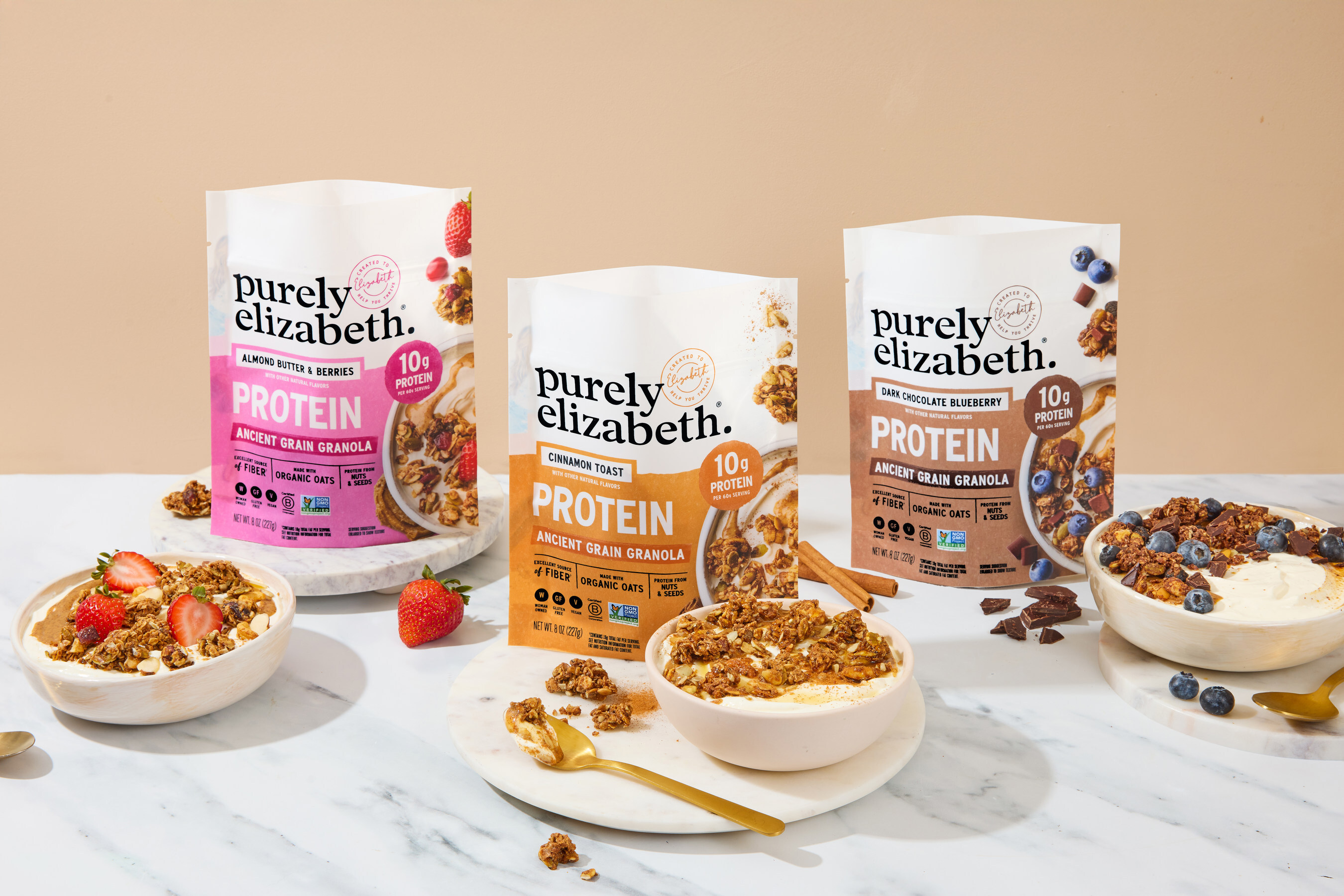
Purely Elizabeth, the Boulder, Colorado-based granola brand, launched its Protein Ancient Grain Granola line on Monday, marking the company's first formal entry into the fortified-nutrition segment and extending a product portfolio built around ancient grains and minimally processed ingredients.
The new line delivers 10 grams of protein per serving, sourced exclusively from whole-food inputs — nuts, seeds and oats — rather than isolated protein concentrates or powders. The positioning is a deliberate play on what brand executives describe as consumer fatigue with synthetic fortification, a tension that has sharpened competition across the better-for-you snack aisle. No retail pricing or suggested retail price range was disclosed in the launch materials.
The protein snack and breakfast category has been among the fastest-growing pockets of the packaged food market, with multiple data trackers recording high-single-digit to low-double-digit annual growth in recent years as consumers seek functional nutrition without sacrificing ingredient legibility. Clean-label protein — formulations that avoid artificial additives and use recognizable whole-food sources — has attracted particular investment from both emerging brands and legacy players looking to premiumize existing lines. Purely Elizabeth, which built its identity on ancient grains such as quinoa and amaranth, is betting that brand credibility in the better-for-you space translates directly to consumer trust in the higher-stakes protein sub-category. For more on the shifting dynamics in functional snacking, see our coverage of [emerging better-for-you brands](/emerging-brands/better-for-you-snack-brands-2025) and the [clean-label ingredient trend](/ingredients-and-formulation/clean-label-protein-trend-packaged-foods).
The launch arrives as mid-tier wellness brands face intensifying shelf-space competition from both mass-market incumbents adding protein SKUs and direct-to-consumer challengers scaling quickly through social channels. Purely Elizabeth has historically maintained a strong retail footprint in natural and specialty grocery, and the protein extension is expected to expand its addressable market into conventional grocery and club formats, though specific distribution targets were not announced at launch.
Written by Michael Politz, Author of [Guide to Restaurant Success: The Proven Process for Starting Any Restaurant Business From Scratch to Success (ISBN: 978-1-119-66896-1)](https://www.amazon.com/Beverage-Magazines-Guide-Restaurant-Success/dp/1119668964), Founder of Food & Beverage Magazine, the leading online magazine and resource in the industry. Designer of the Bluetooth logo and recognized in Entrepreneur Magazine's "Top 40 Under 40" for founding American Wholesale Floral, Politz is also the Co-founder of the Proof Awards and the CPG Awards and a partner in numerous consumer brands across the food and beverage sector.