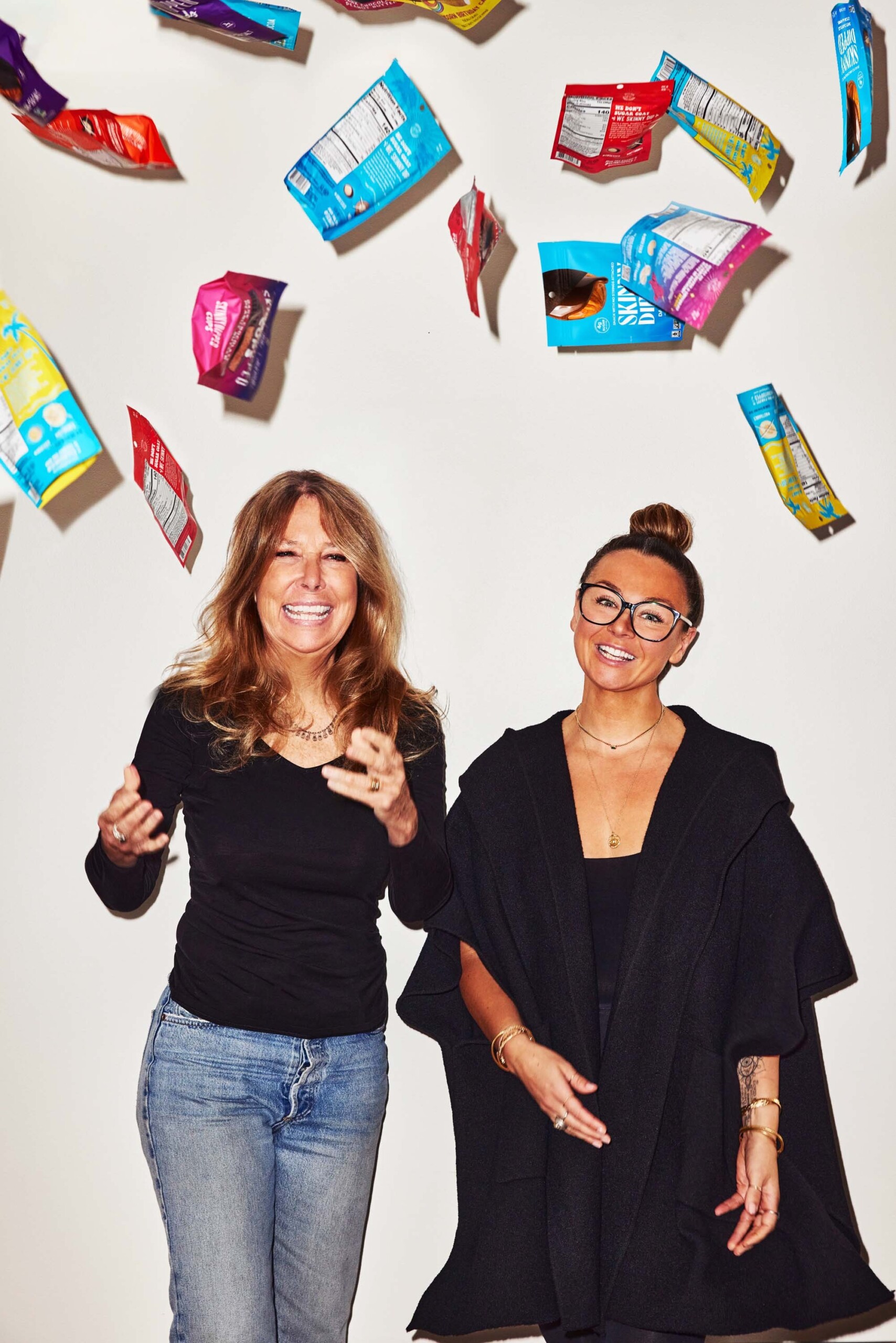
Val Griffith and her daughter Breezy Griffith didn't set out to build a snack empire. Ten years ago in their Seattle kitchen, they were just trying to make something better than what was on shelf—clean ingredients, less sugar, actual flavor. Today, SkinnyDipped sits in over 30,000 stores nationwide, from Walmart and Costco to Starbucks, with 20 SKUs spanning thinly dipped almonds to Dark Chocolate Peanut Butter Cups.
"We didn't come from a traditional CPG background by any means, but we figured it out," Breezy says. That's the understatement of the decade. The duo learned manufacturing, packaging, and distribution on the fly, enlisting family and friends as taste testers before anything shipped. "From day one, quality was non-negotiable," Val notes. That conviction has held through explosive growth—and turned down deals that didn't align.
When Target came calling early, the pressure was on. "The beginning wasn't perfect," Breezy admits, but they never bent on real ingredients or sugar thresholds. Their first product, the thinly dipped almonds, became proof of concept. "Execution came from doing, not overthinking," Breezy adds. That bias toward action, paired with a willingness to learn in real time, carried them through the chaotic scaling phase that kills most emerging brands.
What separated SkinnyDipped was discipline. "We've turned down opportunities that didn't align with our standards," Breezy says flatly. In an era when clean-label claims are slapped on everything, that restraint matters. The Griffiths understood consumer trust isn't renewable—once you lose it chasing a quick retail win, you don't get it back. "We've learned to trust each other's strengths," Val explains, a nod to the operational rigor required when your co-founder is also your mom or daughter.
Looking ahead, Breezy sees the bar rising across the category. "The bar is higher now," she says, and she's right—transparency and ingredient integrity are table stakes in 2025, not differentiators. SkinnyDipped is expanding its lineup while holding the line on formulation, betting that the same principles that got them into 30,000 doors will keep them there as competition intensifies.
The real story here isn't just about almonds and chocolate. It's about a mother-daughter team that built a brand without venture capital theatrics or influencer gimmicks—just relentless focus on product quality and operational discipline. In a food industry littered with overhyped launches and underbaked execution, the Griffiths proved that doing the work still wins.