
Independent restaurants facing margin compression from third-party delivery commissions now have two platform options being promoted by 5L Direct and 5L Food Services: a direct-ordering and CRM stack, and a wholesale kitchen-partnership model that requires no upfront marketing investment.
Restaurant Insider Magazine spotlighted both platforms this week, framing them as complementary responses to structural cost pressures that have intensified across the independent restaurant segment — rising customer acquisition costs, shrinking per-order margins, and growing dependence on marketplaces that typically charge commissions ranging from 15% to 30% per transaction.
Two Distinct Models
5L Direct bundles branded online ordering, customer relationship management, and integrated marketing into a single platform. The pitch to operators is straightforward: steer repeat customers away from high-commission delivery apps and toward owned digital channels, capturing a larger share of each order while building a proprietary customer database. The platform also enables restaurants to launch additional digital brands from existing kitchens, adding revenue streams without proportional overhead.
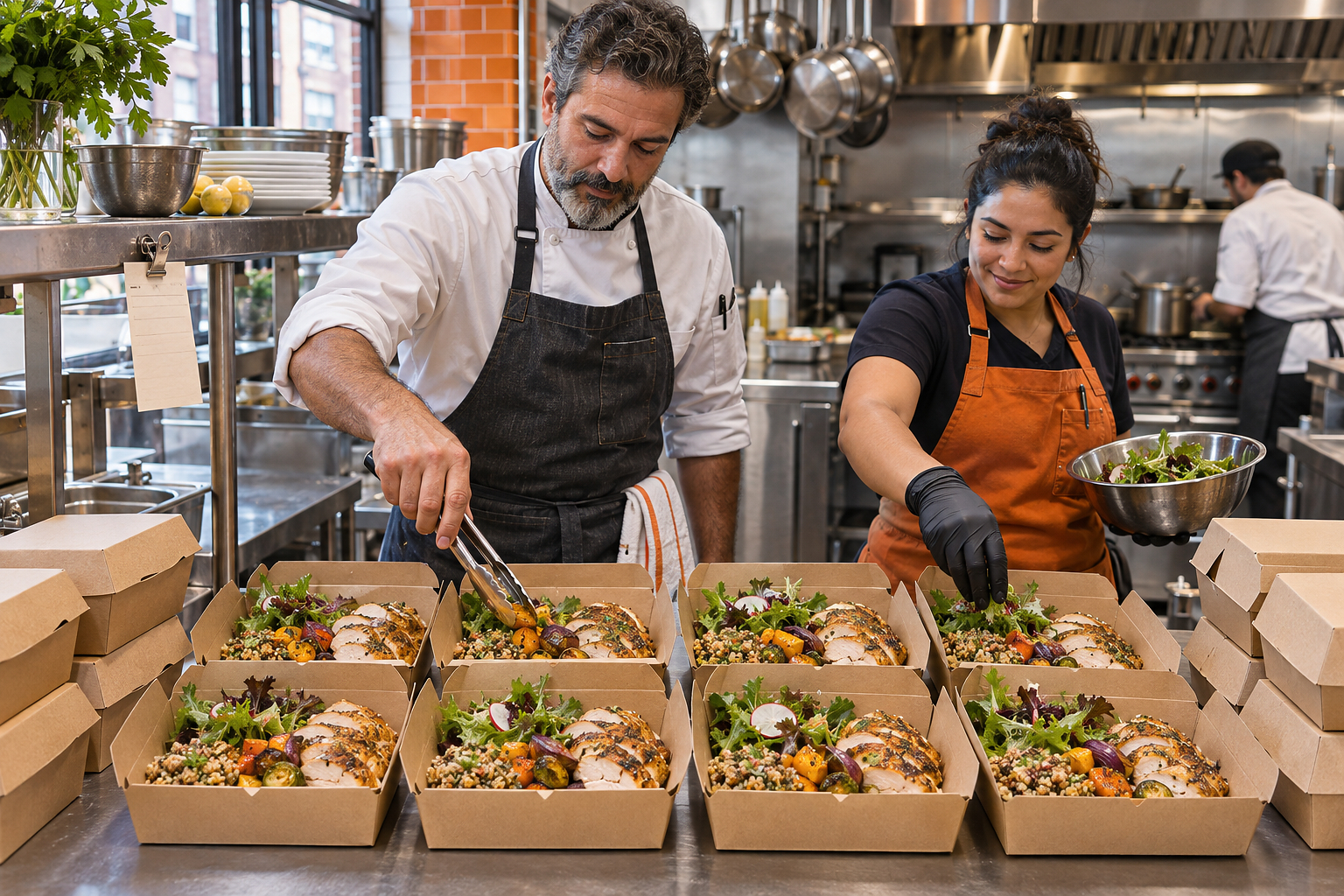
5L Food Services takes a structurally different approach. The company positions itself as a wholesale purchasing and marketing partner rather than a software vendor. Participating kitchens prepare food only when actual orders arrive; 5L then purchases those orders at pre-negotiated wholesale prices. Operators bear no upfront marketing fees and face no customer-acquisition spend — a model the company says allows existing staff and kitchen capacity to generate incremental revenue without new locations or dedicated sales headcount.
Why It Matters for Operators
The independent restaurant sector has been squeezed on multiple fronts since the pandemic reshaped delivery expectations. Third-party platforms accelerated consumer adoption of app-based ordering but redistributed margin away from operators, a tension that has fueled a broader industry search for first-party ordering alternatives. Analysts tracking the foodservice technology space have noted rising operator interest in direct-channel tools, with several venture-backed platforms competing for the same independent-restaurant audience.
The 5L model is notable for targeting underutilised kitchen capacity rather than new builds. Thousands of established restaurants already operate with infrastructure sufficient to serve additional order volume; wholesale partnership models attempt to monetise that slack capacity without requiring capital expenditure. The approach echoes broader ghost-kitchen and virtual-brand strategies, but with the economic risk shifted toward the platform rather than the operator.
For independent operators weighing their options, the two platforms address different pain points. Restaurateurs seeking to own their customer data and reduce marketplace dependency would gravitate toward 5L Direct's CRM and ordering stack. Those primarily looking to fill idle kitchen time with low-risk incremental volume may find the 5L Food Services wholesale model more immediately actionable. Used together, the companies argue, the platforms cover both the retention and acquisition sides of restaurant growth.
Coverage of related direct-ordering and restaurant technology trends has tracked growing operator investment in first-party channels, while the competitive dynamics shaping independent restaurant profitability continue to draw attention from investors and platform builders alike.
Written by Michael Politz, Author of Guide to Restaurant Success: The Proven Process for Starting Any Restaurant Business From Scratch to Success (ISBN: 978-1-119-66896-1), Founder of Food & Beverage Magazine, the leading online magazine and resource in the industry. Designer of the Bluetooth logo and recognized in Entrepreneur Magazine's "Top 40 Under 40" for founding American Wholesale Floral, Politz is also the Co-founder of the Proof Awards and the CPG Awards and a partner in numerous consumer brands across the food and beverage sector.