The Numbers
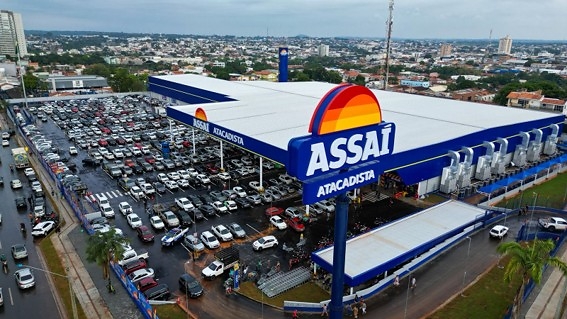
Assaí, Brazil's largest cash-and-carry food retailer, posted adjusted recurring net income of R$ 248 million for the third quarter of 2026, a 55.2% increase from the year-earlier period. Accounting net income reached R$ 427 million, up 119%, boosted by R$ 179 million in extemporaneous PIS/COFINS tax credits. Gross revenue grew 2.7% to R$ 21.3 billion, while adjusted EBITDA held at R$ 1.1 billion with a stable margin of 5.7%.
Gross margin expanded 45 basis points to 17.2%, supported by disciplined expense control. Total operating expenses rose just 4.2% — below Brazil's IPCA inflation rate of 4.4% in the period — a spread that underscores the operational leverage management has sought to demonstrate to investors. Net financial expenses fell 8.8%, reflecting both a lower cost of debt and a 61% reduction in the cost of receivables discounting. Leverage contracted sharply to 2.15x net debt-to-EBITDA from 3.03x in Q3 2025, as trailing 12-month operating cash flow reached R$ 3.3 billion.
Why It Matters
The results arrive as Brazilian households navigate elevated indebtedness, a macro headwind that has pressured discretionary spending across the broader retail sector. Despite that backdrop, Assaí reported a 2.1% rise in customer traffic, with monthly footfall surpassing 40 million. The cash-and-carry format — which serves both small business operators and cost-conscious consumers buying in bulk — has proven relatively resilient to softening consumer confidence, mirroring dynamics seen in the wholesale club segment in other markets.
"The third quarter demonstrated Assaí's ability to safeguard operations and make progress on variables within our control: we delivered top-line growth, stable market share, preserved profitability, and leverage reduction," said Belmiro Gomes, Chief Executive Officer of Assaí. Gomes framed the quarter's performance as a foundation for broader ecosystem investment rather than a defensive crouch.
Ecosystem Build-Out
Beyond the core wholesale food format, Assaí is deploying capital across three adjacencies that carry longer-term revenue implications. In healthcare, the Assaí Farma pharmacy concept closed the quarter with 11 units in São Paulo — all opened between July and November — and remains on track to reach 25 locations by December, alongside an e-commerce rollout within the company's Meu Assaí app. The dietary supplement category has been extended to 300 stores.
In private label, the company launched more than 30 new items during Q3, bringing its total SKU count to 140 across the Assaí, Assaí Chef, Econobom, and newly introduced Assaí Bloom brands. Management is targeting 250 SKUs by year-end — a build-out that, if executed, could meaningfully improve category margin mix over time. For context, private-label penetration remains a key profitability lever for food retailers globally, particularly in inflationary periods when consumers trade down from branded goods.
The digital and convenience pillar showed the sharpest growth rate: last-mile delivery sales surged 204% across 104 stores. Assaí also acquired 18 gas stations in São Paulo, a move the company describes as anchoring a convenience retail front that is scheduled to begin operations in August 2027. The gas station play mirrors a broader trend in foodservice and fuel convergence seen among large-format grocers seeking to capture higher-frequency visits and ancillary revenue streams.
Assaí's quarterly results, alongside its ecosystem diversification strategy, position the company as one of the more active restructuring stories in Brazilian food retail heading into 2027.
Written by Michael Politz, Author of Guide to Restaurant Success: The Proven Process for Starting Any Restaurant Business From Scratch to Success (ISBN: 978-1-119-66896-1), Founder of Food & Beverage Magazine, the leading online magazine and resource in the industry. Designer of the Bluetooth logo and recognized in Entrepreneur Magazine's "Top 40 Under 40" for founding American Wholesale Floral, Politz is also the Co-founder of the Proof Awards and the CPG Awards and a partner in numerous consumer brands across the food and beverage sector.