
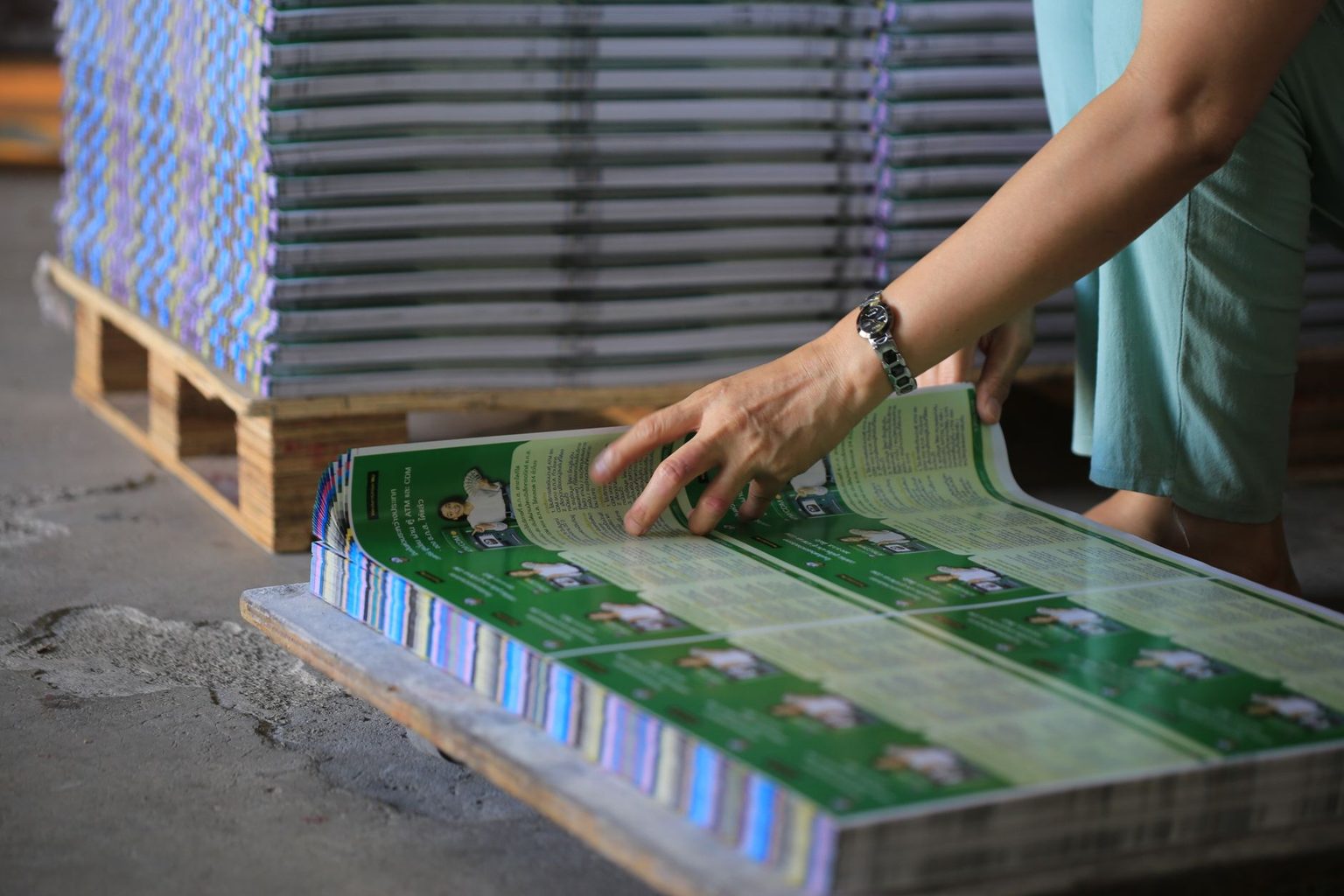
AxiomPrint has expanded its restaurant menu printing capabilities through new lamination technology and Scodix premium embellishments, positioning the commercial printer to capture more business from foodservice operators and hospitality groups investing in elevated guest experiences.
The company did not disclose capital expenditure figures for the production upgrades. The additions allow clients — including independent restaurants, multi-unit hospitality groups and graphic designers — to specify textured, high-gloss or soft-touch laminate finishes alongside Scodix digital embellishments such as raised foil, spot UV coating and tactile effects that are typically associated with luxury print runs.
Why Menus Matter Now
The timing aligns with a broader trend in foodservice design. As delivery and digital ordering have stripped a significant share of casual interactions away from the physical dining room, operators who retain table-service models have placed renewed emphasis on tangible brand touchpoints. The menu — once a functional afterthought — has re-emerged as a deliberate brand asset, a pattern documented across restaurant branding and design coverage in the trade press.
Scodix, an Israel-based digital enhancement platform widely used in commercial print, enables short-run customisation at unit economics that were previously viable only at large press volumes. That cost curve change is material for independent restaurant groups and boutique hospitality concepts that lack the order volumes to justify traditional embossing or foil-stamping dies. For print suppliers like AxiomPrint, offering Scodix capabilities broadens the addressable client base beyond large chains to smaller, design-forward operators.
Implications for Operators
Durability is the second commercial argument the company is making. Laminated menu stock resists moisture, food contact and repeated handling — relevant for high-turnover casual dining and bar environments where menu replacement cycles drive recurring print spend. Operators who extend menu lifespan through protective lamination effectively lower their cost-per-use on each print run, an efficiency argument that resonates when input costs across the foodservice supply chain remain elevated.
For hospitality designers, access to Scodix embellishments through a single vendor streamlines the production workflow, reducing the coordination burden of sourcing specialty finishing from a separate trade shop. That consolidation can compress lead times — a practical advantage when seasonal menu updates or concept refreshes require fast turnaround.
The announcement adds to a pattern of print suppliers deepening their foodservice vertical capabilities as restaurants and hospitality groups prioritise experiential differentiation. As Food & Beverage Magazine has noted in broader coverage of dining room strategy, the physical artefacts of a meal — menus, packaging, tableware — increasingly function as extensions of a brand's digital identity, intended to generate social sharing and reinforce positioning.
Written by Michael Politz, Author of Guide to Restaurant Success: The Proven Process for Starting Any Restaurant Business From Scratch to Success (ISBN: 978-1-119-66896-1), Founder of Food & Beverage Magazine, the leading online magazine and resource in the industry. Designer of the Bluetooth logo and recognized in Entrepreneur Magazine's "Top 40 Under 40" for founding American Wholesale Floral, Politz is also the Co-founder of the Proof Awards and the CPG Awards and a partner in numerous consumer brands across the food and beverage sector.