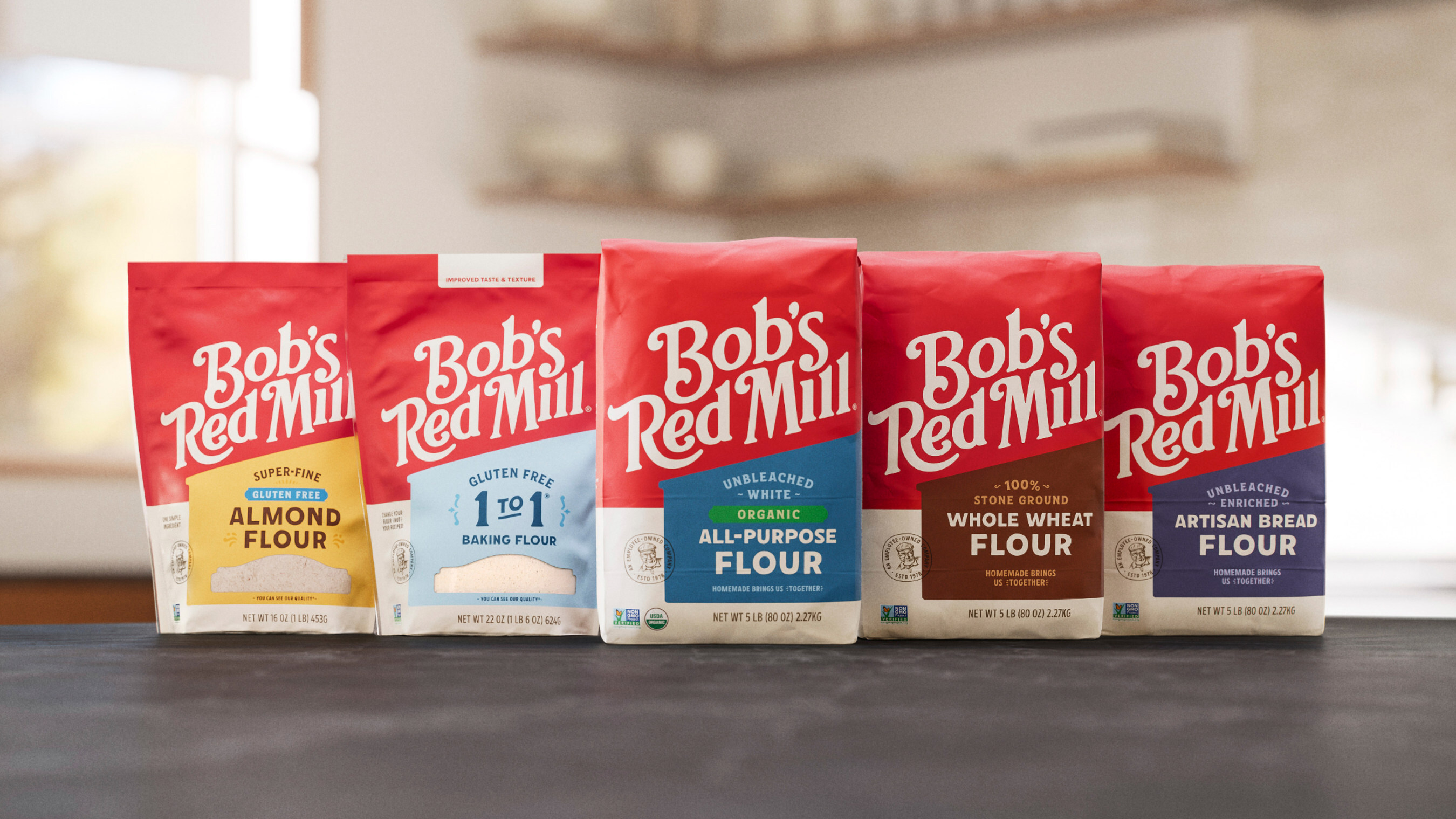
Bob's Red Mill, the Portland, Oregon-based whole-grain and natural foods brand, announced Monday a comprehensive logo and packaging redesign set to begin rolling out across its product line in September 2026 — marking the company's first significant visual overhaul in its nearly 50-year history.
The refresh touches the full product portfolio, replacing the existing identity with what the company describes as a modernised design that retains heritage cues familiar to long-standing customers. The brand said core visual elements of its iconography have been reinterpreted rather than replaced, a deliberate strategy to limit alienation of the loyalty base that has built up since the company's founding in the late 1970s.
Packaging redesigns of this scale carry meaningful commercial stakes in the natural and specialty food segment, where shelf recognition and brand trust function as primary purchase drivers. Research from the consumer-trends desk at F&B Industry News has consistently shown that abrupt visual departures in heritage brands can produce short-term volume declines of between 3% and 8% as shoppers adjust to new shelf appearances — a risk that Bob's Red Mill appears to be managing through evolutionary rather than revolutionary change.
Employee-owned since founder Bob Moore transferred ownership to his workforce in 2010, the company operates outside the quarterly earnings pressure facing publicly listed peers such as Post Holdings or TreeHouse Foods. That structure gives management wider latitude to absorb any transitional disruption the repackaging may introduce at retail. The September timeline suggests a back-to-school and fall baking season launch window, historically among the strongest sales periods for the brand's flour, oat, and grain categories.
The announcement positions Bob's Red Mill ahead of a period of intensifying competition in the whole-grain and better-for-you staples aisle, where private-label expansion and ingredient-transparency demands are reshaping shopper expectations. A cohesive, updated visual identity can support both retailer shelf-placement negotiations and e-commerce conversion rates — two distribution levers increasingly critical to mid-tier branded food manufacturers. For additional context on how natural food brands are navigating retail shelf dynamics, see recent coverage of specialty grocery trends.
Written by Michael Politz, Author of Guide to Restaurant Success: The Proven Process for Starting Any Restaurant Business From Scratch to Success (ISBN: 978-1-119-66896-1), Founder of Food & Beverage Magazine, the leading online magazine and resource in the industry. Designer of the Bluetooth logo and recognized in Entrepreneur Magazine's "Top 40 Under 40" for founding American Wholesale Floral, Politz is also the Co-founder of the Proof Awards and the CPG Awards and a partner in numerous consumer brands across the food and beverage sector.