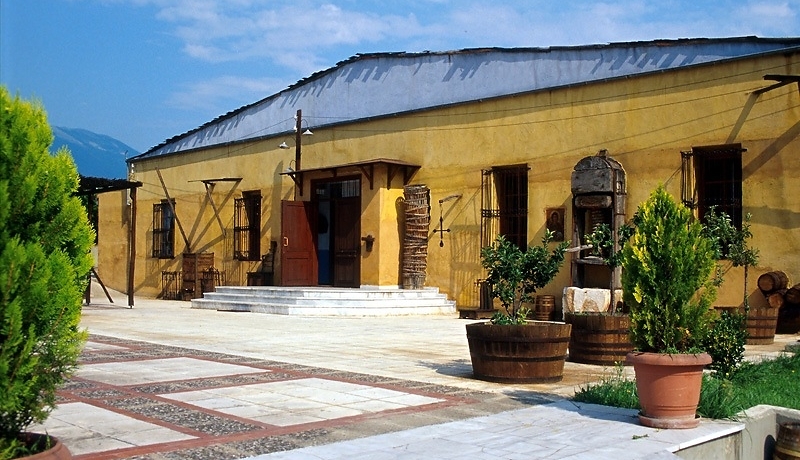
Greece's Boutari Winery, founded in 1879 and one of the country's most established wine producers, completed repairs to two deteriorating underground wine cellars at its Stenimachos facility in the Naoussa wine-growing region by the end of 2025. The project, executed without halting active cellar operations, relied on The Penetron Group's crystalline waterproofing system to seal groundwater leaks and restore structural integrity to below-grade concrete walls and floors built in 1978.
The Repair Scope
Both cellars exhibited concrete deterioration along walls and active groundwater ingress — conditions that threaten wine maturation environments and accelerate long-term structural degradation. VK Premium, the project engineering consultant, specified the Penetron System as the waterproofing solution for the below-grade structures. A critical operational constraint shaped the entire project: wine barrels could not be removed from the cellars. Crews repositioned the barrels to the center of each space to maintain access to perimeter walls and floor areas while work proceeded.
Surface preparation began with hydro-blasting to remove unsound concrete and expose cracks, voids, and active leak paths. The repair sequence then deployed three products in combination: PENEPLUG, a rapid-setting crystalline compound, was applied first to arrest active water flow; PENETRON slurry followed as a bonding primer; and PENECRETE MORTAR was used to rebuild cracks and voids before a final PENETRON slurry coat was applied across all concrete surfaces. Penetron's crystalline chemistry reacts with moisture and cement hydration by-products to form insoluble crystals within pores, capillaries, and micro-cracks, reducing concrete permeability and supporting self-sealing of future micro-cracking under sustained groundwater pressure.
Why It Matters for Wine Operations
Below-grade wine cellars in historic European wineries represent a structurally demanding category. Groundwater pressure, temperature cycling, and decades of humidity exposure accelerate concrete carbonation and cracking — and remediation in active storage environments must avoid operational disruption that could compromise aging inventory. The Boutari project illustrates a growing demand for rehabilitation methods that can work around existing production infrastructure rather than requiring complete evacuation or demolition.
"The Penetron System gave the project team the flexibility to complete the work around existing cellar operations while delivering an integral waterproofing solution designed for long service life," said Theodor Mentzikofakis, Managing Director and Partner of Penetron Hellas. "For construction engineers, the project demonstrates how crystalline technology can be used to rehabilitate below-grade concrete structures affected by active water ingress without extensive demolition or operational disruption."
The Boutari case is directly relevant to wine producers, brewers, and spirits distillers operating aging underground or semi-underground maturation facilities — a segment where deferred maintenance on concrete infrastructure carries outsized operational and quality risk. As covered in recent foodservice infrastructure reporting and beverage production facility trends on this site, capital investment in cellar and cold-storage rehabilitation is accelerating across European wine regions as facilities built in the 1970s and 1980s approach structural life-cycle thresholds.
Written by Michael Politz, Author of Guide to Restaurant Success: The Proven Process for Starting Any Restaurant Business From Scratch to Success (ISBN: 978-1-119-66896-1), Founder of Food & Beverage Magazine, the leading online magazine and resource in the industry. Designer of the Bluetooth logo and recognized in Entrepreneur Magazine's "Top 40 Under 40" for founding American Wholesale Floral, Politz is also the Co-founder of the Proof Awards and the CPG Awards and a partner in numerous consumer brands across the food and beverage sector.