The Promotion
Burger King is deploying an anime-anchored limited-time offer across its more than 19,000-location system beginning September 1, partnering with Toei Animation to launch a Dragon Ball Super-branded menu designed to drive traffic from both franchise loyalists and families with younger children. The collaboration, which spans food, beverage, packaging, and collectible merchandise, represents one of the chain's more layered IP tie-ins in recent years.
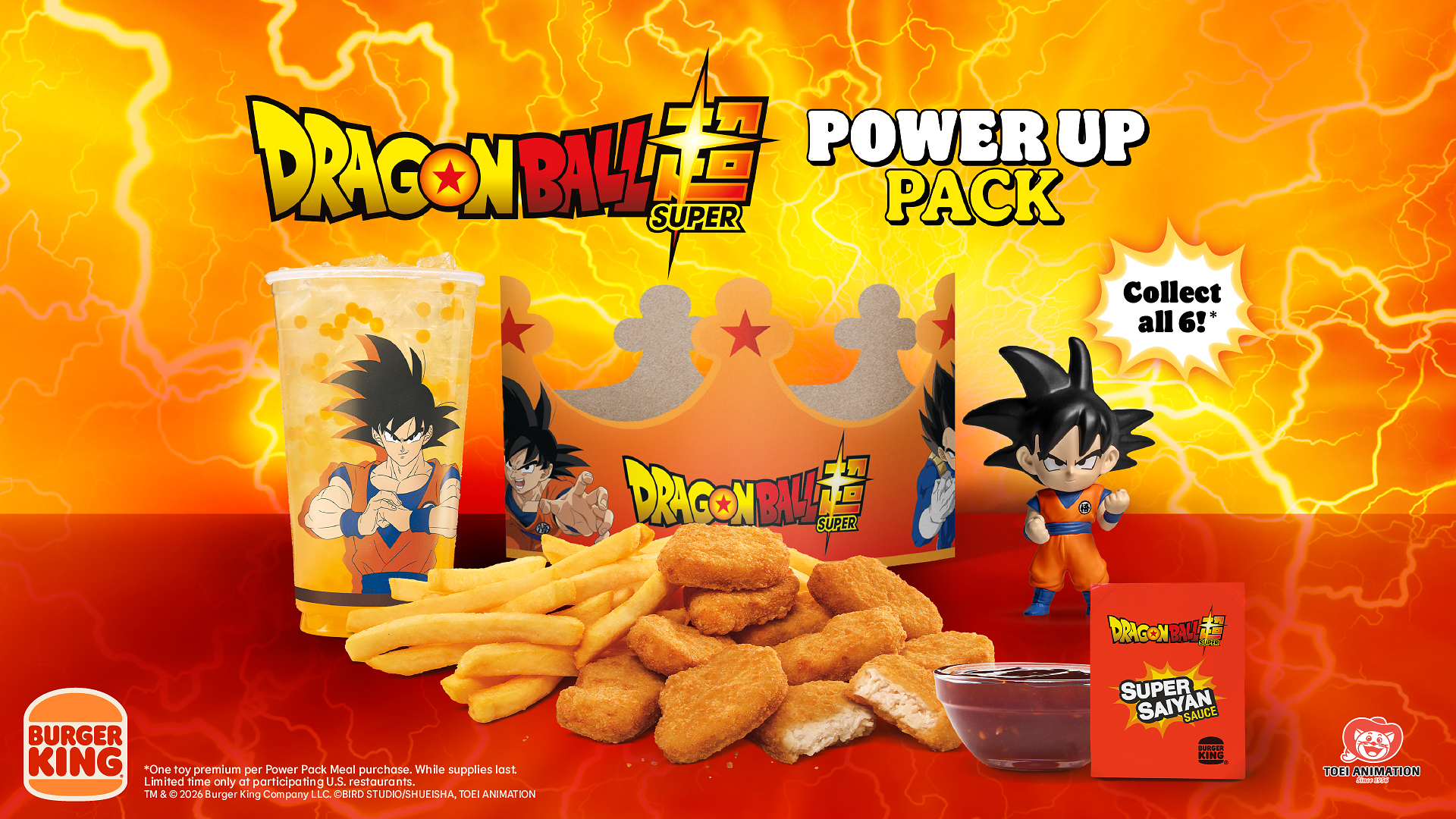
The centerpiece is the "Dragon Ball Super Power Up Pack," a bundled offer that includes 10-piece chicken nuggets — reformulated with an all-white-meat recipe — served with a new Super Saiyan Sauce, a teriyaki-style sweet-savory condiment created for the promotion. The pack also includes a Dragon Ball Burst Lemonade, a mango-peach lemonade topped with mango-flavored popping boba, and a medium fry. Each pack comes with one of six exclusive character figurines: Goku, Super Saiyan God Super Saiyan Goku, Vegeta, Super Saiyan God Super Saiyan Vegeta, Piccolo, and Beerus.
Kid-Focused Traffic Driver
The promotion extends to Burger King's King Jr. Meal platform — a structural signal that the chain is treating this as a full family-occasion play rather than a young-adult novelty. King Jr. participants receive their choice of hamburger, cheeseburger, or four- or six-piece chicken nuggets, plus a side, drink, themed crown, and one of the same six figurines. Limited-edition packaging and a Dragon Ball Super crown round out the adult bundle as well.
The collectible figurine mechanic is a deliberate repeat-visit lever. Six distinct characters distributed randomly creates scarcity and incentivizes multiple purchases — a tactic that QSR operators have deployed with measurable success in the toy-premium category, most notably McDonald's Happy Meal partnerships. For Burger King, the King Jr. Meal integration also shores up a daypart and demographic — families with children — where the chain has historically trailed its primary competitor.
Why Anime IP Now
Anime-licensed collaborations have accelerated across the foodservice and consumer-packaged-goods sectors over the past three years, as studios and rights holders seek to extend franchise monetization beyond streaming and retail. Dragon Ball, now in its fifth episodic series iteration, commands a global audience that skews toward millennials who grew up with the original run and Gen Z viewers who discovered the franchise through Dragon Ball Super's 2015 debut. That dual-cohort reach makes the IP commercially attractive for a QSR seeking to widen its promotional aperture beyond a single age bracket.
"Dragon Ball Super has inspired generations, and this collaboration gives families a fun, unexpected way to engage with a world they love while enjoying new and innovative menu items," said Joel Yashinsky, Chief Marketing Officer, Burger King U.S. & Canada. The chain is routing orders through in-restaurant, drive-thru, BK.com, and the BK App channels, consistent with its broader push to grow digital order share. Coverage of how QSR operators are leveraging IP partnerships to boost digital ordering and loyalty engagement has been a recurring theme in the sector this year, as has the broader rise of limited-time offers as traffic catalysts in a value-pressured environment. Reporting on the foodservice IP-licensing trend has also been tracked by Food & Beverage Magazine.
Written by Michael Politz, Author of Guide to Restaurant Success: The Proven Process for Starting Any Restaurant Business From Scratch to Success (ISBN: 978-1-119-66896-1), Founder of Food & Beverage Magazine, the leading online magazine and resource in the industry. Designer of the Bluetooth logo and recognized in Entrepreneur Magazine's "Top 40 Under 40" for founding American Wholesale Floral, Politz is also the Co-founder of the Proof Awards and the CPG Awards and a partner in numerous consumer brands across the food and beverage sector.