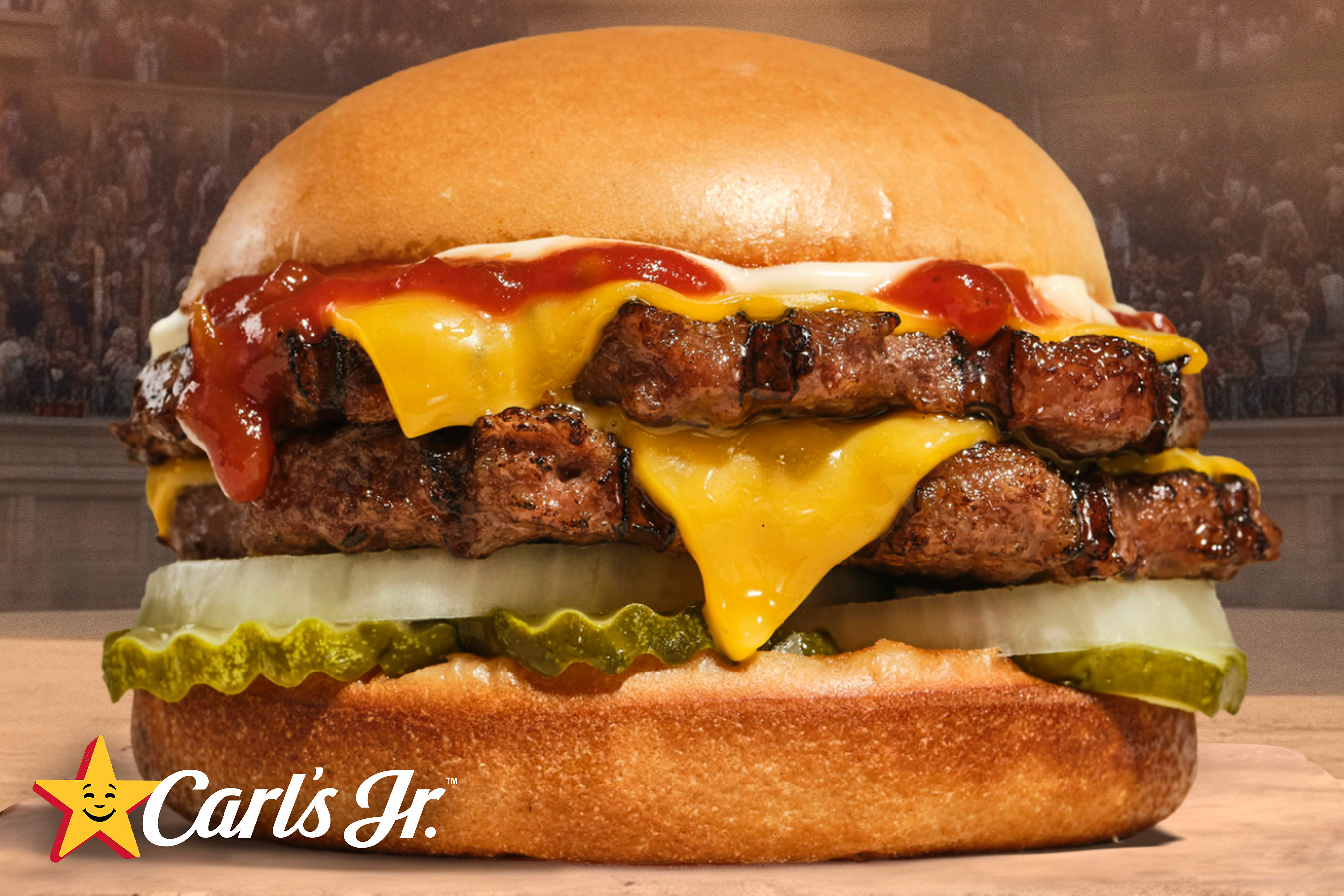
Carl's Jr. is overhauling its burger production model across more than 1,000 U.S. restaurants, replacing holding-based preparation with a fully cooked-to-order system — a structural change the brand's parent, CKE Restaurants Holdings, Inc., is framing as its most significant operational commitment in years. The initiative, branded internally as the Burger Revolution, launched September 9 alongside the Angus Maximus, a limited-time 100% Angus beef double-patty burger priced at $5.99.
The Operational Shift
Under the new standard, Carl's Jr. burgers begin cooking only after a guest places an order, moving away from the pre-cook-and-hold approach common across quick-service restaurants. The change is designed to address the temperature and texture degradation that holding systems can introduce — a persistent friction point in fast-food guest satisfaction scores. Applied systemwide, the shift carries real labor and throughput implications for franchisees, who operate the majority of the brand's domestic footprint.
The Angus Maximus serves as the initiative's commercial anchor. At 5.7 ounces of beef across two charbroiled patties, the burger is priced at an effective $1.05 per ounce — a figure CKE is highlighting as a value-positioning argument against competing premium burger offerings. The LTO runs through October 27 at participating locations. To accelerate loyalty enrollment, new My Rewards members receive a complimentary Angus Maximus with any purchase at sign-up, a mechanic that ties promotional trial directly to the brand's first-party data pipeline.
Value Positioning in Context
The $5.99 price point lands below the premium-burger tier occupied by several fast-casual competitors but above the core value menu that has defined much of the QSR burger segment's recent traffic recovery. For CKE, which operates more than 3,600 franchised or company-operated restaurants across Carl's Jr. and Hardee's in over 35 international markets and U.S. territories, the dual imperative of protecting franchisee margins while investing in product quality is a familiar tension. Cooked-to-order models can extend ticket times, a trade-off operators will monitor closely as the rollout matures.
"Carl's Jr. has never been in the business of serving burgers that are just good enough," said Iwona Alter, brand president for Carl's Jr. "The Burger Revolution and our shift to a cooked-to-order process represent our commitment to raising the standard across the entire Carl's Jr. experience."
What Operators Should Watch
The cooked-to-order mandate arrives as the broader QSR burger category faces sustained pressure from fast-casual incumbents emphasizing fresh preparation — a segment dynamic that has pushed legacy chains to invest in operational differentiation rather than price alone. For franchised systems, systemwide mandates of this scale require training investment and potential equipment reconfiguration, costs that typically surface in franchisee disclosure documents over subsequent quarters. CKE has not disclosed the capital outlay associated with the rollout.
Industry observers tracking menu innovation across the foodservice sector will note that cooked-to-order positioning has gained traction as a marketing differentiator even when execution varies by location volume. Whether the Burger Revolution translates into measurable comparable-sales movement will likely depend on franchisee adoption consistency and consumer awareness of the operational change — not just the LTO halo. Coverage of adjacent operational pivots in the QSR segment has been tracked by Food & Beverage Magazine, and the competitive dynamics reshaping fast-food burger margins remain a central watchpoint for the category heading into 2027.
Written by Michael Politz, Author of Guide to Restaurant Success: The Proven Process for Starting Any Restaurant Business From Scratch to Success (ISBN: 978-1-119-66896-1), Founder of Food & Beverage Magazine, the leading online magazine and resource in the industry. Designer of the Bluetooth logo and recognized in Entrepreneur Magazine's "Top 40 Under 40" for founding American Wholesale Floral, Politz is also the Co-founder of the Proof Awards and the CPG Awards and a partner in numerous consumer brands across the food and beverage sector.