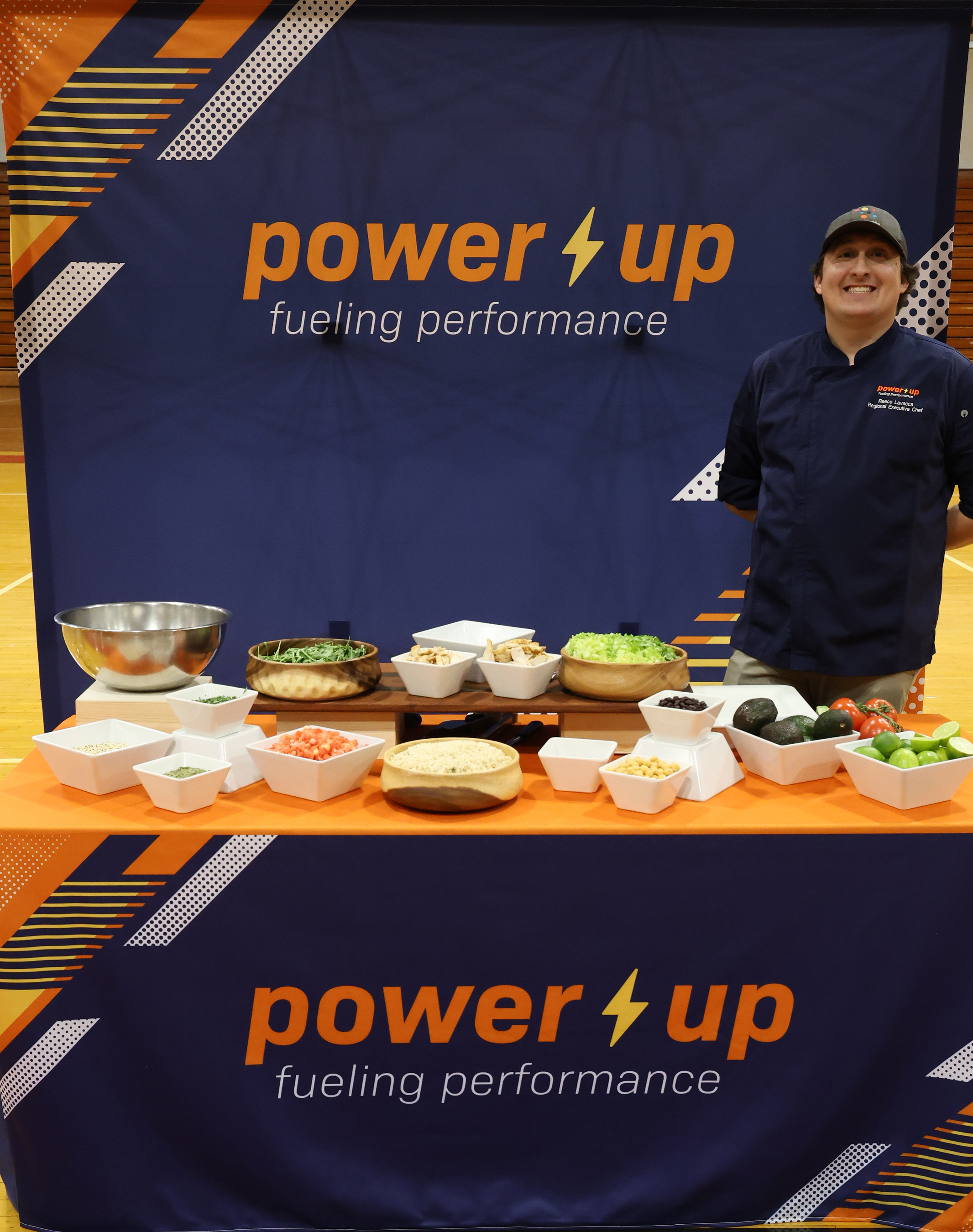
Chartwells K12, the contract foodservice operator serving more than 5,000 schools and 19,000 associates across the United States, is rolling out a structured performance nutrition program called Power Up, designed specifically for middle and high school students. The initiative connects meal design, dietitian-informed recipes, and chef-led experiential programming in a unified curriculum aimed at linking daily food choices to energy output, cognitive focus, hydration, and recovery.
The Program Architecture
Power Up is built on three operational pillars: student-centered menus, in-school pop-up tasting events, and take-home nutrition education. Menu items developed for the program include a Sunberry Smoothie, Banana Chocolate Chip Overnight Oats, a Chipotle Chicken Rice Bowl, and Potato Poppers — all formulated around whole grains, lean proteins, fruits, vegetables, and dairy. The recipe slate reflects what Chartwells K12 describes as a generational insight into Gen Z and Gen Alpha preferences for protein-packed and macro-friendly foods, a category trend that has migrated from specialty fitness retail into mainstream institutional foodservice.
Pop-up tasting events will cover practical topics including pre-activity fueling, post-workout recovery, on-the-go eating, and recipe adaptation based on home pantry availability. The experiential format positions the school cafeteria less as a compliance function and more as an active consumer touchpoint — a shift that contract foodservice operators have been pursuing broadly as school districts tie dining vendor performance to student participation rates and meal-program revenue.
Competitive and Sector Context
The launch extends a portfolio of branded programming that Chartwells K12 has assembled for distinct grade-band segments. Power Up joins Nutrition: Game On, an interactive nutrition-education platform for elementary students, and Global Eats, which introduces globally inspired cuisines to the school lunch set. Together the programs reflect an industry-wide recognition that differentiated, themed dining experiences can drive cafeteria participation — a metric that directly affects the financial performance of school nutrition contracts under both the National School Lunch Program and à-la-carte revenue streams.
For institutional foodservice operators competing in the K-12 segment, branded wellness programming has become a contract-renewal lever. Districts increasingly evaluate vendors not only on cost-per-meal and compliance metrics but on the ability to demonstrate measurable student engagement and nutritional outcomes. Power Up's pairing of culinary theater with dietitian credentialing addresses both dimensions.
"We believe school meals are one of the most powerful tools we have to support student success," said Amy Shaffer, Chief Executive Officer of Chartwells K12. "Power Up takes a food-first approach by starting with delicious, student-friendly meals and using them as a launchpad for real-world nutrition education."
Lindsey Palmer, MS, RDN, Vice President of Nutrition & Industry Relations at Chartwells K12, framed the program's philosophy around autonomy rather than restriction: "Middle and high school students are making more of their own food choices, and Power Up gives them the knowledge and confidence to make choices that support their goals."
The broader foodservice sector's pivot toward performance and functional nutrition in institutional settings mirrors consumer trends that have accelerated post-pandemic, with protein content and hydration increasingly prominent on school menu labeling. For operators and school nutrition directors tracking procurement and menu strategy, Power Up represents a replicable programming model that bundles culinary execution with education in a single contracted offering.
Written by Michael Politz, Author of Guide to Restaurant Success: The Proven Process for Starting Any Restaurant Business From Scratch to Success (ISBN: 978-1-119-66896-1), Founder of Food & Beverage Magazine, the leading online magazine and resource in the industry. Designer of the Bluetooth logo and recognized in Entrepreneur Magazine's "Top 40 Under 40" for founding American Wholesale Floral, Politz is also the Co-founder of the Proof Awards and the CPG Awards and a partner in numerous consumer brands across the food and beverage sector.