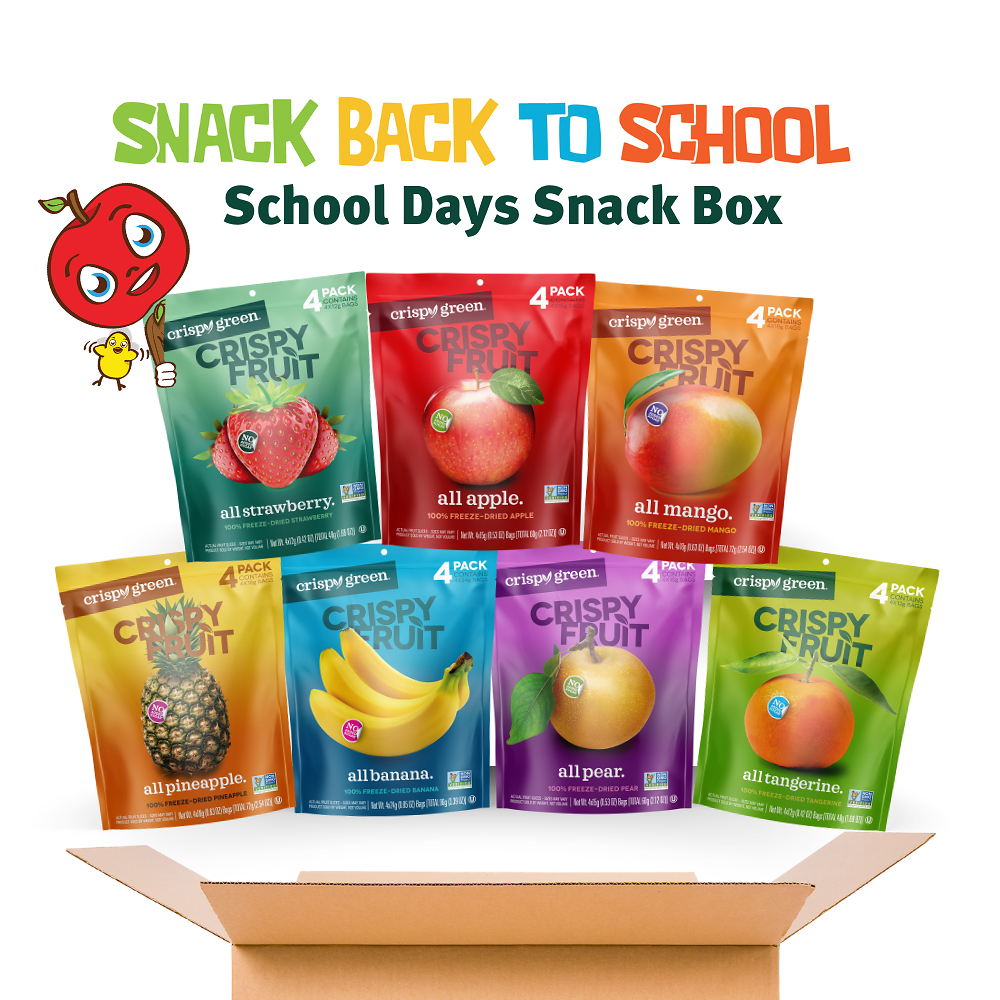
Freeze-dried fruit snack maker Crispy Green is anchoring its 2026 back-to-school campaign to a specific consumer occasion it calls the "3–6 P.M. Snack Rush," citing federal nutrition survey data to argue that the after-school daypart is an underpenetrated opportunity for better-for-you snack brands and the retailers that carry them.
The Data Underpinning the Push
An analysis of U.S. National Health and Nutrition Examination Survey (NHANES) data found that children consume nearly 31% of their daily snack calories between 3 p.m. and 6 p.m., making it statistically the single largest snacking occasion in a child's day. The same research found that the majority of those snack calories originate from grocery store purchases — a finding the Fairfield, N.J., company is using to make the case to retail buyers that better placement and category management during back-to-school season translates directly to parent purchasing decisions.
Crispy Green's Crispy Fruit® line — positioned as the top-selling freeze-dried fruit snack in the U.S. — is sold in single-ingredient, non-GMO, no-added-sugar formats across seven fruit varieties. The products are stocked in the produce and healthy snacks sections at Whole Foods Market and Sprouts Farmers Market locations nationally, as well as online through Amazon.
Positioning and Trade Significance
The campaign introduces a brand platform the company calls Health Over Hype™, a deliberate repositioning away from trend-driven better-for-you marketing toward a "simple ingredients, real life" message aimed at time-pressed parents. Angela Liu, founder and CEO of Crispy Green Inc., framed the strategy as meeting a logistics problem as much as a nutrition one. "Life gets busy, especially during the after-school rush," Liu said. "Choosing snacks made with real fruit and simple ingredients should be the easy part."
For trade buyers and category managers, the daypart framing matters. Rather than competing solely on ingredient panels or certifications — a crowded positioning in the better-for-you snack category — Crispy Green is targeting a specific behavioral moment: the car, the sports bag, the gap between school dismissal and dinner. The company's grab-and-go 4-PACKS are shelf-stable and require no refrigeration, attributes that align with convenience-channel and foodservice adjacency opportunities beyond traditional grocery.
Retail and Outlook
Registered dietitian Toby Amidor, MS, RD, CDN — cited in the campaign as a Wall Street Journal bestselling author — emphasized the operational simplicity angle for parents rather than leading with clinical nutrition claims. "Healthy snacking doesn't have to be complicated," Amidor said. "Having nutritious, portable snacks ready before kids get hungry can make it much easier to stay on track, even on the busiest days."
The campaign arrives as freeze-dried and dehydrated fruit snacks continue to capture shelf space at the expense of conventional fruit snack formats weighed down by added sugars and artificial ingredients — a structural shift that has benefited category leaders with established retail footprints. Founded in 2004, Crispy Green has operated in this segment for more than two decades, giving the brand distribution scale that newer entrants in the better-for-you snack space are still building. The back-to-school window, historically one of the highest-velocity periods for snack category resets, makes the timing of this messaging push strategically deliberate for both shelf placement negotiations and direct-to-consumer conversion.
Written by Michael Politz, Author of Guide to Restaurant Success: The Proven Process for Starting Any Restaurant Business From Scratch to Success (ISBN: 978-1-119-66896-1), Founder of Food & Beverage Magazine, the leading online magazine and resource in the industry. Designer of the Bluetooth logo and recognized in Entrepreneur Magazine's "Top 40 Under 40" for founding American Wholesale Floral, Politz is also the Co-founder of the Proof Awards and the CPG Awards and a partner in numerous consumer brands across the food and beverage sector.