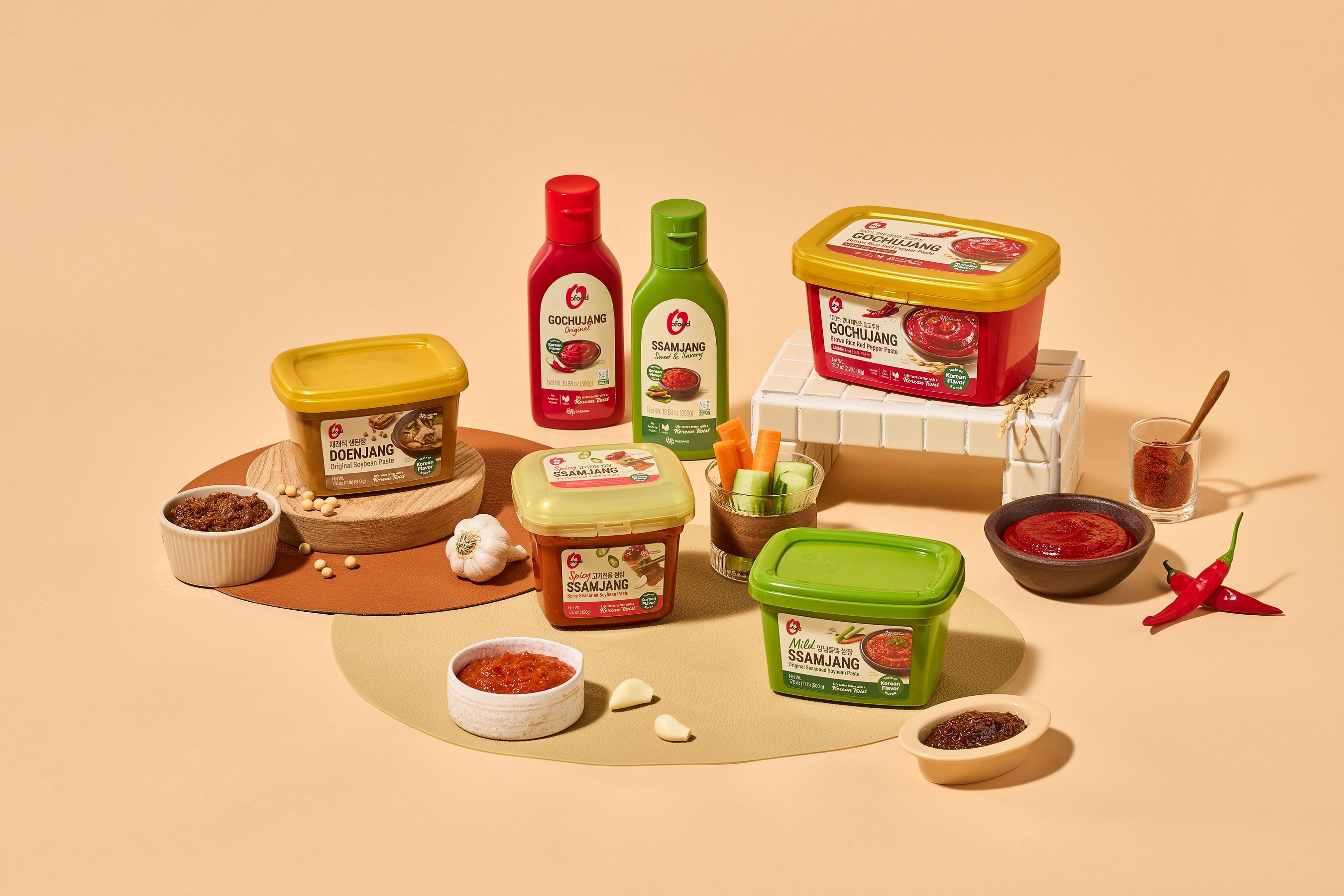
Daesang Corporation, the Seoul-headquartered fermentation and food-manufacturing group founded in 1956, is accelerating a structured push into the U.S. condiment aisle through its global consumer brand Ofood, leaning on 70 years of fermentation expertise to reposition traditional Korean sauces as everyday pantry staples for American households.
The Growth Numbers
Ofood's flagship Natural Gochujang — a tube-packaged, thinner-consistency variant of the fermented chili paste — posted 2025 export sales up approximately 84% year over year, making it the top-selling sauce in Daesang's export portfolio. The product is already available through Walmart, a critical mainstream distribution milestone for an imported ethnic-food brand. Daesang currently ships approximately 480 sauce SKUs to around 60 countries globally, with the United States designated as a priority growth market.
Portfolio and Positioning
The company has identified sauces as one of four strategic global categories alongside kimchi, gim (Korean seaweed), and convenience foods. The Ofood sauce range is deliberately engineered to crossover: Gochujang Tteokbokki Hot Sauce is marketed for use in pasta and gnocchi as readily as in its native application; All Purpose Korean BBQ Sauce covers marinades, stir-fry bases, and dipping uses; Chicken Dipping Sauce targets the fast-growing K-chicken segment; and Mayo Gochujang is positioned as a burger and fry condiment — a direct play on familiar American consumption occasions.
The reformulation strategy — milder fermented aroma, pourable viscosity, multi-use versatility — reflects a broader industry pattern in which ethnic food producers adapt flavor profiles to reduce the trial barrier with mainstream U.S. shoppers without abandoning the functional ingredient identity that drives consumer interest. Korean food's growing cultural footprint, amplified through streaming media and foodservice trends, has provided meaningful tailwind for imported condiment brands seeking shelf placement beyond specialty and Asian grocery channels. The dynamics mirror the trajectory of sriracha and other Asian-origin hot sauces that crossed into mass retail over the past decade.
Outlook and Strategy
Eun-young Park, Head of Daesang's Food Business Unit, said the company will continue introducing products that preserve authentic Korean flavors while reflecting local tastes, with an explicit focus on expanding mainstream retail distribution in the United States and other key markets. Daesang operates manufacturing subsidiaries in the United States, Poland, China, Indonesia, and Vietnam, giving it production infrastructure to support volume growth in Western markets without sole reliance on Korean export logistics.
For foodservice operators and retail buyers, the move signals that Korean condiments are transitioning from niche ethnic-aisle placement into competitive set with established hot sauces and global condiment brands. Daesang's scale — it is among the world's largest fermented-food producers — gives it pricing and supply-chain leverage that smaller K-food exporters cannot easily replicate. Category observers tracking Korean food's retail penetration will watch whether the Walmart listing translates into broader national chain placement in the near term.
Written by Michael Politz, Author of Guide to Restaurant Success: The Proven Process for Starting Any Restaurant Business From Scratch to Success (ISBN: 978-1-119-66896-1), Founder of Food & Beverage Magazine, the leading online magazine and resource in the industry. Designer of the Bluetooth logo and recognized in Entrepreneur Magazine's "Top 40 Under 40" for founding American Wholesale Floral, Politz is also the Co-founder of the Proof Awards and the CPG Awards and a partner in numerous consumer brands across the food and beverage sector.