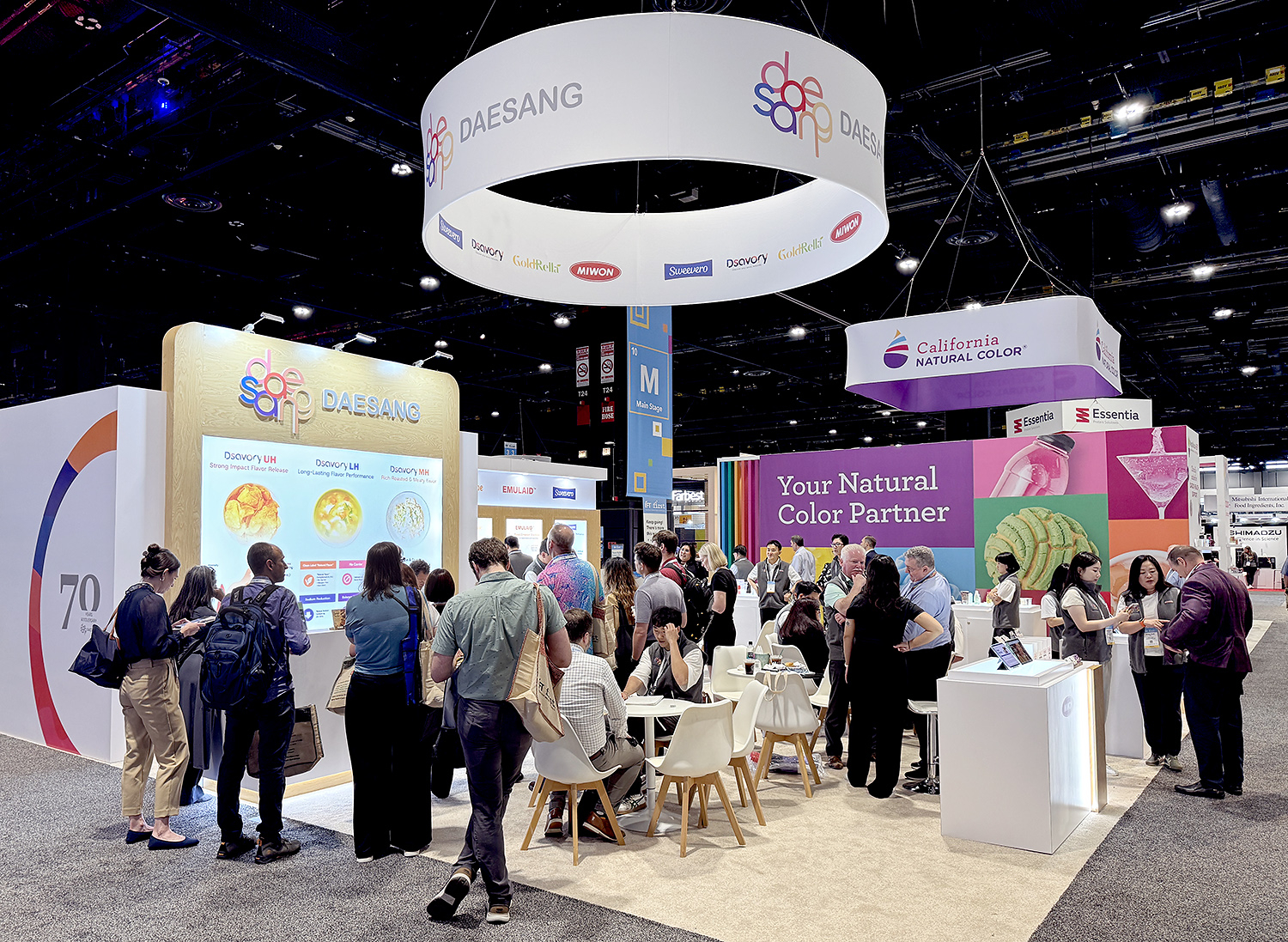
Daesang Corporation stepped up its international commercial campaign at IFT FIRST 2026, the food science and innovation exposition held at McCormick Place in Chicago from July 13 to 15, using the platform to present next-generation ingredient lines to a global buyer audience.
The South Korean ingredient manufacturer brought two headline offerings to the show floor: allulose, a low-calorie rare sugar attracting growing formulation interest across the beverage and confectionery segments, and Capsulaid™, its proprietary microencapsulation technology designed to deliver controlled release of active compounds in food and nutritional applications. Both products are positioned to address accelerating demand for clean-label, vegan-compatible, and low-sodium formulations — three of the most consequential reformulation mandates currently reshaping packaged food and foodservice supply chains.
The Innovation Case
Daesang's allulose play is strategically timed. Regulatory acceptance of allulose as a food ingredient has expanded across key markets in recent years, and global food manufacturers are increasingly evaluating it as a sugar-reduction tool that preserves the mouthfeel and browning characteristics consumers expect — a technical barrier that has slowed adoption of earlier-generation sweetener alternatives. The company cites seven decades of proprietary fermentation and bioprocessing expertise as the foundation for its production competency in the category.
Capsulaid™ targets a different but complementary opportunity. Microencapsulation is emerging as a critical enabling technology for formulators trying to stabilize sensitive ingredients — omega fatty acids, probiotics, plant-based flavors — through processing and shelf life. Positioning the platform at IFT FIRST signals Daesang's intent to compete for ingredient supply contracts with multinational food and beverage manufacturers that use the annual exposition as a sourcing venue.
Market Context
IFT FIRST routinely draws tens of thousands of food science professionals and procurement decision-makers, making it among the highest-concentration buyer events in the global food ingredient calendar. For Korean ingredient exporters, the Chicago show has become a preferred channel to accelerate North American and European market development without the extended sales cycles typical of direct outreach.
Daesang's exhibition follows a broader pattern of Asia-Pacific ingredient suppliers investing in trade show presence to close the brand-recognition gap with established Western competitors in specialty sweeteners and functional ingredient platforms. The clean-label and low-sodium categories in particular are seeing intensified competition as large consumer packaged goods companies publicly commit to front-of-pack nutrition targets.
For food and beverage manufacturers evaluating supply-chain diversification following recent input-cost volatility, Korean producers with vertically integrated fermentation capacity represent a credible alternative sourcing node. Daesang's dual-product showcase at IFT FIRST suggests the company is actively cultivating that positioning. Industry observers tracking sweetener and specialty ingredient trends and clean-label reformulation will want to monitor how Daesang's North American pipeline develops through the second half of 2026.
Written by Michael Politz, Author of Guide to Restaurant Success: The Proven Process for Starting Any Restaurant Business From Scratch to Success (ISBN: 978-1-119-66896-1), Founder of Food & Beverage Magazine, the leading online magazine and resource in the industry. Designer of the Bluetooth logo and recognized in Entrepreneur Magazine's "Top 40 Under 40" for founding American Wholesale Floral, Politz is also the Co-founder of the Proof Awards and the CPG Awards and a partner in numerous consumer brands across the food and beverage sector.