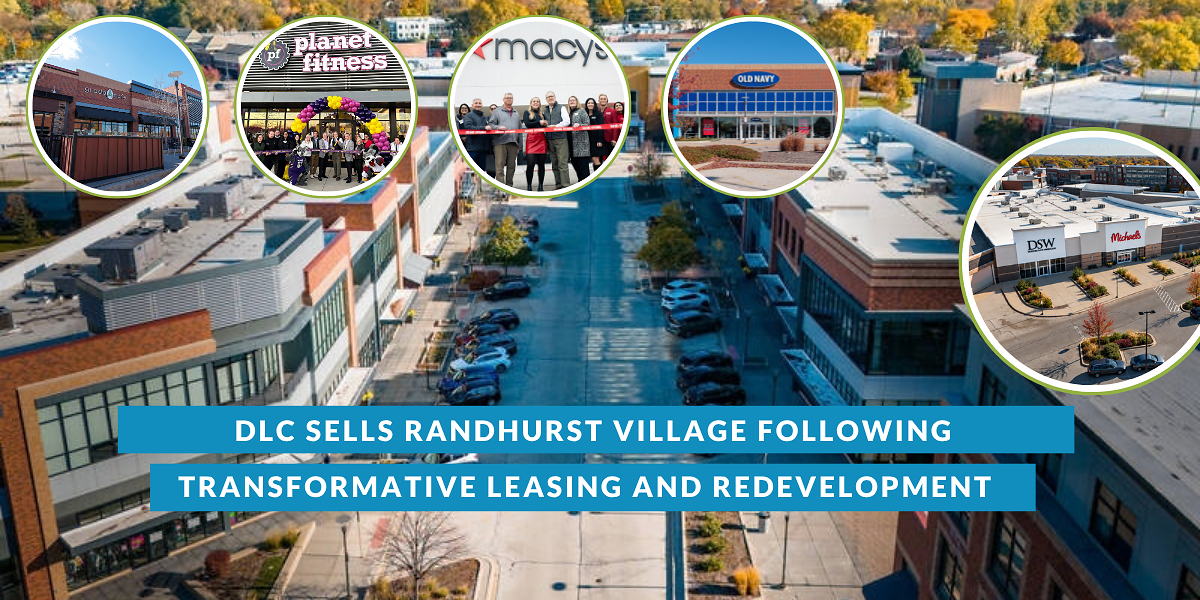
DLC Management Corp. has sold Randhurst Village, a 90-plus-anchor open-air shopping center in Mount Prospect, Illinois, capping a decade of leasing and redevelopment that the company says repositioned the property as both a regional retail destination and a local dining hub.
The Elmsford, New York-based owner-operator acquired Randhurst Village in 2016 and executed a multi-phase strategy that replaced two major department-store vacancies, added nationally recognized food and retail tenants, and built out a restaurant lineup that management credits with meaningfully expanding repeat-visit traffic. Financial terms of the sale were not disclosed. DLC was represented in the transaction by Newmark Retail Capital Markets, led by Conor Lalor, President and Head of Retail Capital Markets, alongside Senior Managing Director Keely Polczynski and Associate Director Brian Schneiderman.
The Transformation Play
The most significant capital project involved the former 200,000-square-foot Carson Pirie Scott box, which DLC converted into two tenancies: HomeGoods and Macy's. More recently, the company backfilled the former Bed Bath & Beyond space with Skechers — which has already opened — and Nike, described as coming soon. The center's current anchor roster includes Costco, Jewel-Osco, The Home Depot, TJ Maxx, HomeGoods, AMC Theaters, Planet Fitness, Old Navy, Michaels, DSW, and PetSmart, a lineup that reflects the broader industry pivot toward experiential and necessity-based tenants that has defined open-air center strategy since the mid-2010s.
The food and beverage component of the repositioning is particularly relevant to the foodservice sector. DLC added multiple restaurant tenants to Randhurst Village as a deliberate strategy to broaden the center's appeal beyond transactional retail shopping. The creation of what the company terms a "local dining hotspot" aligns with a well-documented trend in retail real estate: operators increasingly treating restaurant density as a traffic driver and dwell-time extender, functions once served by department stores. For F&B operators evaluating open-air centers as expansion sites, Randhurst Village's trajectory illustrates both the leasing opportunity created by anchor vacancies and the competitive density that can develop once a dining cluster gains critical mass.
Integrated Execution Model
DLC executed the development projects using in-house resources — architectural services through affiliate NWS Architects and general contracting through affiliate Renovo Construction — an integrated model the company says accelerated project timelines and reduced costs relative to third-party procurement. That structure, which DLC applies across its portfolio of more than 90 properties encompassing more than 24 million square feet and over $4 billion in assets under management, gave incoming tenants, including restaurant operators, a single-counterparty path from lease execution through construction delivery.
"Our team tackled major vacancies, redeveloped obsolete spaces, brought new retailers and restaurants to the property, and continued investing in its long-term success," said Adam Ifshin, Founder and Chief Executive Officer of DLC. Chris Ressa, Executive Vice President and Chief Operating Officer, added that the leasing, development, construction, and architectural teams worked in concert to maintain momentum through successive tenant transitions.
The sale closes a business plan that began with the 2016 acquisition and underscores the growing role of dining and experiential tenants in the value-creation thesis for repositioned open-air retail assets. For food and beverage operators, the Randhurst outcome reinforces that well-capitalized landlords with integrated development capabilities are actively reshaping the physical retail environment — and that former anchor boxes represent some of the largest available restaurant and dining-adjacent footprints in suburban trade areas.
For further context on how restaurant tenants are driving open-air center leasing activity, see our coverage of experiential retail trends and the foodservice real estate leasing outlook.
Written by Michael Politz, Author of Guide to Restaurant Success: The Proven Process for Starting Any Restaurant Business From Scratch to Success (ISBN: 978-1-119-66896-1), Founder of Food & Beverage Magazine, the leading online magazine and resource in the industry. Designer of the Bluetooth logo and recognized in Entrepreneur Magazine's "Top 40 Under 40" for founding American Wholesale Floral, Politz is also the Co-founder of the Proof Awards and the CPG Awards and a partner in numerous consumer brands across the food and beverage sector.