The Product
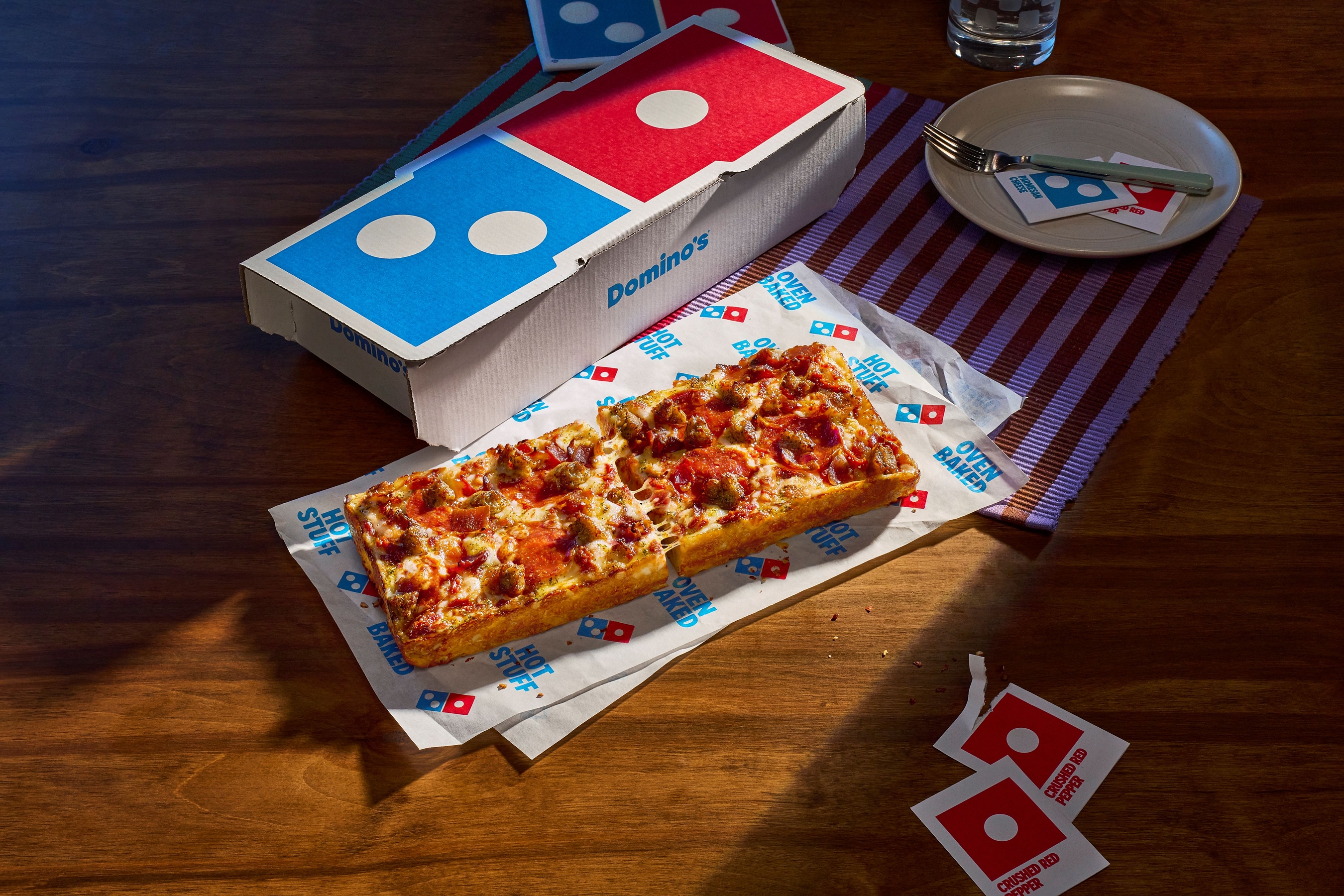
Domino's Pizza (Nasdaq: DPZ) is adding a single-serve Detroit-style pizza to its U.S. menu on Aug. 31, a format shift the Ann Arbor-based chain says addresses a persistent gap between individual customization and group ordering. The new product, branded the Domino, is shaped to mirror the company's rectangular logo tile and cuts into two slices — an overt piece of brand theatre that also functions as a portion-control play in a category still dominated by shared pies.
The item is built on buttery-flavored pan dough encrusted with Parmesan cheese, baked in a rectangular pan, layered with two cheese applications, a customer-selected sauce, and up to three toppings, then finished with garlic seasoning. The Detroit-style crust format — characterized by its crisp, cheesy edges and thick, focaccia-adjacent crumb — has gained meaningful momentum in the fast-casual and QSR pizza segment over the past several years, with operators from Little Caesars to independent chains investing in the regional style to differentiate from traditional hand-tossed and thin-crust offerings.
Pricing and Distribution
Domino's will slot the Domino into its existing Mix and Match Deal at $6.99 per item when customers select two or more qualifying menu items, with pricing subject to local variation. The entry point positions the single-serve format as an accessible incremental add-on rather than a premium upsell — a pricing architecture designed to lift average ticket size on group orders without cannibalizing existing large-pizza sales.
The launch will reach all U.S. locations within Domino's system of more than 22,500 stores across more than 90 markets globally. Independent franchise owners operate 99% of those units, meaning franchisee execution and supply-chain readiness are material factors in the rollout's consistency. The company reported global retail sales of more than $20.6 billion in the trailing four quarters ended June 14, 2026, a scale that gives the new SKU immediate mass-market reach uncommon in product introductions at smaller chains.
Strategic Context
Joe Jordan, chief operating officer, president of Domino's U.S., and incoming chief executive officer, framed the product as a portfolio gap-filler rather than a replacement for existing formats. "When everyone wants something different, traditional pizza falls short," Jordan said. "The Domino lets every person build the exact pizza they want." The timing of the announcement — made while Jordan is transitioning into the CEO role — signals that menu innovation is a priority pillar of his incoming leadership agenda.
The single-serve angle speaks directly to broader foodservice trends: operators across QSR and fast-casual have invested in smaller-format, individually portioned items to address solo diners, workplace lunch occasions, and late-night snack traffic without requiring a full-size commitment. Domino's noted in independent consumer testing that participants rated the Domino among the most favorably received products the chain has introduced, though specific methodology and sample size were not disclosed. For franchisees, the appeal lies in incremental ring: a consumer who might previously have ordered a single large pie for the table can now add individually customized Dominos to the same order, pushing per-ticket value higher. The digital channel, which generated more than 85% of U.S. retail sales for Domino's in 2025, provides the ordering infrastructure to make high-customization, multi-item orders operationally practical at scale.
For broader context on single-serve and Detroit-style format trends reshaping the QSR pizza segment, see our coverage of menu innovation driving ticket growth and Detroit-style pizza's national expansion. The launch also arrives as Food & Beverage Magazine has tracked accelerating operator investment in regional American pizza formats as a differentiation strategy against delivery aggregator private-label competition.
Written by Michael Politz, Author of Guide to Restaurant Success: The Proven Process for Starting Any Restaurant Business From Scratch to Success (ISBN: 978-1-119-66896-1), Founder of Food & Beverage Magazine, the leading online magazine and resource in the industry. Designer of the Bluetooth logo and recognized in Entrepreneur Magazine's "Top 40 Under 40" for founding American Wholesale Floral, Politz is also the Co-founder of the Proof Awards and the CPG Awards and a partner in numerous consumer brands across the food and beverage sector.