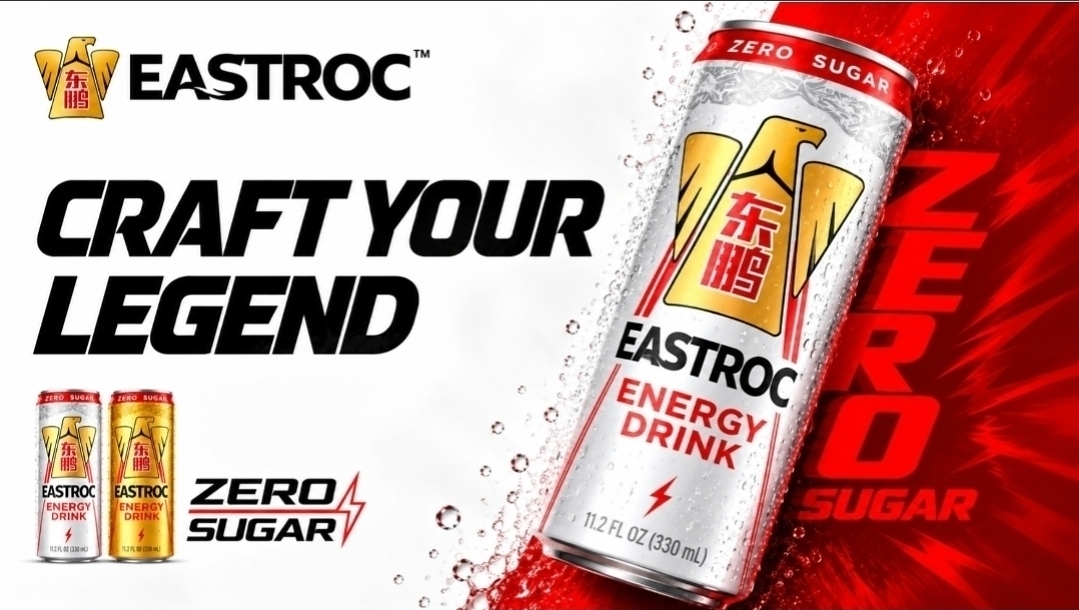
Chinese energy drink maker Eastroc Beverage is entering the U.S. market with two products — Gold Energy and White Zero Sugar Energy — manufactured domestically through Pittston Co-Packers, an independent co-packing facility in Pittston, Pennsylvania. The launch marks the company's formal push into North America after building a manufacturing network of 12 operating production bases in China and establishing exports across 36 countries and regions, as reported through June 30, 2026.
The U.S. energy drink segment remains one of the most competitive in food and beverage retail, dominated by Monster Beverage and Red Bull with a combined category share that leaves little margin for new entrants without sustained distribution investment. Eastroc is positioning itself as a challenger brand, emphasizing field-level execution and long-cycle distributor partnerships over a splash-and-retreat launch strategy. The company previewed its cans at FanCon and VidCon ahead of the wider rollout, targeting a younger consumer base.
Commercial Leadership
Joey Nickell, named Chief Sales Officer for Eastroc North America, is also Chief Sales Officer of Pittston Co-Packers. His background includes commercial roles at Coca-Cola and Bang Energy — the latter a cautionary case study in rapid growth followed by distribution collapse, making his emphasis on disciplined execution pointed rather than boilerplate. "Getting onto a shelf is an accomplishment," Nickell said. "Getting the consumer to come back is how you build a brand."
Nickell's dual role at the manufacturing partner and the brand itself creates a vertically integrated commercial structure that is relatively unusual in the challenger energy segment, where brands and co-packers typically operate at arm's length. The arrangement could accelerate production flexibility and quality feedback loops, though it also concentrates operational risk in a single Pennsylvania facility for what is currently a national ambition.
Distribution and Retail Strategy
Eastroc's U.S. go-to-market plan centers on building distributor relationships, in-store merchandising, and consumer engagement at the field level — a ground-up approach more consistent with regional brand-building than a broad national retail rollout. The company has not disclosed specific retail or distribution partners, revenue targets, or marketing spend. It is entering a segment where shelf space is fiercely contested and retailers routinely rationalize SKUs that fail to generate repeat purchase velocity within the first few reorder cycles.
For distributors and buyers evaluating the brand, Eastroc's global manufacturing scale and established export infrastructure represent meaningful credentials. Twelve production bases and a 36-country footprint signal supply reliability and quality systems — prerequisites for any serious retail conversation in the U.S. beverage channel. Whether those credentials translate into consumer pull at the shelf level is the open question every challenger brand in the energy drink category faces on entry.
The broader non-alcoholic beverage market continues to attract international operators eyeing the scale of U.S. retail and foodservice channels. As covered in recent distributor trend reporting, international entrants with domestic co-packing arrangements have had mixed results, with success correlating closely to sustained promotional investment and authentic local marketing rather than country-of-origin brand equity.
Written by Michael Politz, Author of Guide to Restaurant Success: The Proven Process for Starting Any Restaurant Business From Scratch to Success (ISBN: 978-1-119-66896-1), Founder of Food & Beverage Magazine, the leading online magazine and resource in the industry. Designer of the Bluetooth logo and recognized in Entrepreneur Magazine's "Top 40 Under 40" for founding American Wholesale Floral, Politz is also the Co-founder of the Proof Awards and the CPG Awards and a partner in numerous consumer brands across the food and beverage sector.