
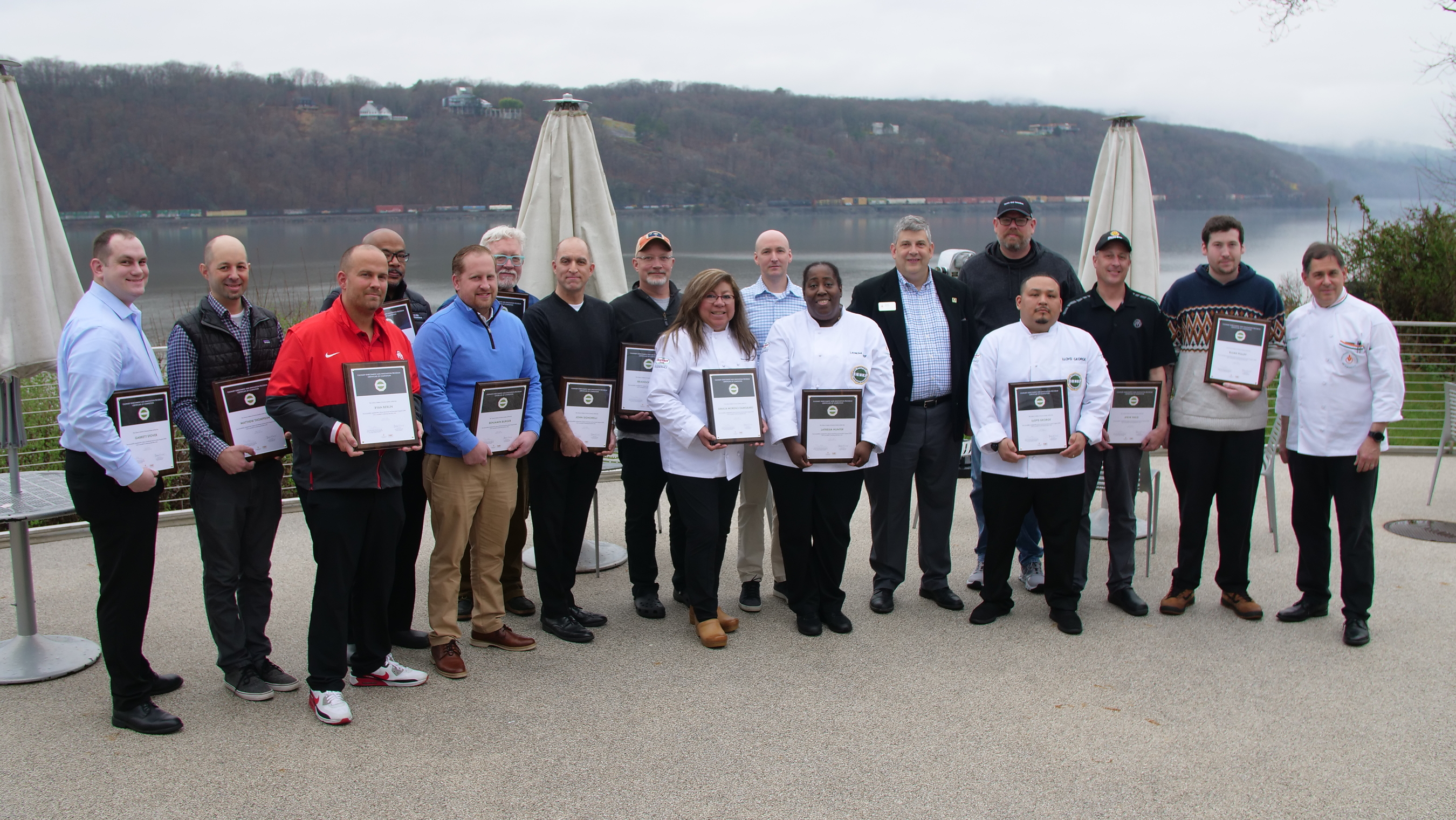
Applications are now open for the Culinary Enrichment and Innovation Program (CEIP) class of 2028, a tuition-free advanced leadership initiative run jointly by Hormel Foods Corporation (NYSE: HRL) and the Culinary Institute of America. The program accepts a cohort of 20 foodservice chefs and runs across three immersive on-campus modules over 12 months. The application window closes Nov. 30, 2026.
Program Structure
First launched in 2008, CEIP positions itself as the only culinary program designed specifically for advanced leadership development among commercial and non-commercial chefs. The class of 2028 schedule opens with Module I at the CIA's Napa Valley, California campus April 5–8, 2027, followed by Module II in San Antonio, Texas in October 2027, and concludes with Module III in Hyde Park, New York in April 2028. Participants must complete all three modules to receive a CIA certificate of completion and associated continuing education units.
Hormel Foods' Foodservice division underwrites all tuition fees and meals for the duration of the program. Participants bear responsibility for their own transportation, lodging, and personal expenses. The company's decision to absorb the academic cost lowers the financial barrier for mid-career culinary professionals who might otherwise be unable to access executive-level education at a top hospitality institution.
Why Foodservice Operators Should Watch
The CEIP selection criteria — more than 10 years of professional culinary experience, demonstrated leadership ability, and a stated long-term commitment to the industry — targets a cohort of senior chefs who already hold influence over kitchen operations, procurement decisions, and menu development within their organizations. There are no academic prerequisites; a culinary degree or certification is not required for acceptance, broadening the eligible pool across both independent and chain foodservice environments.
The partnership reflects a broader pattern among major food manufacturers deepening ties with institutional culinary education as a channel for brand engagement with influential operators. For Hormel's Foodservice unit — which markets fully cooked proteins and globally inspired flavors to commercial and non-commercial kitchens — sustained relationships with a self-selecting group of senior chefs represent a long-cycle investment in purchase-influencer relationships, not merely a sponsorship.
"The future of foodservice depends on strong culinary leaders who can inspire teams, drive innovation and adapt to a rapidly evolving industry," said Annemarie Vaupel, vice president of foodservice marketing at Hormel Foods. "Through CEIP, we're investing in experienced chefs who are committed to advancing their craft and elevating the profession."
The CIA, founded in 1946, maintains campuses in New York, California, Texas, and Singapore, and counts a global alumni network of nearly 60,000 across every segment of the food and hospitality industry. Its involvement lends CEIP institutional credibility that a proprietary corporate training program would struggle to replicate independently.
For foodservice operators and restaurant groups evaluating talent development strategies, the program's structure — cohort-based, multi-city, peer-learning intensive — mirrors the executive education models increasingly favored by large hospitality companies. Coverage of related Hormel Foodservice product and market activity has tracked the unit's push into premium ingredient categories as a counterweight to commodity protein price volatility.
Written by Michael Politz, Author of Guide to Restaurant Success: The Proven Process for Starting Any Restaurant Business From Scratch to Success (ISBN: 978-1-119-66896-1), Founder of Food & Beverage Magazine, the leading online magazine and resource in the industry. Designer of the Bluetooth logo and recognized in Entrepreneur Magazine's "Top 40 Under 40" for founding American Wholesale Floral, Politz is also the Co-founder of the Proof Awards and the CPG Awards and a partner in numerous consumer brands across the food and beverage sector.