
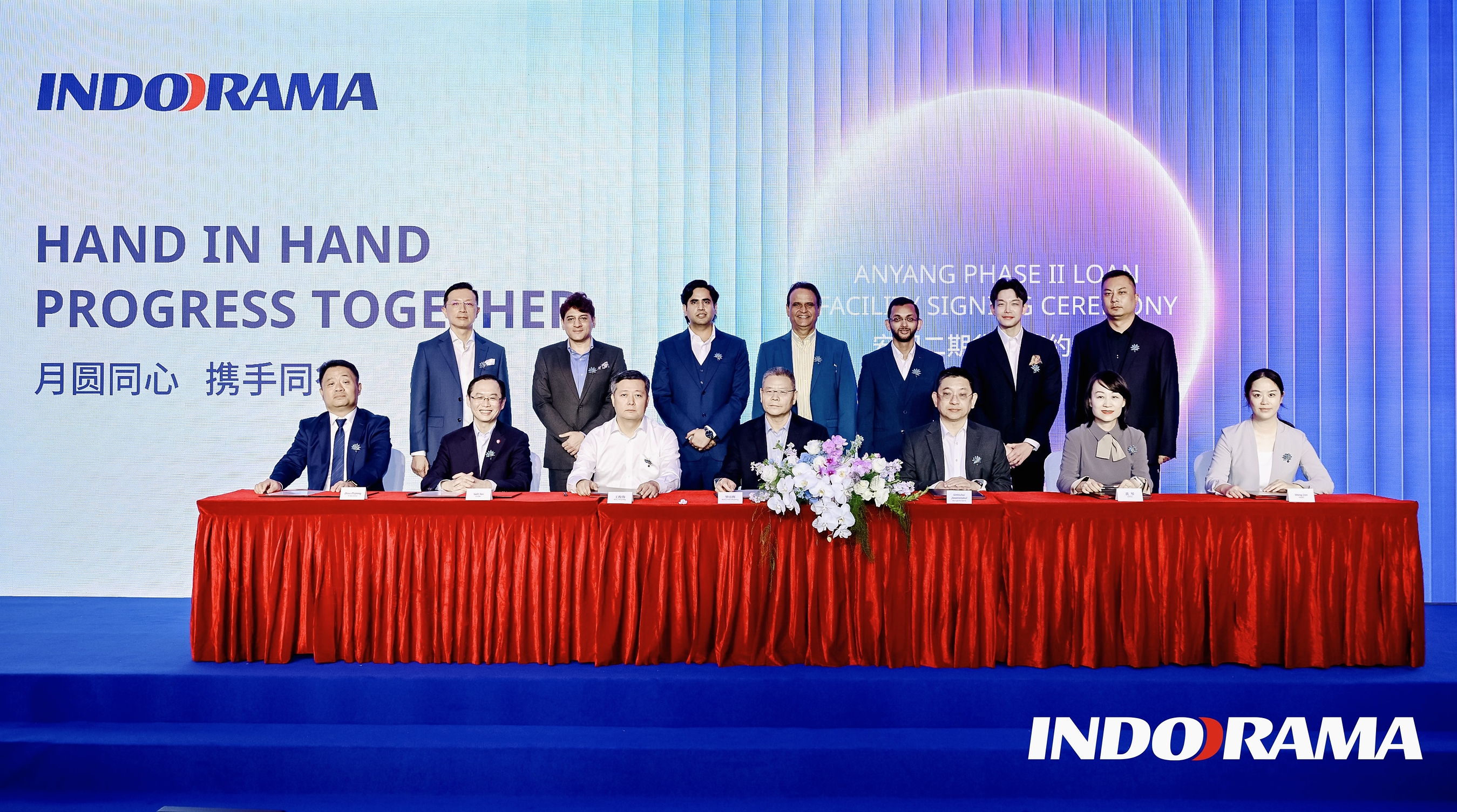
Anyang Indorama Gases Co., Ltd., a wholly owned subsidiary of Singapore-headquartered Indorama Corporation, has closed a RMB 2.4 billion (approximately $358 million) long-term syndicated loan facility with five Chinese and international banks to finance a Phase II urea fertilizer capacity expansion at its Anyang City site in Henan Province. The deal marks the group's most significant capital commitment in China since it acquired the Anyang nitrogen fertilizer business earlier this year.
The Numbers
The facility is structured to partially fund construction and development of the Henan expansion, with OCBC Bank Limited serving as coordinator and facility agent and Sumitomo Mitsui Banking Corporation (China) Limited acting as security agent. Lending banks include Bank of China Limited, Bank of Communications Co., Ltd., Bangkok Bank (China) Company Limited, and China CITIC Bank Co., Ltd. On completion — targeted for 2029 — the site's urea production capacity, measured from syngas and ammonia inputs, is projected to roughly double to approximately 2 million tonnes per annum. Indorama currently ranks as the fifth-largest global private fertilizer producer and the largest urea producer in Sub-Saharan Africa.
Why It Matters for Food Security
Urea is the world's most widely traded nitrogen fertilizer and a critical upstream input for grain and row-crop agriculture. A doubling of capacity at Anyang would meaningfully reinforce China's domestic fertilizer supply at a time when global nitrogen markets remain sensitive to energy price volatility and trade-policy disruptions. More energy-efficient production processes planned for the expanded site align with Beijing's push to reduce industrial emissions while maintaining agricultural self-sufficiency — a strategic priority that has shaped fertilizer policy in China for more than a decade. For food and agribusiness supply chains sourcing from or selling into China, expanded domestic urea output reduces import dependency and can dampen spot-price spikes that flow through to farm-gate input costs.
Outlook and Strategy
Amit Lohia, Group Vice Chairman of Indorama Corporation, said the transaction "strengthens our fertilizer platform in one of the world's most important markets and reinforces our commitment to supporting global food security." The Henan expansion is a brownfield project, leveraging existing infrastructure at the acquired Anyang site, which typically compresses both construction timelines and capital intensity relative to greenfield builds. Chai Wei Joo, Country Head (China) at Indorama Corporation, indicated the group intends to continue investing in China beyond this project. OCBC Bank's Seth Tan, Managing Director and Head of Corporate Banking China, noted a 14-year institutional relationship with Indorama underpins the bank's participation. Indorama's broader manufacturing footprint spans 38 countries and more than 100 sites across Asia, Europe, Africa, and North America, with aggregate revenues exceeding $20 billion. The fertilizer segment — covering nitrogen, phosphate, and related agricultural inputs — sits alongside polyolefins, textiles, and industrial chemicals as a core vertical for the group. The Anyang expansion reinforces the company's position as a key supplier to agricultural and agri-food supply chains across Asia, a theme increasingly tracked by food commodity and ingredient markets analysts.
Written by Michael Politz, Author of Guide to Restaurant Success: The Proven Process for Starting Any Restaurant Business From Scratch to Success (ISBN: 978-1-119-66896-1), Founder of Food & Beverage Magazine, the leading online magazine and resource in the industry. Designer of the Bluetooth logo and recognized in Entrepreneur Magazine's "Top 40 Under 40" for founding American Wholesale Floral, Politz is also the Co-founder of the Proof Awards and the CPG Awards and a partner in numerous consumer brands across the food and beverage sector.