
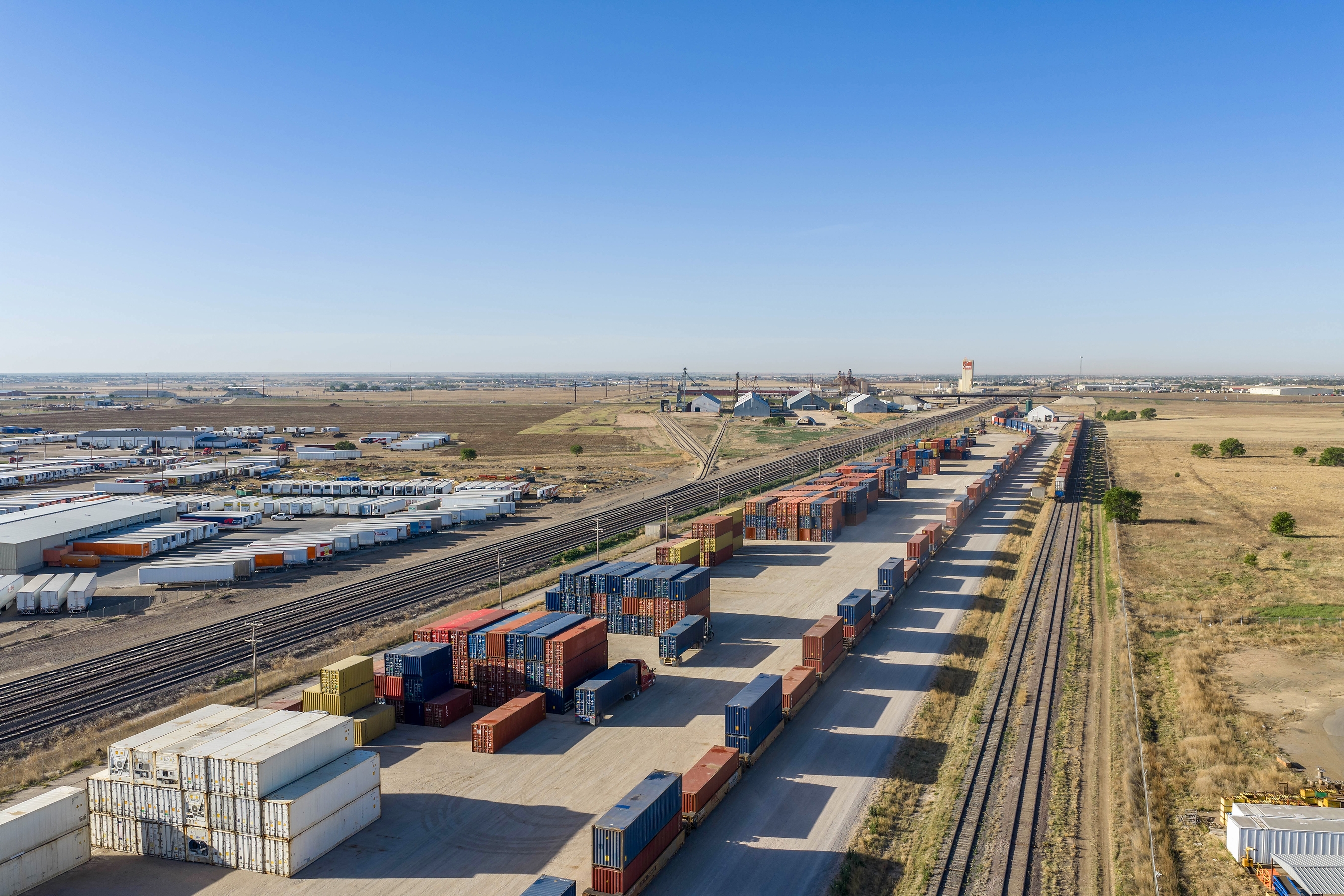
InfraRed Capital Partners has acquired a majority stake in Rail Modal Group (RMG), an inland intermodal rail terminal and export logistics platform that serves agricultural producers and processors across the U.S. Midwest and Plains. Financial terms were not disclosed. The deal gives the Albany, N.Y.-based company access to the $13.0 billion equity platform of InfraRed, an international mid-market infrastructure asset manager, as it pursues a planned expansion of capacity and geographic reach.
The Platform
Founded in 2018 by Greg Oberting — who retains an equity stake and continues as chief executive — RMG owns and operates four large-scale inland terminals that link regional shippers to the North American Class I rail network and major U.S. gateway ports. The company consolidates containerized freight onto full-length, 100-plus-car unit trains with on-dock service into West Coast container ports. Since inception, RMG has shipped more than 1,200 unit trains, the equivalent of roughly 200 million truck miles.
The model addresses a structural gap in U.S. agricultural logistics. Agriculture is a $1.5 trillion sector, yet much of domestic production is concentrated far from marine export terminals and established intermodal hubs. RMG's transloading service converts available inbound container capacity into outbound export movements, reducing transportation costs and broadening market access for producers and processors who would otherwise face lengthy drayage to coastal ports. Intermodal rail transloading handles more than 20 million containers in the U.S. annually, and rail accounts for over 40.0% of long-distance domestic freight movement — a share that has drawn sustained infrastructure investment from both private equity and specialist asset managers in recent years.
Why It Matters
For food and beverage operators and agribusiness shippers, the transaction signals continued institutional appetite for the inland logistics infrastructure underpinning U.S. agricultural export supply chains. Containerization preserves product identity and integrity, a material consideration for grain, pulse, and specialty-crop exporters competing on provenance in overseas markets. RMG's scale — unit trains rather than mixed manifest shipments — offers shippers schedule reliability and cost predictability that road-dependent alternatives cannot match.
Filip Guz, Partner and Head of Americas Investments at InfraRed, said the platform had built "a differentiated network, strong customer relationships and a compelling pipeline of growth opportunities." Oberting framed the investment as validation of RMG's role in the North American supply chain and cited InfraRed's experience scaling infrastructure platforms as central to selecting the firm as a partner.
Expansion Plans
Growth capital will be deployed across three priorities: expanding capacity and resilience at existing terminals, broadening service capabilities, and developing additional terminal locations. No specific site targets or capital commitment figures were disclosed. The strategy mirrors a broader pattern in agricultural supply-chain infrastructure investment, where asset managers have increasingly treated inland intermodal terminals as essential, regulated-asset-adjacent businesses with long-duration revenue visibility.
InfraRed, which is part of SLC Management — the institutional alternatives arm of Sun Life — manages equity capital across core and value-add fund strategies from offices in London, Frankfurt, Madrid, New York, Sydney, and Seoul. The RMG transaction falls within one of its value-add funds. For trade coverage of export logistics trends shaping U.S. foodservice and ingredient supply chains, operators should monitor capacity additions at West Coast gateway ports, where RMG's on-dock unit-train service terminates.
Written by Michael Politz, Author of Guide to Restaurant Success: The Proven Process for Starting Any Restaurant Business From Scratch to Success (ISBN: 978-1-119-66896-1), Founder of Food & Beverage Magazine, the leading online magazine and resource in the industry. Designer of the Bluetooth logo and recognized in Entrepreneur Magazine's "Top 40 Under 40" for founding American Wholesale Floral, Politz is also the Co-founder of the Proof Awards and the CPG Awards and a partner in numerous consumer brands across the food and beverage sector.