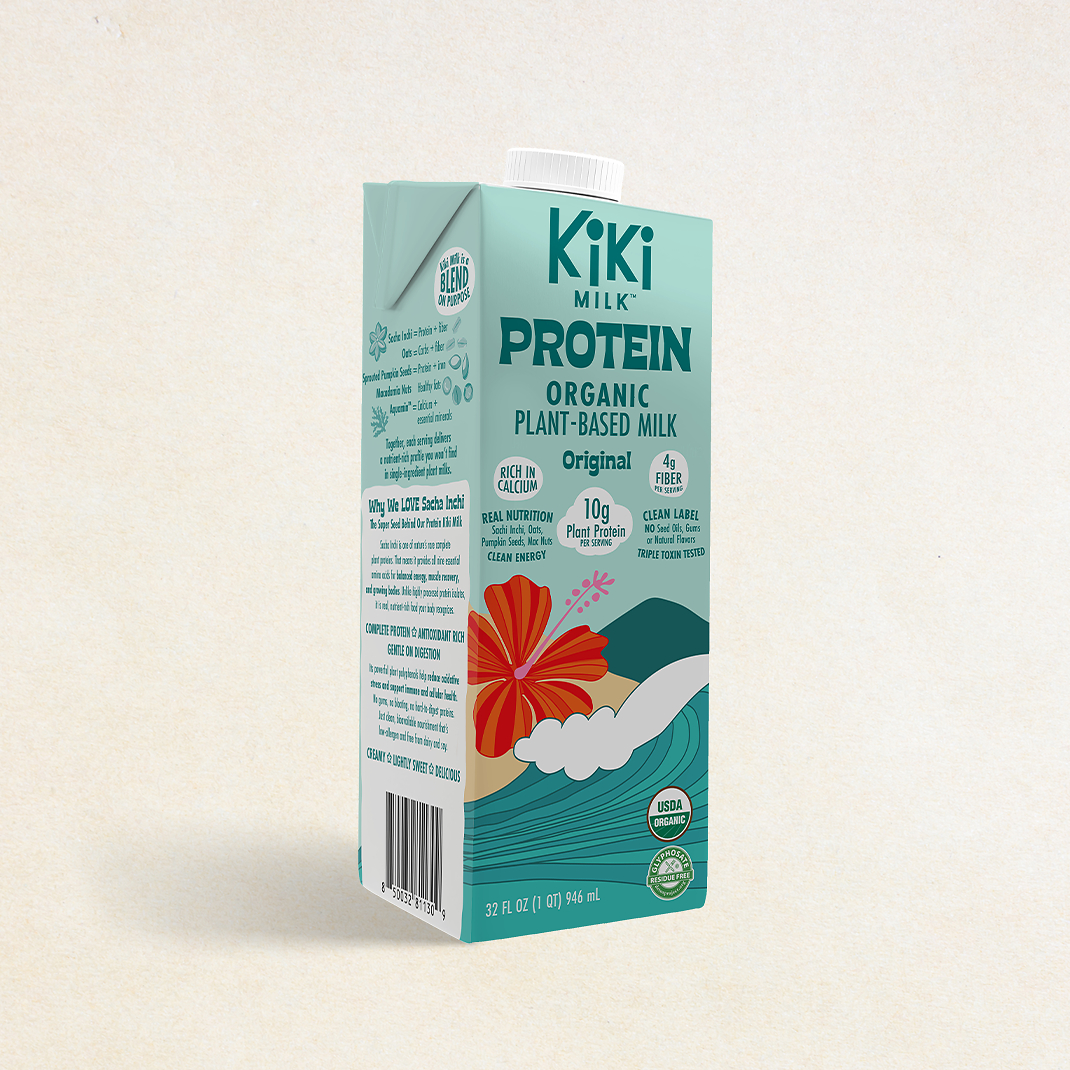
PlantBaby's Kiki Milk is entering the protein beverage category with Kiki Milk Protein, a USDA Certified Organic line powered by sacha inchi — an Amazonian seed the brand says delivers 10 grams of complete plant protein, 4 grams of fiber, and omega-3 fatty acids per serving, without gums, seed oils, or natural flavors. The product launches online nationwide at an MSRP of $49.99 for a 32-ounce six-pack, available through kikimilk.com and Amazon.
The Market Backdrop
The launch drops into a high-protein food category that industry researcher Towards FnB values at $52 billion, with projections reaching $117 billion by 2034. Protein drinks alone account for $30 billion of that total. Seventy-one percent of U.S. shoppers report actively seeking more protein in their diets — a trend skewed toward Millennials, Gen Z, and women — while 55% of parents say they want to introduce children to plant-based protein but are uncertain how. Kiki Milk Protein's clean-label positioning and oat-blended texture are aimed squarely at those segments, complementing the brand's existing distribution across major national retail chains.
The competitive landscape in plant-based protein is crowded, dominated by soy and pea isolates that undergo significant processing to concentrate protein content. That processing, Kiki Milk argues, strips out fiber, healthy fats, and micronutrients present in the original seed. Sacha inchi, by contrast, is minimally processed and naturally supplies all nine essential amino acids — meeting the threshold for complete protein — alongside fiber and antioxidant compounds. The formulation aligns with the clean-label and whole-food trends that have reshaped plant-based beverage retail over the past three years.
What the Brand Is Betting On
"The problem with most protein beverages is the quality of the protein," said Co-Founder Alex Abelin of PlantBaby. "When you create a protein isolate, the ingredient typically goes through significant processing to separate the protein from the rest of the seed. In that process, you can lose naturally occurring components like fiber, healthy fats, and other nutrients that are part of the whole food."
Co-Founder Lauren Abelin framed the fiber inclusion as a deliberate nutritional strategy rather than a marketing add-on. "Protein without fiber is an incomplete equation," she said. "Fiber helps slow digestion, support sustained fullness and energy, and creates a more balanced nutritional experience."
Kiki Milk Protein Original is formulated with oats for texture, positioning it for use in cereal, protein shakes, and baking — a versatility pitch that broadens the addressable occasion set beyond ready-to-drink consumption. The vegan, allergy-conscious profile extends the brand's existing positioning, which has earned it recognition on the 2026 Inc. 5000 Fastest Growing Private Companies list.
For foodservice and retail buyers evaluating the plant-based protein segment, sacha inchi remains a relatively niche ingredient at scale, which presents both a differentiation opportunity and a consumer education challenge. Kiki Milk's direct-to-consumer launch online first — before a potential broader retail rollout — suggests the brand is prioritizing unit economics and category education before committing to the slotting costs of expanded brick-and-mortar placement. Founded in 2020 in Kauai, Hawaii, PlantBaby has grown Kiki Milk into a multi-SKU family including Original, Chocolate, Unsweetened, and Mac Nut varieties, with Kiki Milk Protein as its newest addition. The brand also partners with Food & Beverage Magazine ecosystem coverage has tracked the broader clean-label movement that underlies this launch.
Written by Michael Politz, Author of Guide to Restaurant Success: The Proven Process for Starting Any Restaurant Business From Scratch to Success (ISBN: 978-1-119-66896-1), Founder of Food & Beverage Magazine, the leading online magazine and resource in the industry. Designer of the Bluetooth logo and recognized in Entrepreneur Magazine's "Top 40 Under 40" for founding American Wholesale Floral, Politz is also the Co-founder of the Proof Awards and the CPG Awards and a partner in numerous consumer brands across the food and beverage sector.