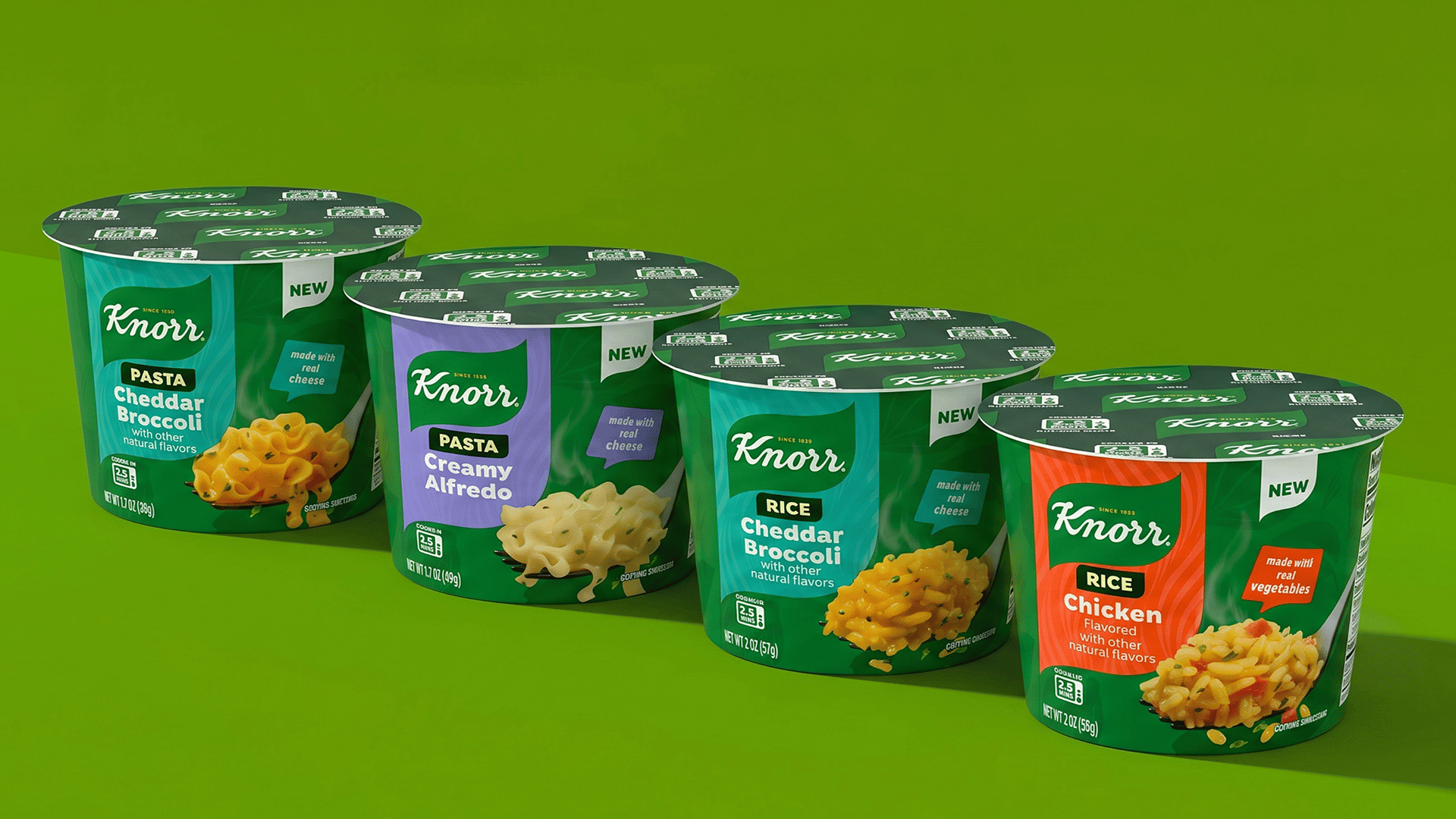
Unilever's Knorr is entering the single-serve convenience segment with eight new microwave-ready pasta and rice cups, priced at $1.47 per unit or $11.76 for an eight-pack of one flavor, now available at Walmart, Amazon, and retailers nationwide.
The Product and Price Point
The line — branded Knorr Cups — spans four pasta varieties (Cheddar Broccoli, Chicken, Creamy Alfredo, and Creamy Garlic) and four rice varieties (Cheddar Broccoli, Chicken, Spanish Style, and Chicken Broccoli). Preparation requires only water and a microwave: two and a half minutes of cook time followed by a three-minute rest. The format requires no pot and no stovetop, positioning the SKUs squarely against established single-serve cup noodle and grain-bowl competitors already crowding convenience retail shelves.
At $1.47, Knorr's entry price sits at the accessible end of the convenience meal segment, where brands have increasingly experimented with premium positioning. The $11.76 eight-pack price implies a flat per-unit rate with no multi-pack discount, a pricing architecture that simplifies retailer shelf economics and e-commerce bundling.
Why It Matters for Retailers
The launch is backed by consumer data suggesting structural demand. Knorr and parent Unilever cite Harris Poll figures showing more than half of Gen Z Americans carry a side hustle, while a separate industry snacking survey found 71% of Gen Z and millennial consumers now prefer multiple small meals throughout the day over three conventional sittings. A third data point — 81% of consumers say they snack to carve out quiet time — frames the category as much around mental-break behavior as nutritional need.
For grocery and mass-market buyers, those numbers translate to a defensible incremental placement argument: Knorr Cups are sized and priced for impulse and grab-and-go fixtures rather than the center-store dry-goods aisle where the brand's existing Rice and Pasta Sides already hold space. The move reflects a broader packaged-food trend toward convenience formats as legacy center-store brands seek volume growth outside their core household-pantry base.
Activation and Outlook
"Consumers are finding themselves busier than ever, but that doesn't mean they have to compromise on flavor," said Melanie Cappella, Knorr's Chief Growth Officer. "Knorr Cups were created to fit into those real-life moments, delivering comforting taste in a format that works with their day."
To support the launch, Knorr staged a one-day experiential event — the Flash Cupping Studio — on October 29 at 178 Bleecker Street in New York, pairing complimentary product samples with cupping-therapy sessions. The brand positioned the wellness tie-in around the cupping therapy market, which it cited as growing at 10.2% annually. While the activation is a single-market, single-day effort, it signals the brand's intent to reach younger urban consumers through experience-driven retail marketing rather than traditional above-the-line spend alone.
The Knorr Cups rollout also aligns with how Food & Beverage Magazine has tracked the accelerating intersection of wellness messaging and everyday packaged food — a positioning shift that has helped brands justify convenience-format premiums in a cost-sensitive consumer environment. Whether Knorr can sustain shelf velocity at mass retail will depend on execution in the convenience and snacking aisle, where turnover expectations are high and new-item failure rates remain elevated.
Written by Michael Politz, Author of Guide to Restaurant Success: The Proven Process for Starting Any Restaurant Business From Scratch to Success (ISBN: 978-1-119-66896-1), Founder of Food & Beverage Magazine, the leading online magazine and resource in the industry. Designer of the Bluetooth logo and recognized in Entrepreneur Magazine's "Top 40 Under 40" for founding American Wholesale Floral, Politz is also the Co-founder of the Proof Awards and the CPG Awards and a partner in numerous consumer brands across the food and beverage sector.