
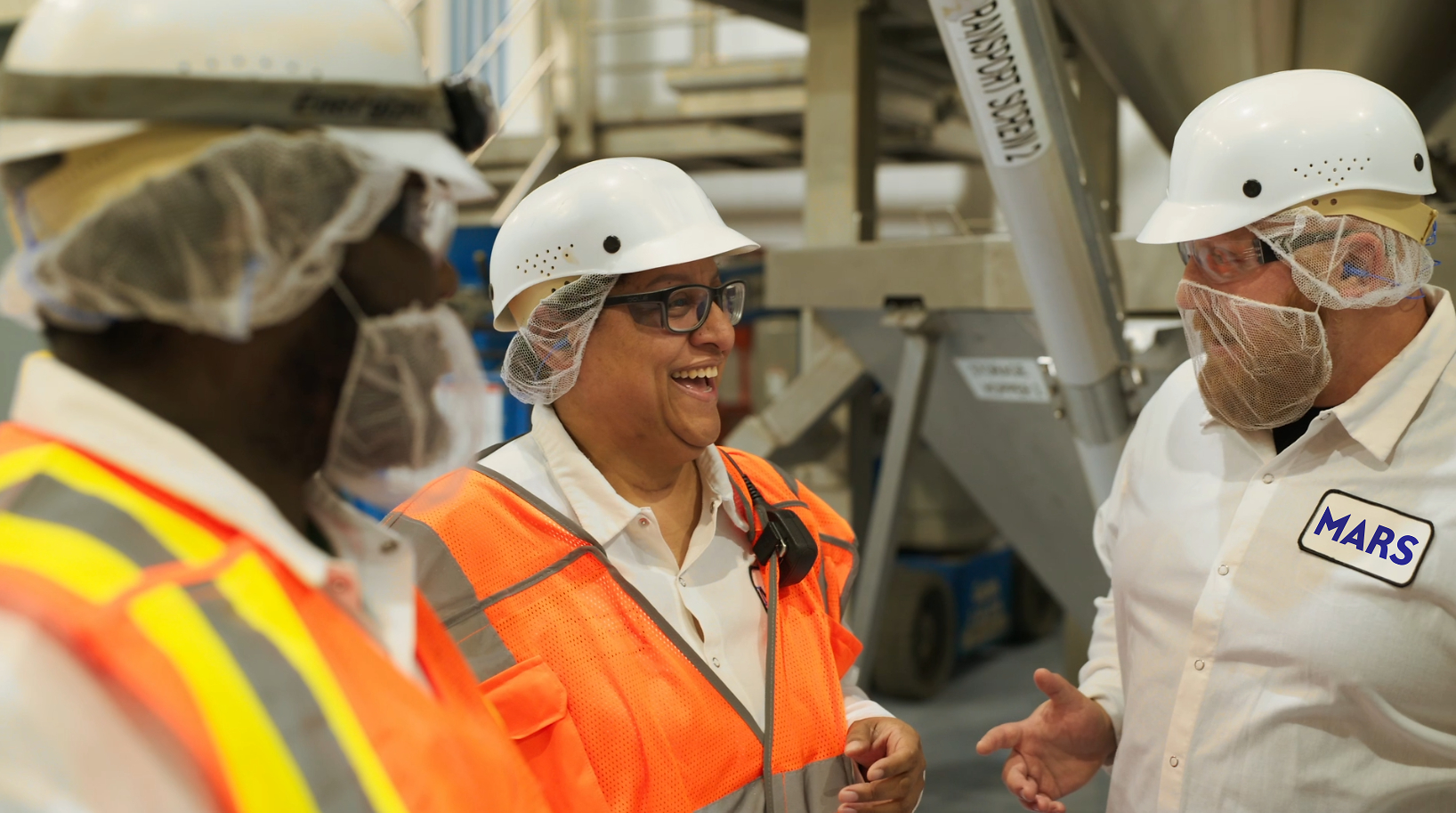
Mars, Incorporated will commit an estimated $1.4 billion to its U.S. manufacturing and operations footprint in 2027 — the largest single-year capital outlay in the company's 115-year history — targeting candy production, frozen snacking, wet pet food, and veterinary hospital expansion.
The announcement extends a decade-long domestic investment programme that has exceeded $9 billion since 2017. With 94% of Mars products sold in the United States made domestically, the company frames the commitment as both a supply-chain resilience play and a growth accelerator for a portfolio that now includes Kellanova brands following last year's acquisition.
The Numbers
Three discrete 2026 capital projects illustrate the scale of spending already under way. Mars invested $60 million to add two dedicated manufacturing lines for its Trü Frü® frozen-fruit brand inside a $240 million Salt Lake City factory opened in 2025. That facility — anchored by Nature's Bakery snack-bar production at a rate exceeding 1 billion bars per year — will now carry capacity for 17 million Trü Frü frozen products annually. In Waco, Texas, Mars has channelled $165 million into its candy complex since 2024, a site that turns out more than 56 billion pieces of SNICKERS®, STARBURST®, and SKITTLES® each year and recently powered the launch of SNICKERS Xtreme Almond and STARBURST Sour lines. A separate $49 million investment in a Columbus, Ohio wet pet-food plant brings U.S. production of TEMPTATIONS® Lickable Treats online for the first time, adding capacity for more than 400 million pouches annually; total capital deployed at that site since 2022 stands at $162 million.
Veterinary Expansion
Beyond factory floors, more than $34 million of the 2027 budget is earmarked for four new Mars Veterinary Health hospitals. Three BluePearl™ Pet Hospitals will open in Ellicott City, Maryland, and in Austin and Katy, Texas; a Banfield® Pet Hospital will follow in Wilmington, North Carolina. The facilities are expected to create up to 195 jobs and add emergency and specialty care capacity in markets the company identifies as under-served. Mars already operates more than 2,000 veterinary clinics and hospitals across the country, a network built through the BluePearl, Banfield, VCA, and AniCura brands.
What It Means for the Sector
The investment lands at a moment when large food manufacturers are under pressure to demonstrate domestic supply-chain depth amid ongoing trade-policy uncertainty. For Mars, the Kellanova integration — which added 15 U.S. facilities — amplifies that imperative. Claus Aagaard, Chief Financial Officer of Mars, Incorporated, said the commitment is designed to expand manufacturing capabilities, accelerate portfolio growth, and ensure the company can "meet the evolving needs of consumers for generations to come."
For the broader snacking and confectionery sector, the announcement signals that well-capitalised, privately held operators retain the balance-sheet flexibility to pursue long-cycle factory investment even as publicly traded peers manage quarterly earnings pressure. The parallel push into pet food and veterinary services underscores Mars's strategy of treating animal health as a growth vertical with comparable investment priority to its consumer food brands.
Mars employs 80,000 U.S. associates across more than 60 factories, research labs, and offices. The company did not provide a breakdown of the $1.4 billion by business segment or geography beyond the specific projects disclosed.
Written by Michael Politz, Author of Guide to Restaurant Success: The Proven Process for Starting Any Restaurant Business From Scratch to Success (ISBN: 978-1-119-66896-1), Founder of Food & Beverage Magazine, the leading online magazine and resource in the industry. Designer of the Bluetooth logo and recognized in Entrepreneur Magazine's "Top 40 Under 40" for founding American Wholesale Floral, Politz is also the Co-founder of the Proof Awards and the CPG Awards and a partner in numerous consumer brands across the food and beverage sector.