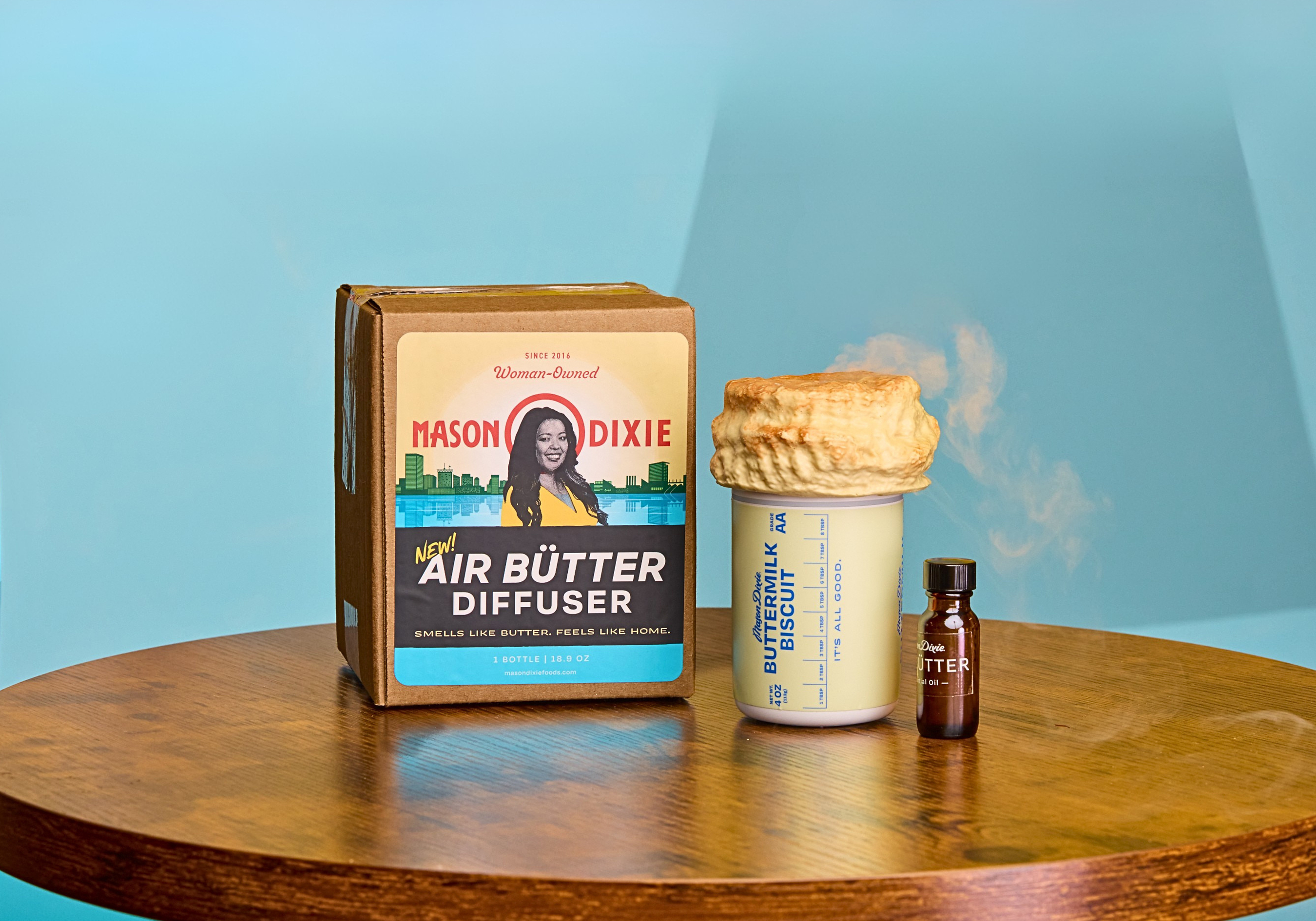
Mason Dixie Foods, the Baltimore-based frozen comfort food brand stocked in more than 8,000 retail locations, is pushing into seasonal lifestyle merchandise with the launch of a $35 Air Bütter Diffuser — a scented diffuser shaped like a butter stick and biscuit that ships immediately while supplies last.
The Product
The direct-to-consumer item, available exclusively at masondixiefoods.com, fills rooms with a warm-butter fragrance via scented oil poured into a biscuit-shaped reservoir. The form factor is a deliberate callback to the brand's core product identity: every Mason Dixie biscuit is made with real butter and no artificial additives, a positioning the company has used to build distribution at Whole Foods Market, Costco, Sprouts, Kroger, and Giant, among others.
The move is a small but strategically legible one. Consumer packaged goods brands in the frozen and refrigerated food aisles have increasingly pursued brand-extension novelties — particularly around the holidays — to generate earned media, deepen household familiarity, and drive direct-to-consumer revenue outside the grocery channel. A $35 price point positions the item as an impulse gift rather than a considered purchase, keeping the barrier to trial low during peak retail gifting weeks.
Brand Origins
Founder and Chief Executive Ayeshah Abuelhiga launched Mason Dixie Biscuit Co. in 2014 as a Washington, D.C., pop-up where scratch-made biscuits sold out daily. Demand prompted her to freeze batches in advance; retail customers soon began purchasing bags to bake at home, and the frozen line followed. That origin story — real ingredients, no preservatives, no corn syrup, no artificial colors or gums — remains central to the brand's retail pitch and is woven into the diffuser's marketing narrative.
"That warm, buttery smell is what makes a house feel like the holidays," Abuelhiga said. "The Air Bütter Diffuser keeps it in the air all season long, so the whole house feels like you've been baking for days."
What It Signals
For a brand that has scaled primarily through conventional grocery and club-store distribution, a direct-to-consumer seasonal drop is a meaningful channel experiment. It allows Mason Dixie to capture full margin on a low-volume, high-visibility item while building a first-party customer list — data that can inform future launches and promotional targeting outside the retailer-controlled environment.
The limited-quantity constraint also creates urgency that standard frozen SKUs cannot replicate on shelf. Comparable holiday novelty plays by food brands — from hot sauce ornaments to branded kitchen accessories — have demonstrated measurable social-media lift that translates into broader brand awareness among the same premium-grocery consumer segment Mason Dixie targets. Whether the diffuser moves enough units to justify a repeat holiday SKU will likely depend on how effectively the brand converts seasonal buzz into measurable retail velocity data.
For more on how frozen food brands are navigating the direct-to-consumer channel, see our coverage of frozen food retail trends and CPG brand extension strategies.
Written by Michael Politz, Author of Guide to Restaurant Success: The Proven Process for Starting Any Restaurant Business From Scratch to Success (ISBN: 978-1-119-66896-1), Founder of Food & Beverage Magazine, the leading online magazine and resource in the industry. Designer of the Bluetooth logo and recognized in Entrepreneur Magazine's "Top 40 Under 40" for founding American Wholesale Floral, Politz is also the Co-founder of the Proof Awards and the CPG Awards and a partner in numerous consumer brands across the food and beverage sector.