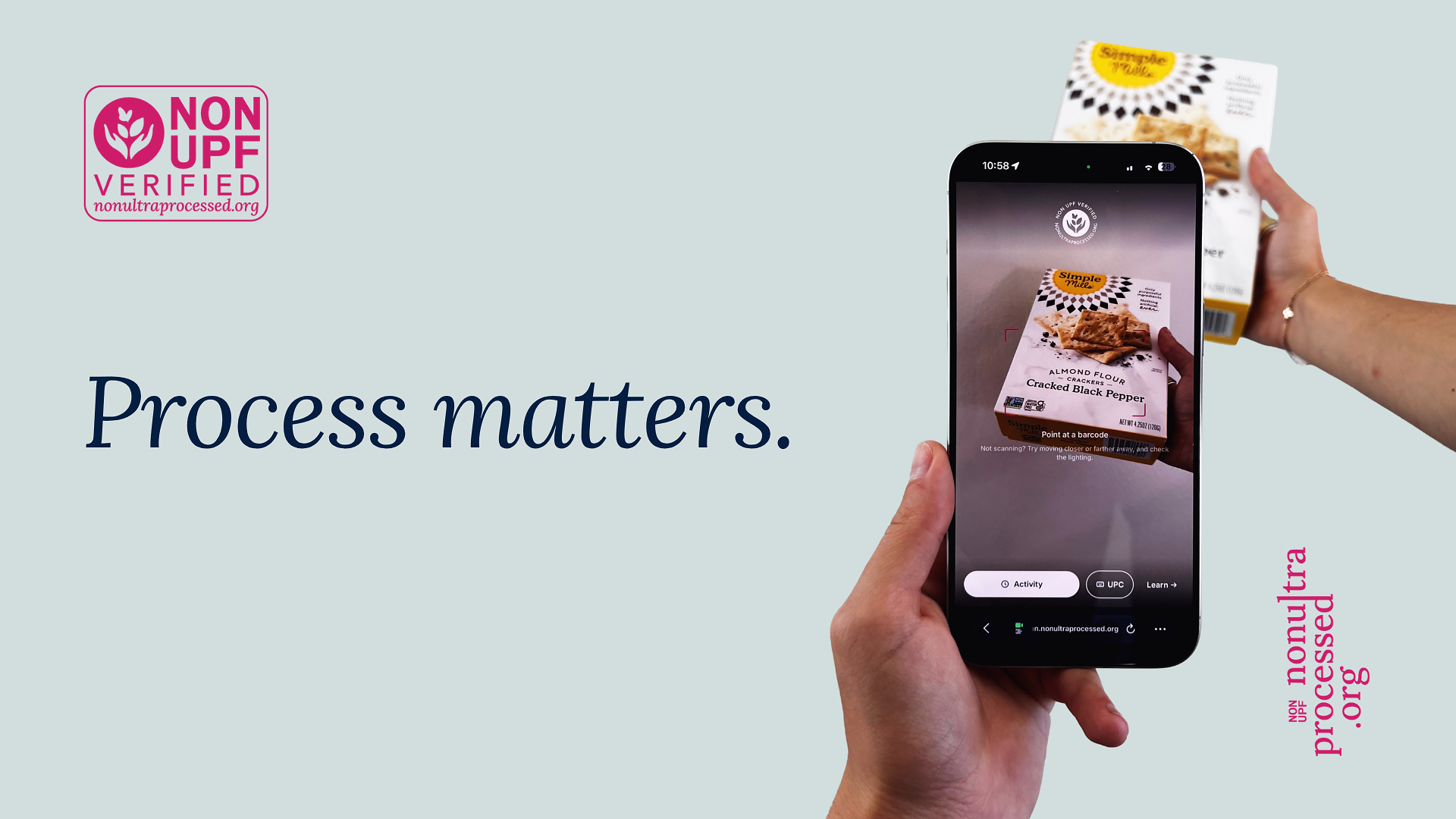
The Non-GMO Project has certified 304 products across 23 brands under its Non-UPF Verified program since enrollment opened on January 21, 2026 — a pace that puts the food-processing transparency initiative on track to expand well beyond its initial cohort before year-end. The organization simultaneously launched a dedicated iOS and Android app that lets shoppers scan barcodes, check verification status, and formally request that unverified brands pursue certification.
The Numbers
The 304 verified SKUs now span 15 food and beverage categories and include products from Amy's Kitchen, Simple Mills, Spindrift, and Chomps. A further 41 brands are actively seeking verification, suggesting the verified product count could grow meaningfully in coming months. The Non-GMO Project's broader network covers more than 5,000 food brands across North America — a distribution channel that gives the Non-UPF program a substantial runway for brand recruitment.
Standard and Methodology
Non-UPF Verified is positioned as the first independent, third-party certification to evaluate food processing methods rather than relying solely on ingredient lists or nutritional profiles. Under the program's standard, at least 70% of a product's ingredients must meet requirements for permissible minimal or moderate processing, and certain ingredients and processing techniques associated with ultraprocessed foods are restricted or prohibited outright. That methodology distinguishes the program from California's proposed AB 2244, which would establish a state-administered Non-Ultraprocessed Certified program based on ingredients and nutritional data visible on packaging. The Non-GMO Project argues that processing methods — which often leave no trace on the label — require direct engagement with food manufacturers and their supply chains to evaluate properly, drawing on nearly two decades of verification infrastructure built for its flagship Non-GMO Project Verified Butterfly seal, which appears on more than 63,000 products.
Policy Backdrop
The program's growth coincides with an accelerating national policy debate over how to define and regulate ultraprocessed foods. California's AB 2244, if signed into law, would create the first U.S. state-level certification framework for the category. For food manufacturers, the emergence of both regulatory and third-party verification tracks creates a compliance and marketing calculus that is likely to intensify as the ultraprocessed foods conversation moves from academic research into mainstream retail. Megan Westgate, CEO of the Non-GMO Project, framed the program's consumer app as a mechanism to translate that public awareness into actionable market signals. "Every request for verification signals to food brands that consumers want to be informed about how their food is made," Westgate said. The app's request feature is designed to surface latent shopper demand directly to food makers — a model the organization has previously used to scale Non-GMO Project Verified across tens of thousands of products.
For food and beverage operators and retailers evaluating consumer-facing transparency certifications, the speed of Non-UPF Verified's early enrollment suggests category demand is real. Brands in the natural and better-for-you food processing and supply chain segments, in particular, face growing pressure from retailers and shoppers alike to provide documentation of how products are made — not merely what they contain.
Written by Michael Politz, Author of Guide to Restaurant Success: The Proven Process for Starting Any Restaurant Business From Scratch to Success (ISBN: 978-1-119-66896-1), Founder of Food & Beverage Magazine, the leading online magazine and resource in the industry. Designer of the Bluetooth logo and recognized in Entrepreneur Magazine's "Top 40 Under 40" for founding American Wholesale Floral, Politz is also the Co-founder of the Proof Awards and the CPG Awards and a partner in numerous consumer brands across the food and beverage sector.