Grand Rapids, Michigan-based oHy has secured a nationwide listing at Target, placing its hydrogen-infused sparkling water in more than 800 stores across the United States — a distribution footprint that instantly transforms the startup from a regional curiosity into a mass-retail contender in the premium functional beverage segment.
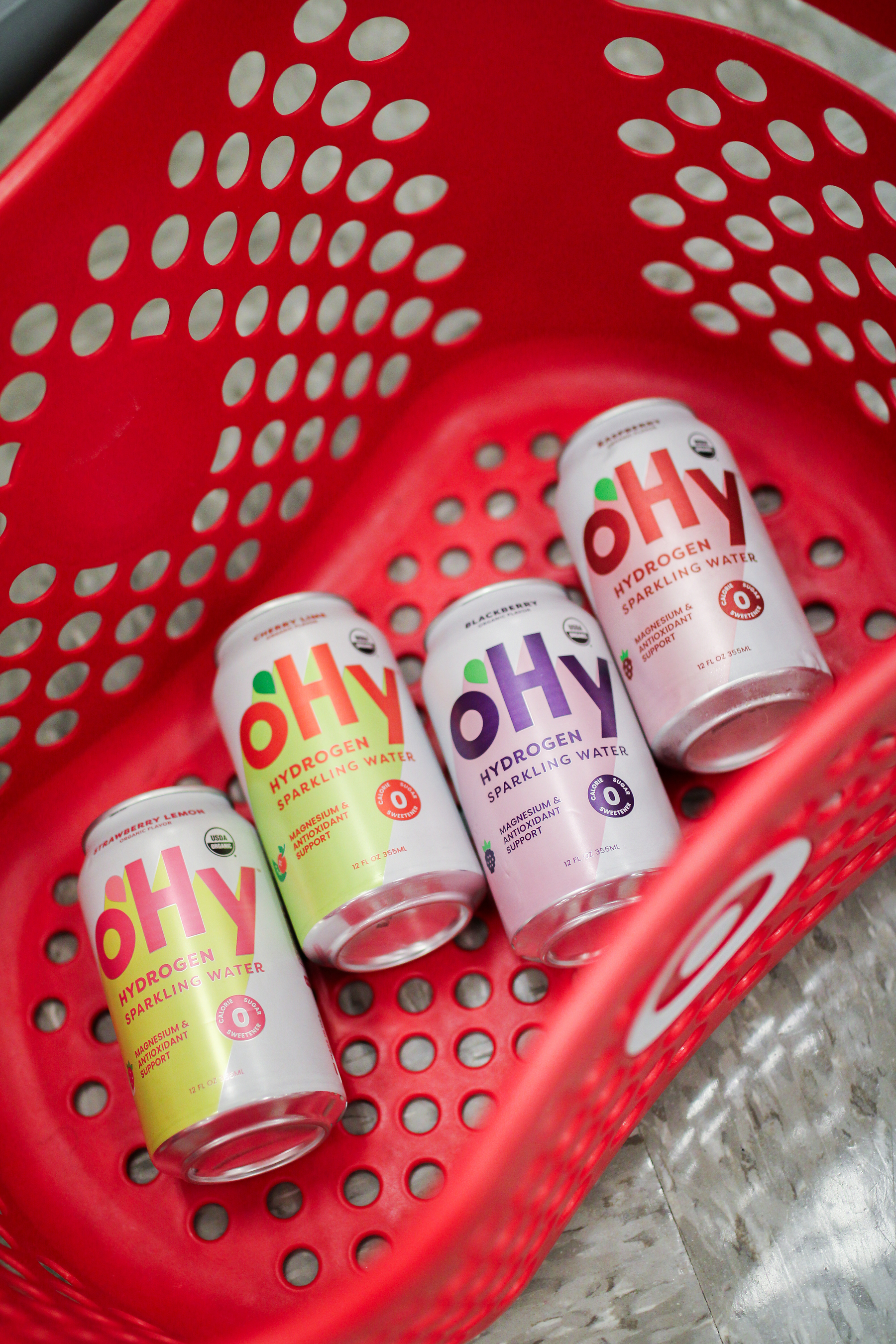
The launch makes oHy the first hydrogen beverage brand to appear on Target shelves, according to the company. Four USDA Organic SKUs — Blackberry, Raspberry, Cherry Lime, and Strawberry Lemon — are now stocked in the sparkling water aisle. Each variety carries zero sugar and zero calories, positioning the line directly against the expanding field of better-for-you sparkling waters from brands such as Spindrift and Waterloo, while differentiating on the molecular-hydrogen platform.
The Product Proposition
oHy's process uses ultra-purified water combined with magnesium and organic fruit flavors to generate molecular hydrogen, which the company describes as the smallest antioxidant element. The brand claims the formulation supports natural energy, cognitive focus, and post-exercise recovery — a trio of functional claims that maps closely onto wellness positionings gaining traction across the functional beverage and sports-hydration categories. The cans are produced via a patented infusion process and carry Non-GMO Project Verification alongside the USDA Organic seal, credentials that resonate with Target's core health-conscious demographic.
Retail Strategy and Distribution
Securing a Target listing at scale is a meaningful commercial milestone for an emerging beverage brand. Target's grocery and beverage aisles attract an estimated 30 million weekly shoppers, giving oHy immediate access to a broad, health-focused consumer base without the fragmented broker-led rollout that typically characterizes natural-channel launches. The move follows a pattern seen across the better-for-you beverage sector, where brands increasingly bypass specialty-natural retail as a first step and negotiate directly into mass and club channels to accelerate velocity and brand awareness.
To stimulate trial at shelf, oHy is running a limited-time introductory promotion: consumers who purchase six cans receive two free, with reimbursement processed via PayPal or Venmo upon submission of a Target receipt. Trial-driving mechanics of this kind are common at launch, as brands seek to convert first-time buyers into repeat purchasers before competitors can respond with shelf-space challenges.
"Launching at Target is an exciting milestone for oHy because it brings our mission to more people," said Trent Hartwig, Co-Founder and Chief Executive Officer of oHy. "We believe wellness should fit into everyday life, and Target gives us the opportunity to introduce more shoppers to a simple way to enjoy the antioxidant benefits of molecular hydrogen."
The hydrogen water subcategory remains nascent in the United States, with most distribution confined to specialty health retailers, direct-to-consumer channels, and select gym and wellness locations. A Target presence at this scale could accelerate mainstream consumer awareness of the format in a way that no prior retail placement has managed. How quickly the brand can build repeat-purchase rates — and whether Target extends the range to additional store count — will be the metrics to watch in the quarters ahead. As Food & Beverage Magazine has noted, mass-retail debuts can make or break emerging functional beverage brands depending on velocity data gathered in the first 90 days post-launch.
Written by Michael Politz, Author of Guide to Restaurant Success: The Proven Process for Starting Any Restaurant Business From Scratch to Success (ISBN: 978-1-119-66896-1), Founder of Food & Beverage Magazine, the leading online magazine and resource in the industry. Designer of the Bluetooth logo and recognized in Entrepreneur Magazine's "Top 40 Under 40" for founding American Wholesale Floral, Politz is also the Co-founder of the Proof Awards and the CPG Awards and a partner in numerous consumer brands across the food and beverage sector.