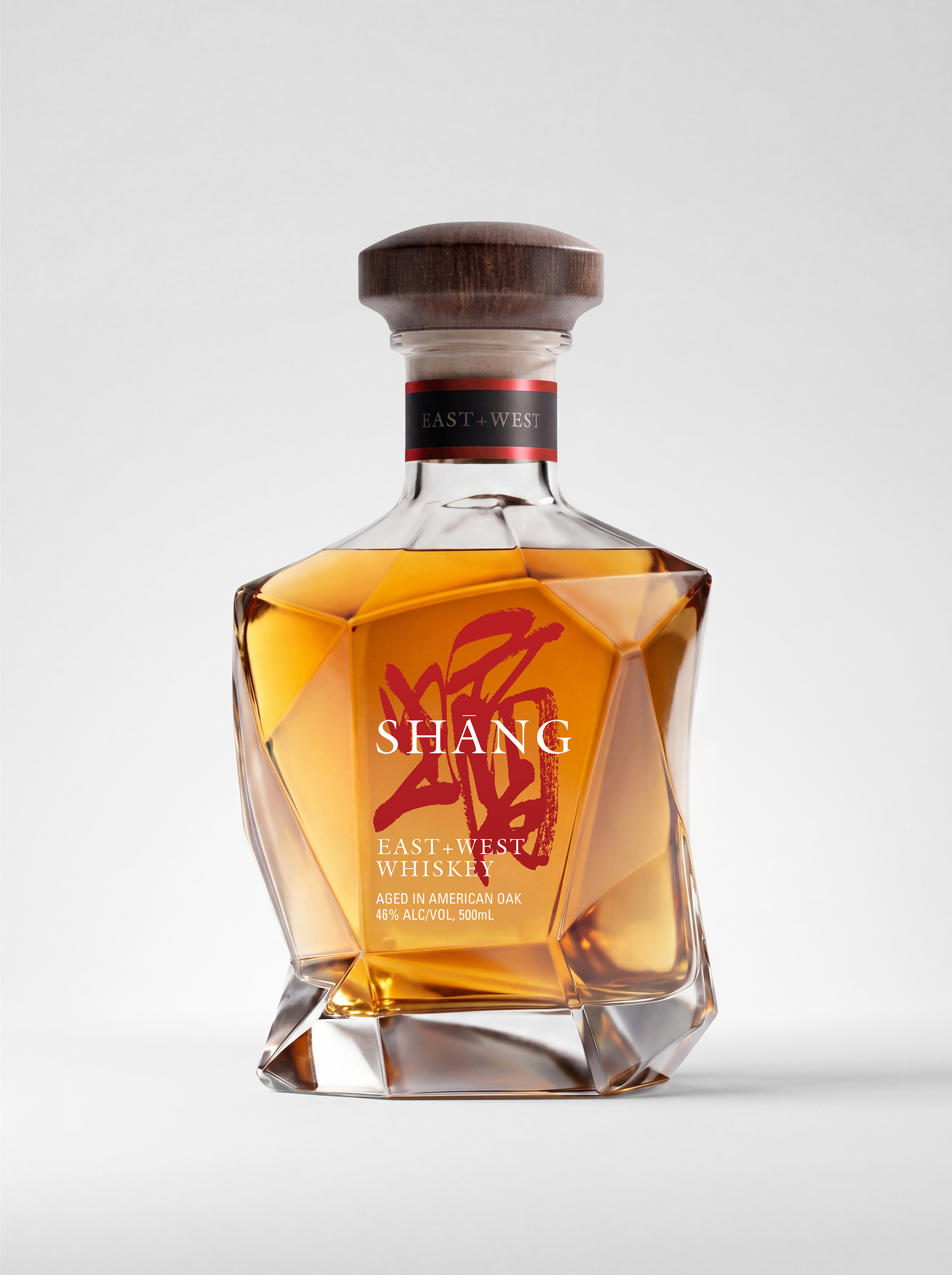
SHĀNG, a newly formed international spirits venture headquartered in Elizabethtown, Ky., has launched a baijiu-whiskey hybrid line it calls the first commercial product to formally blend Chinese baijiu tradition with American whiskey craftsmanship, the company announced on June 15.
The brand did not disclose production volumes, pricing, or distribution agreements at launch. It described the release as a "groundbreaking international collaboration" drawing on what it characterized as 5,000 years of baijiu-making heritage alongside contemporary Kentucky distilling techniques — a pairing that, if it finds shelf placement, would compete at the intersection of the global baijiu market, estimated by industry trackers at roughly $100 billion annually in China alone, and the U.S. whiskey segment, which posted approximately $5.1 billion in domestic producer revenues in 2024 according to the Distilled Spirits Council.
Baijiu, a clear grain spirit typically produced via solid-state fermentation and qu culture, carries flavor profiles — often described as funky, savory, or intensely aromatic — that diverge sharply from bourbon or rye. Whether a hybrid format can attract both category loyalists and crossover drinkers remains the central commercial question facing SHĀNG. Several prior attempts to introduce baijiu to Western consumers have stalled at the on-premise level, largely due to category unfamiliarity. SHĀNG appears to be betting that anchoring the product within a recognizable whiskey framework lowers that adoption barrier. The Kentucky geography reinforces the whiskey credibility signal, placing the brand within the country's most-recognized spirits appellation. Observers of the craft and artisan spirits segment will note that category-blending positioning has become an increasingly common launch strategy as producers seek differentiation in a crowded premium spirits landscape.
No financial backers, master distiller credits, or retail launch partners were named in the initial announcement. The company has not indicated whether the product will pursue a Distilled Spirits Plant designation under TTB rules that would require formal category classification — a regulatory question that carries labeling and marketing implications for any spirit that does not fit neatly into an established Standards of Identity. Investors tracking cross-cultural beverage M&A and brand formation have flagged the U.S.-China spirits corridor as underleveraged relative to food and non-alcoholic categories.
SHĀNG did not provide guidance on revenue targets, distribution timelines, or capitalization. F&B Industry News will update this report as additional commercial details become available. Food & Beverage Magazine, a sister publication covering product and lifestyle angles, has additional context on the baijiu category's U.S. trajectory.
Written by Michael Politz, Author of Guide to Restaurant Success: The Proven Process for Starting Any Restaurant Business From Scratch to Success (ISBN: 978-1-119-66896-1), Founder of Food & Beverage Magazine, the leading online magazine and resource in the industry. Designer of the Bluetooth logo and recognized in Entrepreneur Magazine's "Top 40 Under 40" for founding American Wholesale Floral, Politz is also the Co-founder of the Proof Awards and the CPG Awards and a partner in numerous consumer brands across the food and beverage sector.