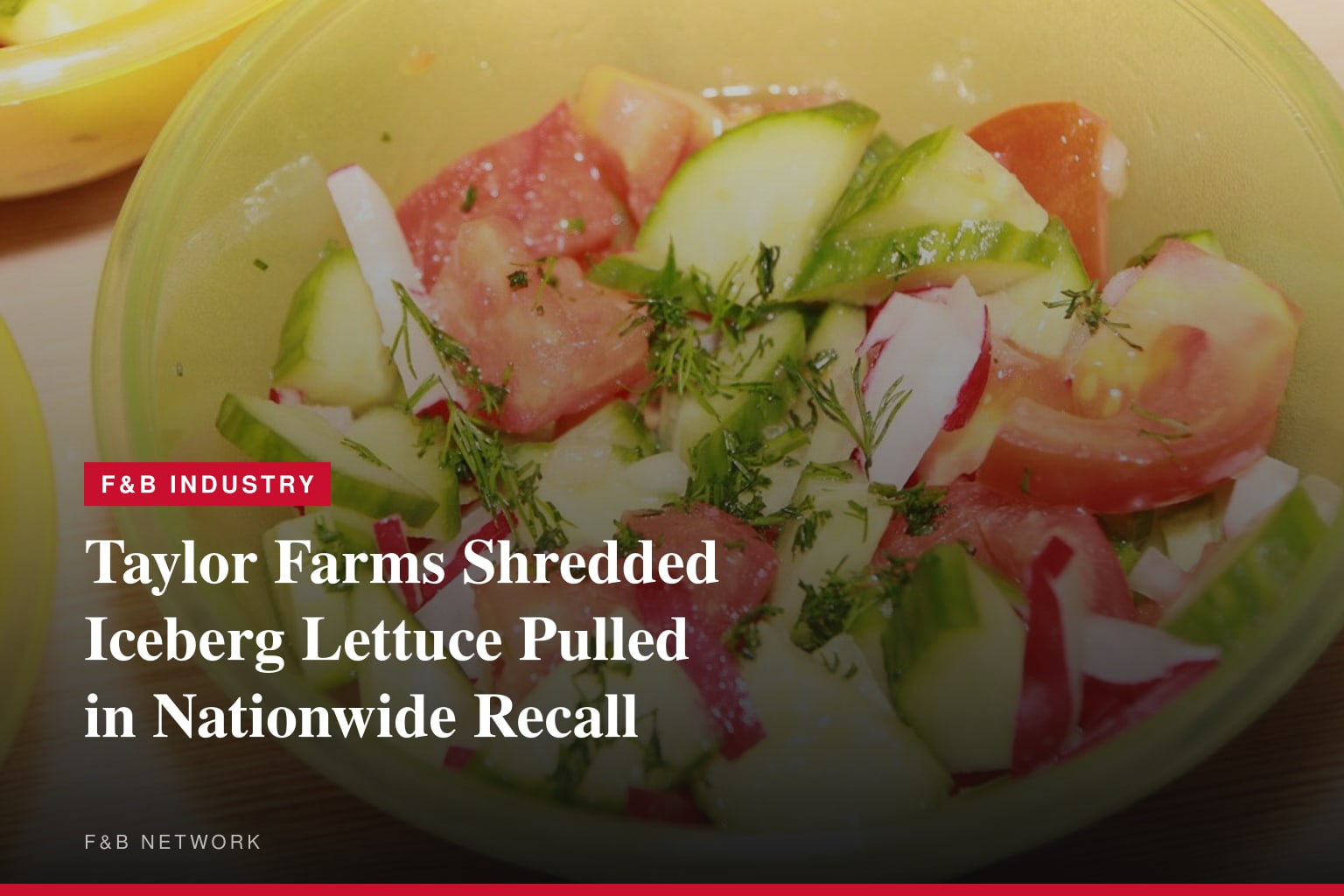
Taylor Farms has issued a nationwide recall of its shredded iceberg lettuce, a development flagged prominently by Philadelphia-based food-safety firm Fulginiti Law in the July edition of its Recall Field Report — a monthly public-alert initiative tracking significant product withdrawals with potential public-health consequences.
The recall adds to a string of fresh-cut produce withdrawals that have tested consumer confidence in the bagged salad and ready-to-eat category over the past several years. Taylor Farms is one of the largest fresh-cut vegetable suppliers in North America, with distribution reaching major grocery chains, foodservice operators, and club-store retailers nationwide, making the breadth of any recall particularly significant for supply-chain managers and retail buyers.
Why It Matters
Fresh-cut leafy greens have been among the most scrutinised segments by the U.S. Food and Drug Administration, particularly following high-profile E. coli and Listeria outbreaks tied to romaine, spinach, and pre-shredded blends over the past decade. A recall at the scale of a supplier with Taylor Farms' national footprint carries downstream implications for foodservice operators relying on just-in-time produce supply, as well as for retailers managing category resets and potential liability exposure.
For distributors and procurement teams, recalls of this kind typically trigger immediate supplier audits, accelerated testing of parallel SKUs, and a review of indemnification clauses in supply contracts. Food manufacturers and co-packers operating in the fresh-cut segment face heightened regulatory scrutiny during active recall windows, often resulting in unannounced facility inspections by federal or state authorities.
Regulatory and Legal Context
Fulginiti Law's Recall Field Report is positioned as a consumer-facing resource, but its monthly cadence also serves as an informal barometer for food-industry legal risk. Law firms specialising in food-safety litigation increasingly monitor voluntary recall activity as a precursor to class-action filings, particularly when a recalled product has wide retail distribution and a credible pathogen or contamination vector.
The Taylor Farms recall is the latest test of the Food Safety Modernization Act's preventive-controls framework, which requires fresh-produce facilities to maintain documented hazard-analysis plans and corrective-action protocols. Compliance gaps identified during a recall investigation can expose manufacturers to consent decrees or injunctions, carrying costs that dwarf the direct expense of a product withdrawal.
Operators sourcing fresh-cut lettuce for salad bars, sandwich programmes, or packaged meal kits are advised to verify lot numbers against the official FDA recall notice and to retain documentation of any disposal or return for audit purposes. The FDA's recall database remains the authoritative reference for affected UPCs and distribution dates.
For broader context on food-safety trends affecting the fresh-produce supply chain, see our coverage of leafy-greens regulatory developments and fresh-cut produce sourcing risk.
Written by Michael Politz, Author of Guide to Restaurant Success: The Proven Process for Starting Any Restaurant Business From Scratch to Success (ISBN: 978-1-119-66896-1), Founder of Food & Beverage Magazine, the leading online magazine and resource in the industry. Designer of the Bluetooth logo and recognized in Entrepreneur Magazine's "Top 40 Under 40" for founding American Wholesale Floral, Politz is also the Co-founder of the Proof Awards and the CPG Awards and a partner in numerous consumer brands across the food and beverage sector.