Tim Hortons has launched a six-item holiday menu tied to the Warner Bros. film ELF at participating U.S. restaurants, marking the quick-service chain's latest licensed entertainment partnership as it competes for seasonal beverage and snack occasions against larger rivals.
The lineup, available immediately, pairs the Tim Hortons brand with Warner Bros. Consumer Products across both food and packaging — a strategy increasingly common among QSR operators seeking pop-culture lift during the high-traffic November-to-January window.
The Menu
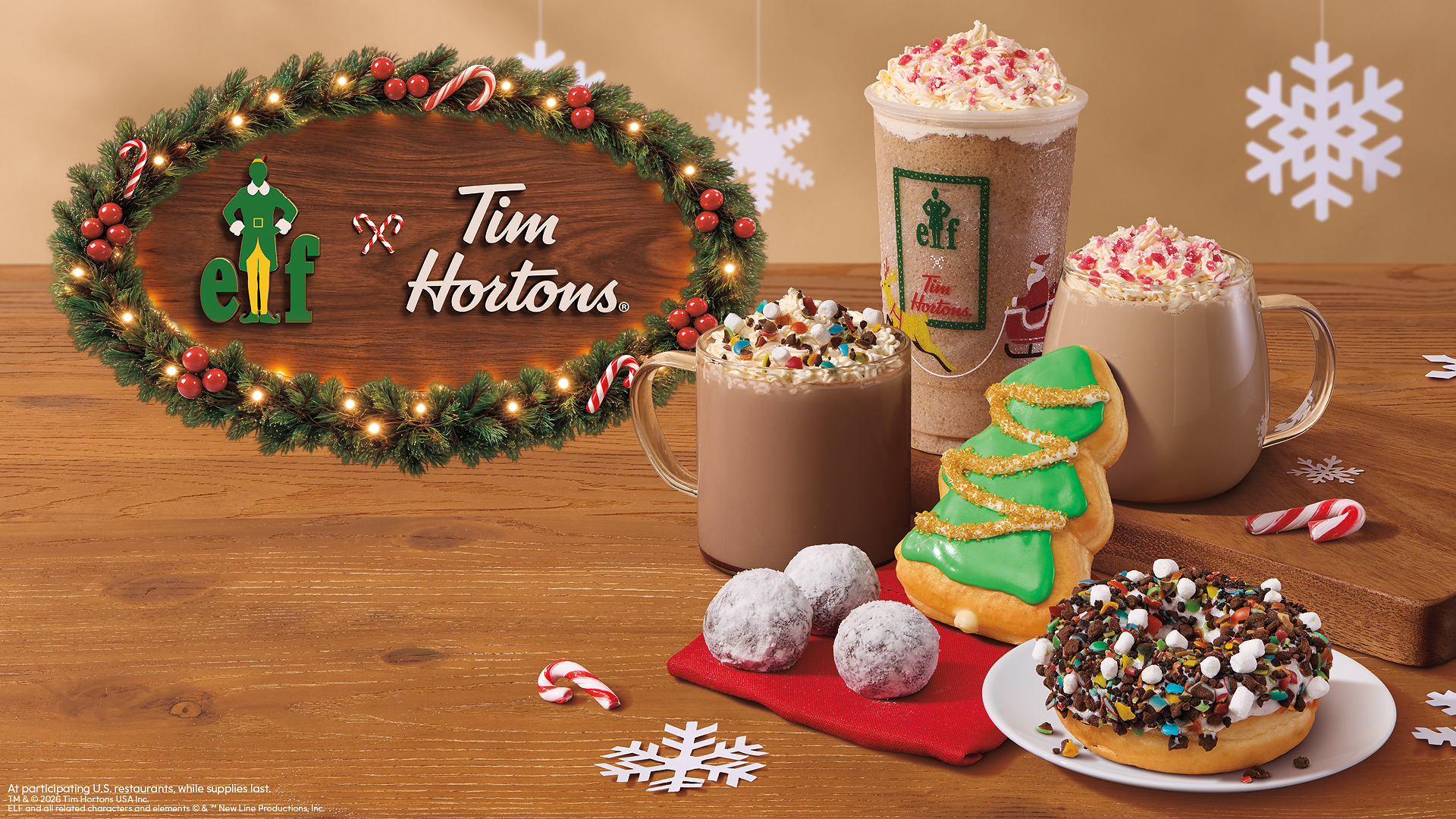
On the beverage side, three new drinks lead the launch: a Candy Cane Forest ELF Latte available hot or iced, a Candy Cane Forest ELF Iced Capp, and an ELF Hot Chocolate topped with spaghetti-shaped whipped topping — a nod to one of the film's most recognizable running gags. All three feature peppermint-flavored syrup or candy-cane elements, anchoring the seasonal flavor profile to candy cane, chocolate, and marshmallow.
The baked-goods component adds three items: an ELF Chaos Donut (vanilla-iced yeast ring with crushed candy topping, chocolate, and mini marshmallows), ELF Snowball Timbits (chocolate cake donut holes dusted in powdered sugar), and a Holiday Cheer Donut shaped as a tree and finished with green vanilla icing and gold sugar. Limited-edition packaging featuring Buddy the Elf character art runs across the product range.
Competitive Context
The ELF activation follows a broader industry pattern in which QSR and fast-casual chains use IP licensing to differentiate seasonal menus in a crowded field. For Tim Hortons, which operates more than 6,000 systemwide restaurants across Canada, the United States, and international markets, the U.S. business remains a growth priority. Holiday beverage platforms — particularly espresso-based and blended frozen drinks — represent a direct competitive response to Starbucks and Dunkin', both of which roll out aggressively marketed seasonal menus in the same period.
"ELF is a must-watch for so many people every holiday season and we're so excited to bring the fun spirit of Buddy the Elf and his favorite flavors to Tims," said Katerina Glyptis, President of Tim Hortons U.S. The company framed the tie-in as a vehicle for driving incremental guest traffic and reinforcing brand relevance in a market where it holds a smaller share than in its Canadian home base.
What's Next
Tim Hortons did not disclose pricing, a promotional end date, or unit-level sales targets for the campaign. The partnership with Warner Bros. Consumer Products — the licensing arm responsible for extending the studio's entertainment franchises into retail and foodservice — suggests the arrangement carries a formal licensing fee structure typical of major studio co-branding deals, though financial terms were not disclosed. For trade operators and foodservice buyers tracking licensed IP trends, the rollout adds to a growing body of evidence that holiday-season menu innovation is shifting from flavor-led to character-led storytelling. Sister coverage on seasonal QSR strategy is available at /restaurants/holiday-menu-trends and licensing deal structures in /industry-news/foodservice-ip-licensing.
Written by Michael Politz, Author of Guide to Restaurant Success: The Proven Process for Starting Any Restaurant Business From Scratch to Success (ISBN: 978-1-119-66896-1), Founder of Food & Beverage Magazine, the leading online magazine and resource in the industry. Designer of the Bluetooth logo and recognized in Entrepreneur Magazine's "Top 40 Under 40" for founding American Wholesale Floral, Politz is also the Co-founder of the Proof Awards and the CPG Awards and a partner in numerous consumer brands across the food and beverage sector.