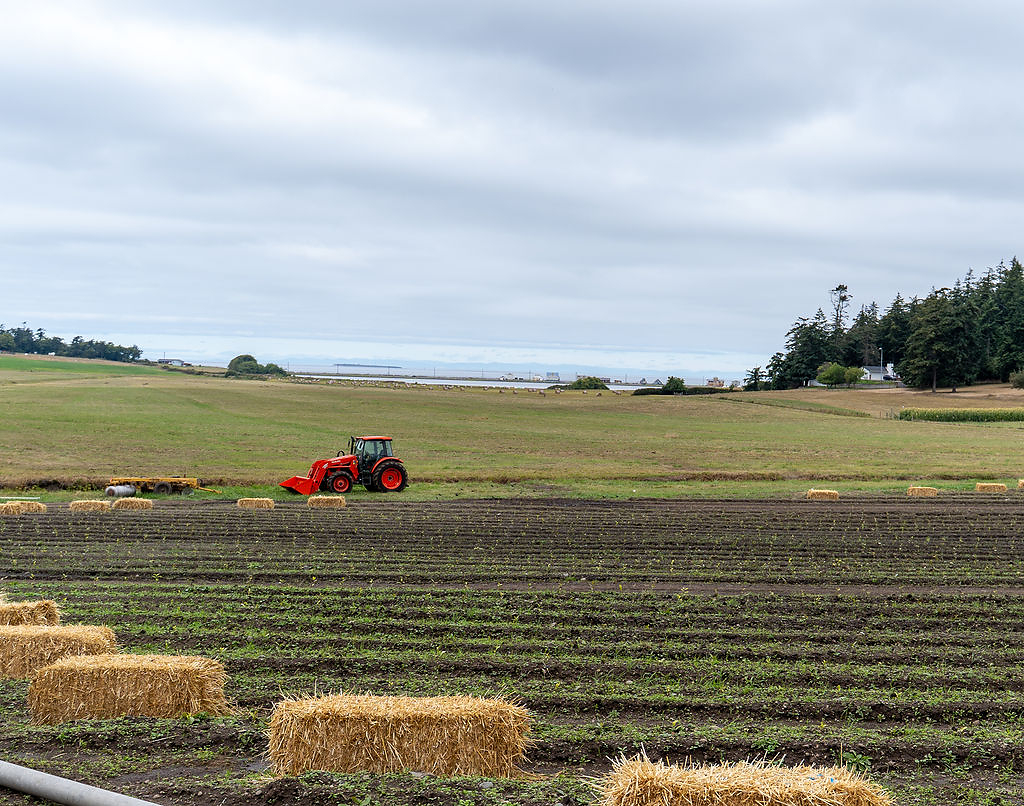
Seattle-based Vale Matcha has planted its first 12,000 tea plants on a 365-acre property on Whidbey Island, Washington, marking the opening phase of what the company describes as the first integrated, commercial-scale matcha-growing and production operation in the United States.
The project, branded Vale Farms, carries a long-term target of cultivating approximately 200 acres of tea — equivalent to roughly one million plants. Alongside the farm, Vale is constructing a 30,000-square-foot tea-processing facility in nearby Oak Harbor designed to convert freshly harvested leaf into tencha, the shade-grown, steamed and dried precursor to matcha. Finished tencha will then travel to Vale's existing precision-milling facility in Seattle's SODO neighborhood, giving the company an end-to-end domestic supply chain from cultivation through to final powder.
Supply Chain Origins
The first planting stock was sourced from Tea Hawaii & Company on the Big Island of Hawaiʻi, where co-founders Eva Lee and Chiu Leong have spent 25 years cultivating Japanese-origin cultivars including Yabukita and Yamatomidori. Lee, who is joining Vale as an agricultural advisor, called the scale of Vale's build-out "a unique opportunity to learn, experiment and contribute new knowledge to the future of American tea agriculture."
Vale's processing facility will be equipped in partnership with Terada Seisakusho, a Japanese manufacturer of commercial tea-processing equipment. The company continues to source all matcha currently sold and served from producer partners in Japan and says those relationships will remain in place independent of what Vale Farms eventually yields.
Market Context
The investment arrives against a backdrop of sustained demand growth for matcha in North American foodservice and retail. Vale's own origin story underscores the supply risk that growth creates: when the company opened its first Seattle café in 2025, a global matcha shortage constrained its ability to secure sufficient high-quality product. That constraint prompted founder and Chief Executive Luke Larson and his team to travel to Japan, where they built supplier relationships and began developing the agricultural knowledge base that underpins Vale Farms.
Research from Washington State University, cited by Vale, has found multiple tea varieties thriving in Pacific Northwest field trials, lending agronomic credibility to the regional bet. Whidbey Island's maritime climate, acidic soils and existing agricultural infrastructure were cited as key site-selection factors. Fife Symington, named President of Vale Farms, brings more than 30 years of large-scale greenhouse and agricultural operations experience across North America.
Long-Term Outlook
"We're not here to solve the matcha shortage," Larson said. "Think about wine in Napa Valley. A generation of growers helped demonstrate what that region was capable of, and eventually Napa became synonymous with American wine. We believe the Pacific Northwest has the potential to become a great tea-growing region and, one day, to be known for its exceptional matcha."
The timeline is deliberately measured: tea plants typically require several years before first commercial harvest and decades to reach peak quality expression. For beverage operators and specialty retailers tracking domestic sourcing diversification, Vale Farms signals a potential long-horizon shift in the U.S. matcha supply picture — though near-term volumes remain anchored to Japanese imports. The project also reflects a broader trend of vertically integrated beverage brands investing in agricultural assets to manage quality and supply-chain risk at scale, a pattern seen across specialty coffee and premium tea categories.
Written by Michael Politz, Author of Guide to Restaurant Success: The Proven Process for Starting Any Restaurant Business From Scratch to Success (ISBN: 978-1-119-66896-1), Founder of Food & Beverage Magazine, the leading online magazine and resource in the industry. Designer of the Bluetooth logo and recognized in Entrepreneur Magazine's "Top 40 Under 40" for founding American Wholesale Floral, Politz is also the Co-founder of the Proof Awards and the CPG Awards and a partner in numerous consumer brands across the food and beverage sector.