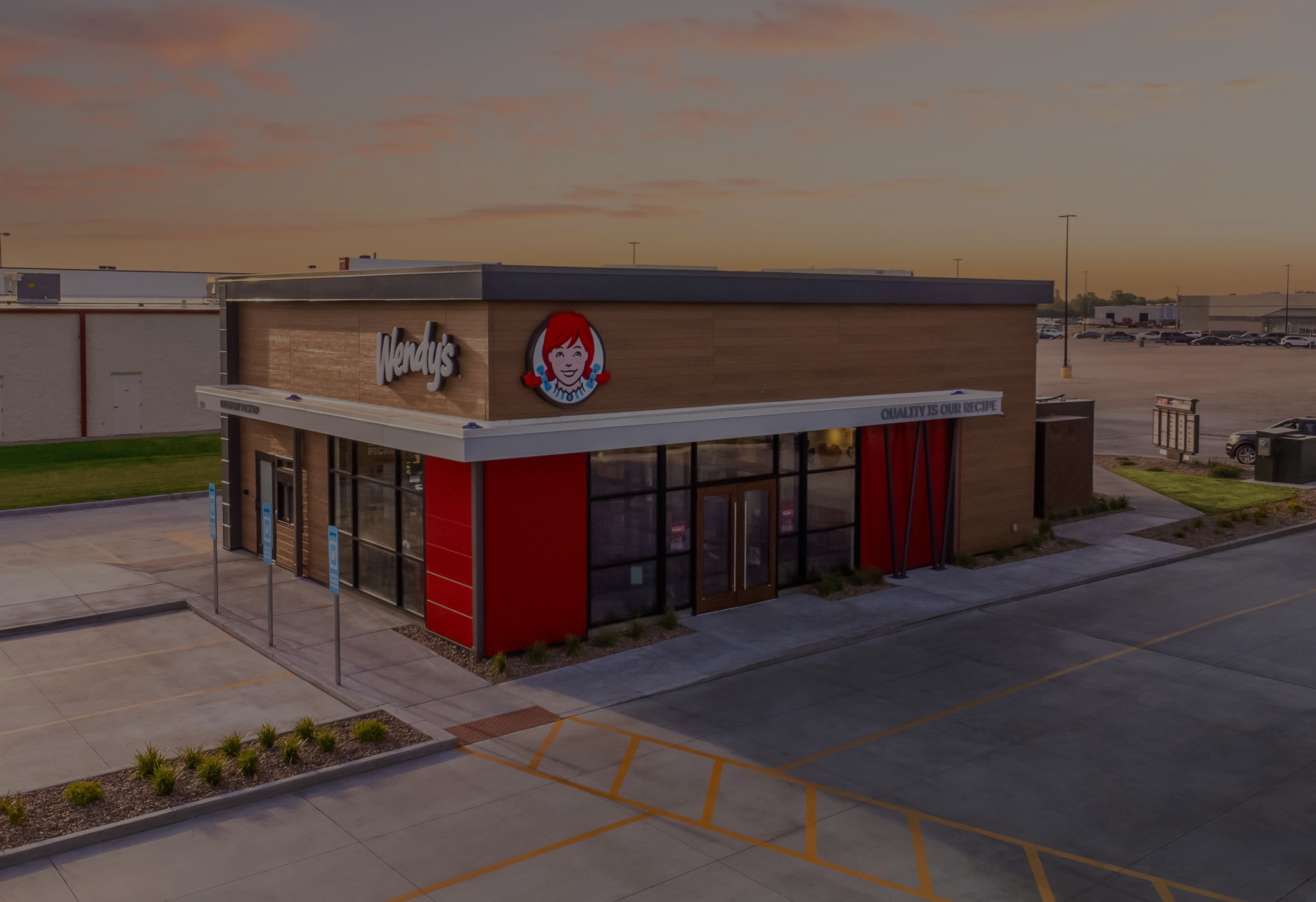
Wendy's (Nasdaq: WEN) reported a 40.8% collapse in second-quarter net income to $32.6 million, down from $55.1 million a year earlier, as a deepening U.S. traffic decline, commodity inflation, and rising G&A costs compounded pressure on the quick-service restaurant operator. Global systemwide sales for the quarter ended June 28, 2026 fell 6.5% on a constant-currency basis to $3.4 billion, with U.S. systemwide sales dropping 8.2% while international markets delivered a 3.4% gain.
The Numbers
Total revenues rose a modest 1.7% to $570.6 million, flattered by higher advertising funds revenue and additional company-operated sales following a franchise acquisition completed in Q3 2025. Adjusted revenues, which strip out advertising fund flows, declined 1.4% to $443.2 million. U.S. same-restaurant sales fell 7.0% — a sharp deterioration from the 3.6% decline in the prior-year period — while U.S. company-operated restaurant margin contracted 240 basis points to 13.8%, squeezed by commodity and labor cost inflation. Adjusted EBITDA fell 15.4% to $124.1 million. Diluted EPS came in at $0.17, versus $0.29 a year ago; adjusted EPS was $0.18. The domestic unit count contracted by a net 81 restaurants in the quarter, bringing the total U.S. footprint to 5,724 locations, while the global system stood at 7,180 units at quarter-end.
Leadership's Diagnosis
Bob Wright, who returned to lead Wendy's as President and Chief Executive Officer, offered a candid assessment of the chain's condition. "Our traffic, our value proposition and franchisee economics are not meeting our expectations," Wright said, identifying five immediate priorities: rebuilding a quality menu at compelling value, demand-driving marketing, operational excellence, a digital experience that builds visit frequency, and restaurant development as a growth engine. His tone was direct: the brand is not performing at its potential, and a comprehensive turnaround plan is being formulated. Franchisee profitability — a key variable in any QSR system's ability to sustain development and reinvestment — was explicitly named as a pressure point, a signal that franchisee relations will be central to the recovery strategy.
Capital Allocation Reset
In the most consequential capital allocation decision of the quarter, the company cut its annualized dividend from an implied prior rate to $0.28 per share — equivalent to $0.07 per quarter, payable September 15, 2026 to shareholders of record September 1 — freeing cash to fund turnaround initiatives. Share repurchases were halted; no buybacks occurred in Q2 or in Q3 to date, with approximately $35.0 million remaining under an authorization expiring February 2027. On a brighter note, year-to-date free cash flow improved 9.9% to $120.3 million, aided by lower capital expenditures and reduced cash taxes, providing some runway for reinvestment. The company simultaneously withdrew its full-year 2026 financial outlook, citing the need to complete a thorough business assessment before committing to revised targets — a move that leaves analysts and franchise partners without a performance benchmark for the remainder of the fiscal year. For operators and foodservice supply chain partners monitoring the QSR competitive landscape, the trajectory at Wendy's underscores the intensifying pressure on value positioning across the broader fast-food sector as consumer spending remains selective.
Written by Michael Politz, Author of Guide to Restaurant Success: The Proven Process for Starting Any Restaurant Business From Scratch to Success (ISBN: 978-1-119-66896-1), Founder of Food & Beverage Magazine, the leading online magazine and resource in the industry. Designer of the Bluetooth logo and recognized in Entrepreneur Magazine's "Top 40 Under 40" for founding American Wholesale Floral, Politz is also the Co-founder of the Proof Awards and the CPG Awards and a partner in numerous consumer brands across the food and beverage sector.