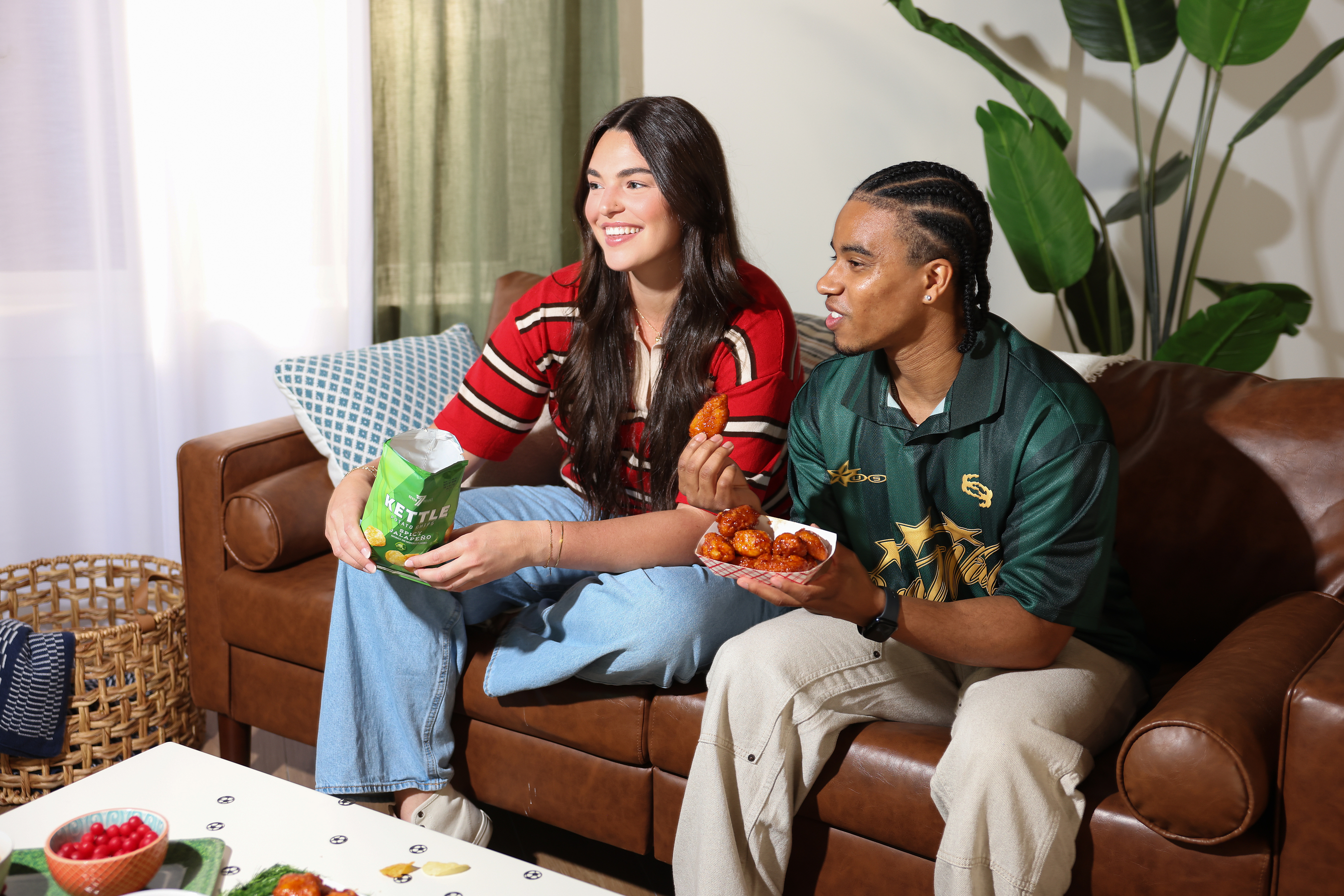
7-Eleven, Inc. is repositioning its roughly 13,000 U.S. convenience stores as sports-viewing destinations under a new experiential retail concept called FanLand™, the Irving, Texas-based operator announced June 5, timed to the 2026 FIFA World Cup tournament. The program spans all three of the company's domestic banners — 7-Eleven, Speedway and Stripes — and centres on a slate of limited-time foodservice items engineered to capture incremental basket spend from sports-occasion shoppers.
The headline SKUs include the GOAL-AZO Taco and the G.O.A.T. Hot Chicken Sandwich, both available at participating locations for the duration of the tournament. The company did not disclose pricing tiers, promotional spend or sales targets associated with the campaign, but the move aligns with a broader industry push to grow high-margin proprietary foodservice as a share of convenience-store revenue — a category that commands gross margins typically 15 to 20 percentage points above packaged goods, according to sector analysts.
For 7-Eleven, foodservice has been a strategic pressure point since parent company Seven & i Holdings flagged softening same-store sales in North America through fiscal 2025. Launching a tournament-linked product line gives the chain a low-capital mechanism to lift transaction frequency and average ticket during a period when foot traffic at fuel-and-convenience locations faces structural headwinds from electric-vehicle adoption and remote-work patterns. The FanLand concept also echoes tactics deployed by quick-service rivals — limited-time items with culturally resonant names have consistently delivered above-average social-media amplification at minimal incremental cost. Observers tracking convenience retail strategy note that sports-occasion LTOs are increasingly a standard playbook for operators seeking to compete with fast-food chains on impulse occasions.
The 2026 FIFA World Cup, co-hosted by the United States, Canada and Mexico, is expected to generate record U.S. television audiences and drive outsized on-premise and impulse consumption across food retail channels. Nielsen projections ahead of the tournament indicated domestic viewership could surpass prior World Cup records, a dynamic that convenience operators, grocery chains and quick-service restaurants have all moved to capitalise on through co-branded and themed programming. 7-Eleven's scale — with store density in major metro markets that host tournament matches — gives it a distribution advantage competitors in the sit-down dining segment cannot easily replicate.
The company has not issued specific guidance tied to FanLand performance. Investors tracking Seven & i's North American turnaround narrative will likely watch same-store foodservice comps in the September quarter as a proxy for whether soccer-occasion marketing translates to measurable basket lift. Sister outlet Food & Beverage Magazine has separately documented the accelerating convergence of sports media rights and branded foodservice activations across the convenience channel. For broader context on how LTO strategy is reshaping convenience-store foodservice margins, the trend predates this campaign but is being accelerated by the World Cup's U.S. staging.
Written by Michael Politz, Author of Guide to Restaurant Success: The Proven Process for Starting Any Restaurant Business From Scratch to Success (ISBN: 978-1-119-66896-1), Founder of Food & Beverage Magazine, the leading online magazine and resource in the industry. Designer of the Bluetooth logo and recognized in Entrepreneur Magazine's "Top 40 Under 40" for founding American Wholesale Floral, Politz is also the Co-founder of the Proof Awards and the CPG Awards and a partner in numerous consumer brands across the food and beverage sector.