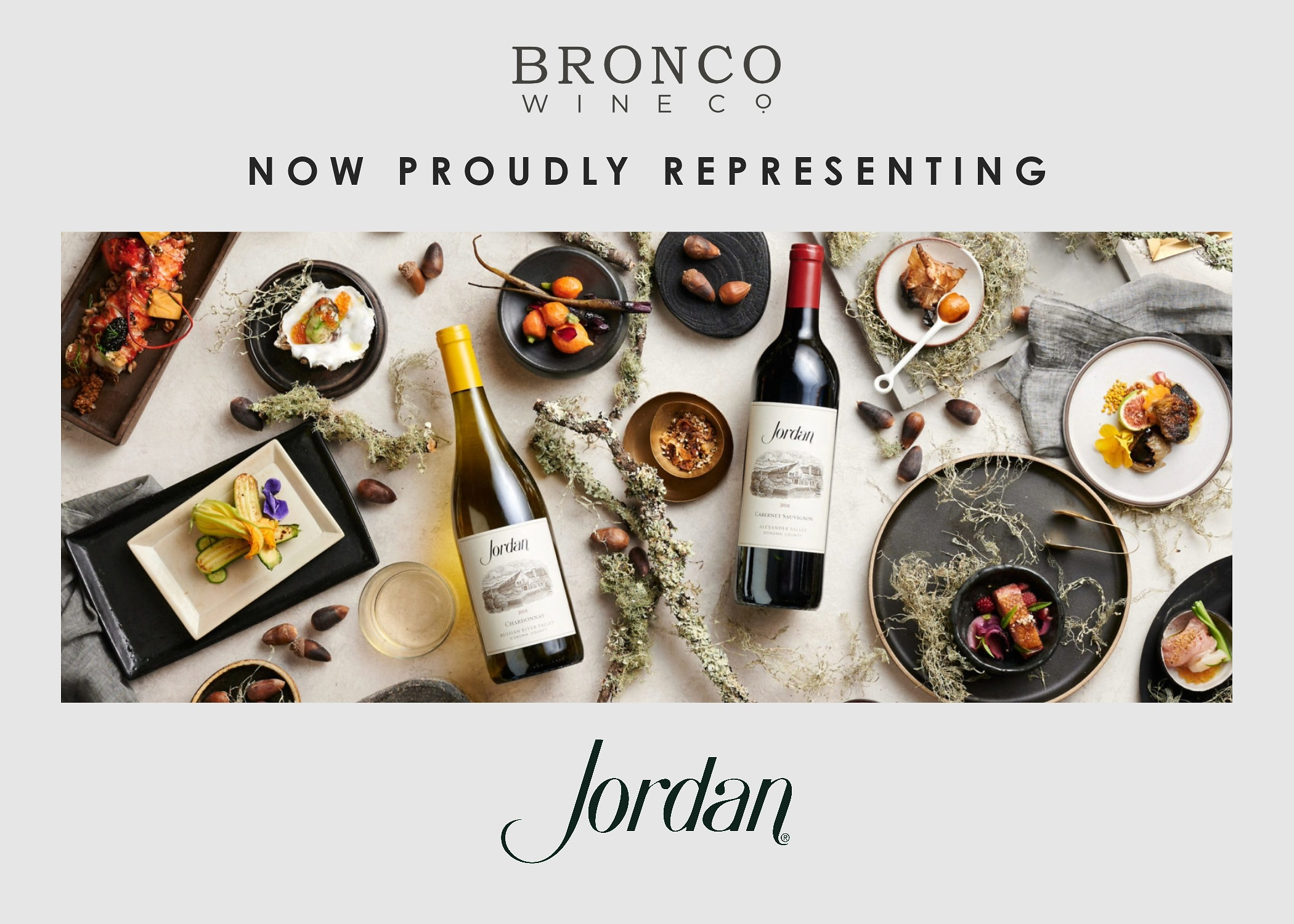
Bronco Wine Company and Jordan Vineyard & Winery have formed a national commercial partnership, effective August 1, 2026, pairing Bronco's mass-market distribution muscle with Jordan's five-decade luxury California wine heritage. Jordan will remain independently owned; the deal gives Bronco's field sales force a mandate to support Jordan's distributor network and retail and on-premise accounts across the United States.
The Strategic Logic
The arrangement creates what both companies call an "integrated commercial organization," with Jordan's regional leadership working alongside Bronco's national sales team. For Bronco — a Ceres, California, family-owned producer founded in 1973 and among the country's largest wine companies by volume — the deal is part of a deliberate pivot toward premium. Dom Engels, Chief Executive Officer of Bronco Wine Company, framed it as a values-aligned selection: "Jordan has spent more than five decades building one of California's most admired wine brands, and we are honored to represent it on a national scale, consciously growing the brand while preserving its legacy."
Casey Tedd, Bronco's Chief Commercial Officer, described the deal as one of "a select group of strategic partnerships with established wineries," signaling that further premium acquisitions or commercial arrangements may follow as the company deliberately repositions its portfolio up the price ladder.
Jordan's Position in the Market
Founded in 1972 by Tom and Sally Jordan in Sonoma County's Alexander Valley, Jordan has built its identity around exactly two wines — a Bordeaux-style Cabernet Sauvignon and a Chardonnay — produced from certified sustainable estate vineyards. The winery has had only two head winemakers since inception, a continuity it credits for the consistency that underpins its luxury pricing and reputation. Beyond the wines, Jordan operates a French-style chateau offering curated hospitality experiences, from vineyard tours to food-and-wine pairings, a brand pillar that distinguishes it from volume-driven California producers.
John Jordan, Proprietor of Jordan Vineyard & Winery, cast the deal as a growth investment rather than a sale of control: "By combining our commitment to exceptional wines, hospitality, and customer relationships with Bronco's commercial expertise and national reach, we're creating a stronger foundation for sustainable growth while remaining true to the values that have defined Jordan for more than fifty years."
Why It Matters for the Trade
The partnership reflects mounting pressure on independent luxury wine producers to secure more robust commercial infrastructure as the U.S. wine category faces softening volume trends and intensifying competition from spirits and ready-to-drink alternatives. Devonna Smith, Chief Financial Officer of Jordan Vineyard & Winery, acknowledged the structural shift directly: "As the wine industry continues to evolve, we believe success will increasingly be driven by stronger customer relationships, disciplined market execution, and strategic collaboration."
For distributors carrying both portfolios, the integration could translate into more coordinated account coverage and consolidated sales calls — a meaningful efficiency at a time when distributor consolidation has reduced the number of hands competing for shelf and menu placement. The premium wine segment has faced particular headwinds as post-pandemic trading patterns normalize and younger legal-drinking-age consumers gravitate toward alternative categories, making execution-level advantages at the distributor tier increasingly decisive for brands positioned above the $20 price point.
Bronco's move into luxury commercial partnerships also raises the competitive stakes for other large California producers eyeing similar deals. For operators and sommeliers sourcing fine-wine programs, Jordan's expanded national footprint could improve availability in markets where the brand has historically been underrepresented. The deal offers a case study in wine distribution strategy as independent producers weigh the trade-offs between brand autonomy and commercial scale.
Written by Michael Politz, Author of Guide to Restaurant Success: The Proven Process for Starting Any Restaurant Business From Scratch to Success (ISBN: 978-1-119-66896-1), Founder of Food & Beverage Magazine, the leading online magazine and resource in the industry. Designer of the Bluetooth logo and recognized in Entrepreneur Magazine's "Top 40 Under 40" for founding American Wholesale Floral, Politz is also the Co-founder of the Proof Awards and the CPG Awards and a partner in numerous consumer brands across the food and beverage sector.