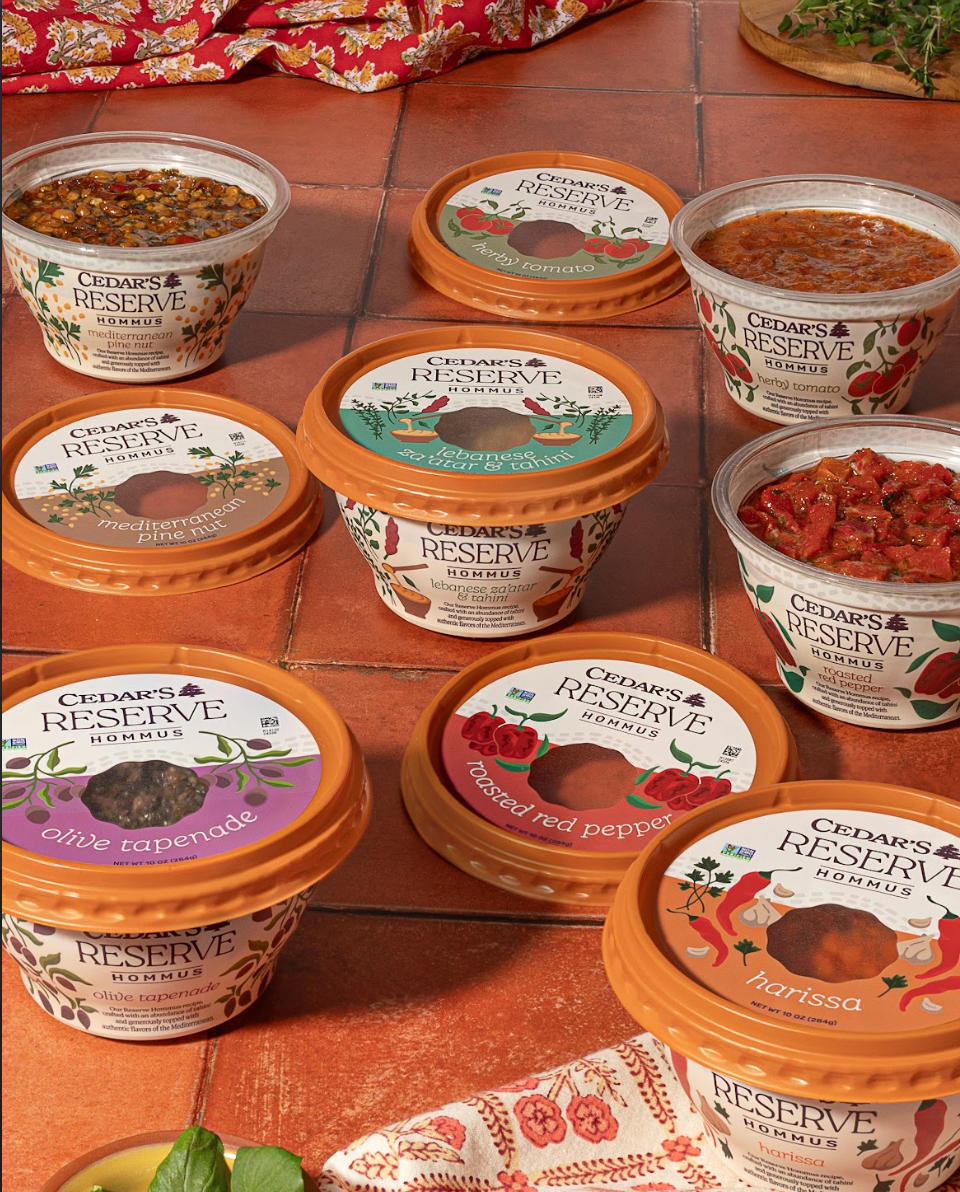
Cedar's Foods, the Haverhill, Massachusetts-based family-owned company and self-described world's largest hommus producer, announced Monday that its complete Reserve product line has received official seed-oil-free certification — covering both the Organic Reserve and Classic Reserve sub-ranges.
The certification, disclosed June 1, 2026, marks a formulation and sourcing commitment that eliminates canola, soybean, sunflower, and other industrially processed seed oils from the Reserve portfolio. While Cedar's Foods did not disclose the certifying body or the revenue contribution of the Reserve line, the move signals a deliberate repositioning of the company's premium tier toward an ingredient-transparency standard that has gained traction among health-conscious consumers and retail buyers alike.
Demand for seed-oil-free products has accelerated sharply across the packaged-food sector over the past 18 months, driven in part by high-profile commentary from public-health advocates and a wave of social-media scrutiny around linoleic acid content in processed foods. Category data from SPINS and Nielsen IQ have consistently shown double-digit unit growth in clean-label refrigerated dips, a segment where Cedar's competes against private-label and branded rivals including Sabra, Hope Foods, and Ithaca Hummus. For more on the clean-label shift reshaping grocery perimeters, see our earlier coverage of consumer trends in refrigerated dips and the Mediterranean snack category outlook.
For Cedar's, the certification also functions as a retail and foodservice sales tool. Premium and natural-channel buyers — including Whole Foods Market, Sprouts, and regional co-ops — have increasingly required third-party substantiation for clean-label claims following a series of industry greenwashing controversies. A seed-oil-free mark on front-of-pack provides a verifiable differentiator at shelf as competition in the roughly $1.0 billion U.S. hummus category intensifies.
Food & Beverage Magazine has previously noted that Cedar's Mediterranean positioning — built over decades as a family-operated regional producer before its national expansion — gives the brand credibility in authenticity-driven marketing that larger conglomerates have struggled to replicate. The Reserve certification extends that narrative into a specific, auditable product attribute rather than a purely lifestyle-oriented claim.
Written by Michael Politz, Author of Guide to Restaurant Success: The Proven Process for Starting Any Restaurant Business From Scratch to Success (ISBN: 978-1-119-66896-1), Founder of Food & Beverage Magazine, the leading online magazine and resource in the industry. Designer of the Bluetooth logo and recognized in Entrepreneur Magazine's "Top 40 Under 40" for founding American Wholesale Floral, Politz is also the Co-founder of the Proof Awards and the CPG Awards and a partner in numerous consumer brands across the food and beverage sector.