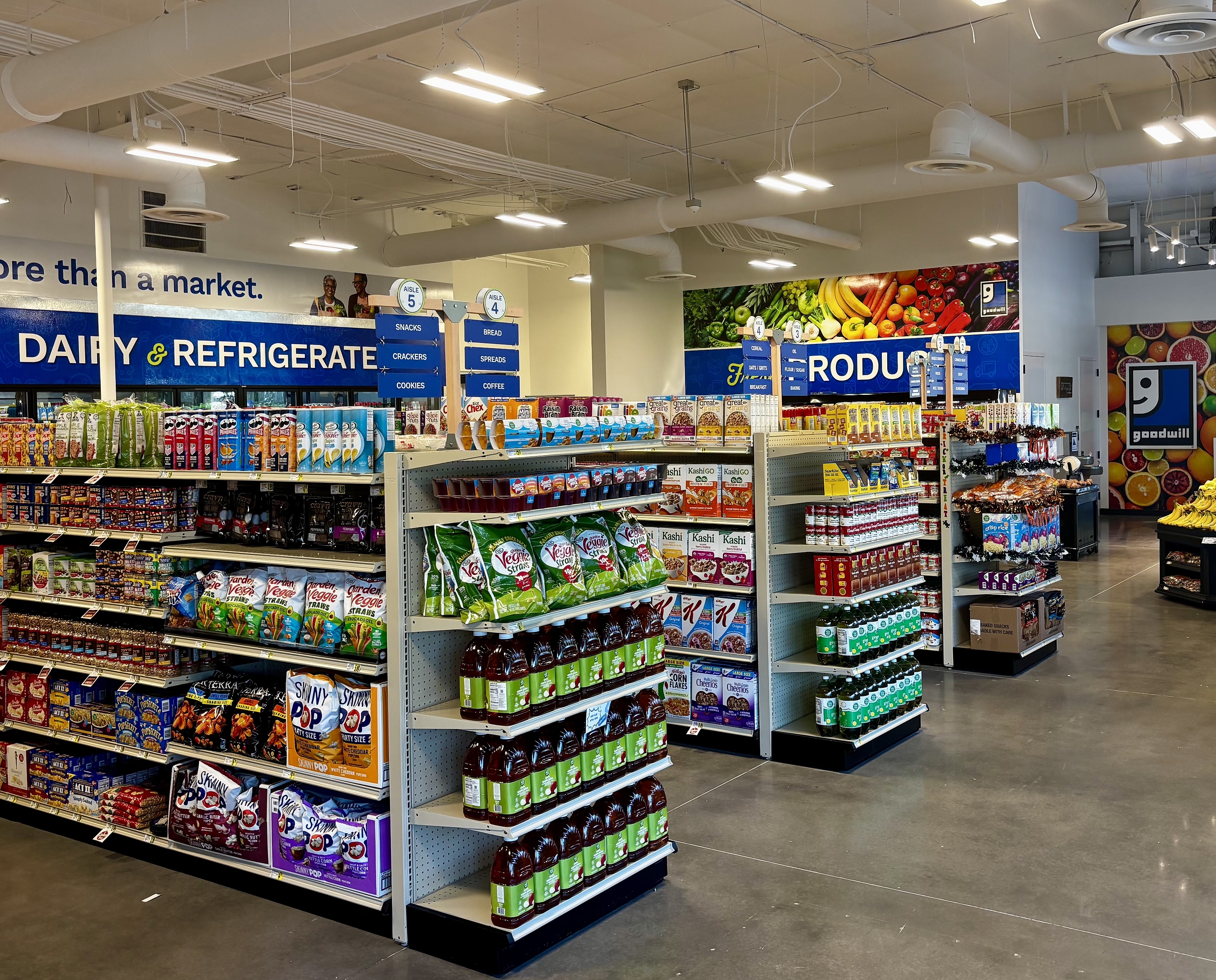
Goodwill Industries of Eastern North Carolina (GIENC) opened a 7,600-square-foot retail food market in Aurora, N.C. on September 10, adding a grocery access point to a USDA-designated food desert where residents must travel more than 10 miles to reach a conventional supermarket.
The Goodwill Community Cupboard, located at 150 South 5th Street inside the Brantley Tillman Opportunity Center, carries fresh fruits and vegetables, proteins, and non-perishable staples. The market operates under GIENC's Goodwill Feeds initiative, which the organization has positioned as a platform for addressing food insecurity across the 51-county eastern North Carolina footprint it serves.
The Food-Desert Problem
Aurora and the surrounding Richland Township meet the USDA's rural food-desert threshold, which requires that at least 33% of a community's population live more than 10 miles from a large grocery store. Without a local source of affordable fresh food, diet-related health disparities tend to compound over time — a dynamic that operators, foodservice distributors, and public-health researchers have increasingly linked to measurable losses in workforce productivity and educational attainment.
Christopher Hash, GIENC president and CEO, framed the investment in explicitly economic terms. "When families have more reliable access to healthy food, children are better equipped to learn, adults are more reliable at work, and seniors can remain independent longer," he said. The organization described the Cupboard as the physical expression of its broader mission of workforce development and community wellness.
Beyond the Grocery Aisle
The Aurora location is designed to function as more than a food retailer. A dedicated community room embedded within the market will host STEAM-related programming — science, technology, engineering, arts, and mathematics — alongside workforce development activities. The dual-purpose format reflects a broader trend in community-anchor food retail, where grocery access is bundled with social services to maximize foot traffic and impact per square foot.
GIENC already operates an employment program and donation center in nearby Washington, N.C., and distributes grants to local nonprofits through its Community Empowerment Program. Earlier in 2026, the organization announced a partnership with TABLE, an Orange County nonprofit, to extend TABLE's Chefs@Home food-kit program to school-age children experiencing food insecurity — another initiative operating under the Goodwill Feeds umbrella.
For the food and beverage supply chain, community-anchor markets in rural food deserts represent a growing distribution challenge: reaching locations that commercial grocers have deemed economically unviable requires alternative logistics models, smaller-format merchandising, and sourcing partnerships built around shelf-stable and locally grown product mixes. GIENC has not disclosed its supply-chain arrangements for the Aurora store.
With 43 employment program centers across eastern North Carolina, the organization has the regional infrastructure to scale the Goodwill Community Cupboard model to additional underserved communities, though no further locations have been announced. The Aurora opening signals that nonprofit operators are increasingly filling the grocery-access gap that regional and national chains have left in low-density rural markets — a development worth tracking for food retail investors and foodservice supply-chain operators alike.
Written by Michael Politz, Author of Guide to Restaurant Success: The Proven Process for Starting Any Restaurant Business From Scratch to Success (ISBN: 978-1-119-66896-1), Founder of Food & Beverage Magazine, the leading online magazine and resource in the industry. Designer of the Bluetooth logo and recognized in Entrepreneur Magazine's "Top 40 Under 40" for founding American Wholesale Floral, Politz is also the Co-founder of the Proof Awards and the CPG Awards and a partner in numerous consumer brands across the food and beverage sector.