
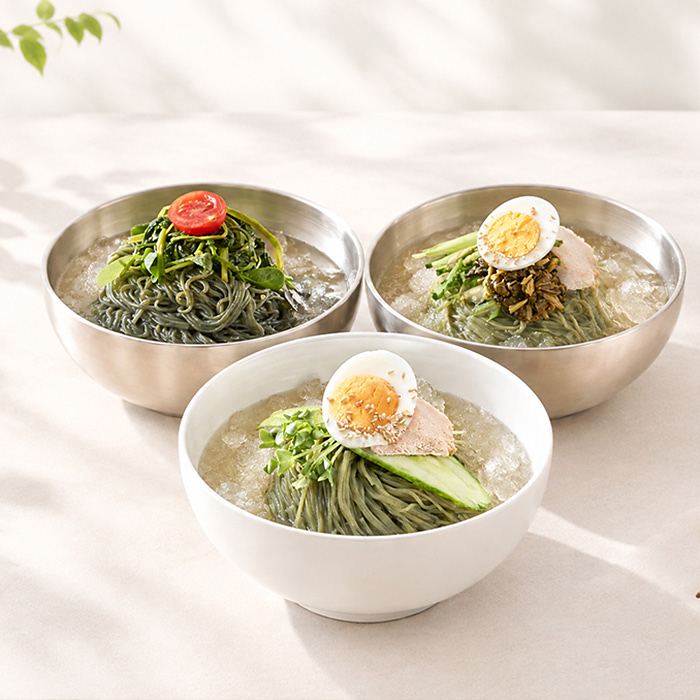
A South Korean food manufacturer has moved to protect three years of rice-noodle research with a patent filing, positioning itself to supply a broader range of noodle formats to domestic and international buyers. HanAll F&B Farming Association Corporation, based in Taebaek, Gangwon Province, filed a patent application in June 2026 for a rice noodle manufacturing method designed to reduce dependence on specific rice varieties and improve noodle separability — two longstanding technical obstacles in the domestic rice-processing sector.
The R&D Investment
The company consumed approximately 6 tons of rice flour across three years of development. The core engineering challenge was raising the domestic rice content of noodles to 50% or higher while still using flour sourced from multiple regional varieties, not just a single cultivar optimised for processing. HanAll F&B said its research focused specifically on reducing those manufacturing constraints rather than engineering around them with blended formulations.
The patent is framed internally as a foundation rather than a finished product. The company intends to continue refining the technology so that noodles can eventually be produced from virtually any variety of domestic Korean rice — a goal that, if realised, would meaningfully lower barriers to entry for other manufacturers considering rice-based noodle lines.
Pipeline and Market Rationale
Beyond its core rice noodle format, HanAll F&B is developing rice pasta and rice naengmyeon — the chilled, chewy Korean cold noodle traditionally made from buckwheat or arrowroot starch. Extending into those two formats reflects an effort to address different cooking methods and meal occasions rather than compete solely in the ambient dry-noodle segment. The move also tracks a broader shift toward grain-alternative and gluten-conscious noodle formats that has accelerated across Asian foodservice and retail channels.
HanAll F&B's existing manufacturing base centres on wild mountain greens and regional specialty foods sourced from the Gangwon highlands, where it has built hygiene and aging-process expertise from the raw-ingredient washing stage onward. The company describes its pivot into rice processing as a natural extension of that capability rather than a category departure.
Management plans to present its manufacturing technology and product competitiveness directly to domestic and international buyers, using those conversations to gauge demand and calibrate future sales-channel strategy. The approach mirrors a pattern seen among smaller Korean food producers seeking to validate export potential before scaling production capacity — a route that Food & Beverage Magazine has tracked across the Korean specialty-foods export corridor.
Broader Industry Implications
The rice-noodle segment sits at the intersection of two durable foodservice and retail trends: growing demand for gluten-free or wheat-reduced carbohydrate formats, and government and industry interest in expanding value-added processing of domestic grain surpluses. In South Korea, where paddy rice output has periodically outpaced consumption of cooked rice, processed rice products represent a policy-aligned growth channel. HanAll F&B's stated ambition — that multiple manufacturers ultimately adopt its technology framework and collectively expand the Korean domestic rice-noodle market — suggests a potential licensing or co-development angle, though the company has not yet outlined specific commercialisation terms.
For food manufacturers and ingredient buyers evaluating alternative-grain noodle supply chains, the patent filing signals that technically validated domestic-rice noodle production may become viable at a wider range of rice-starch profiles than current commercial methods allow.
Written by Michael Politz, Author of Guide to Restaurant Success: The Proven Process for Starting Any Restaurant Business From Scratch to Success (ISBN: 978-1-119-66896-1), Founder of Food & Beverage Magazine, the leading online magazine and resource in the industry. Designer of the Bluetooth logo and recognized in Entrepreneur Magazine's "Top 40 Under 40" for founding American Wholesale Floral, Politz is also the Co-founder of the Proof Awards and the CPG Awards and a partner in numerous consumer brands across the food and beverage sector.