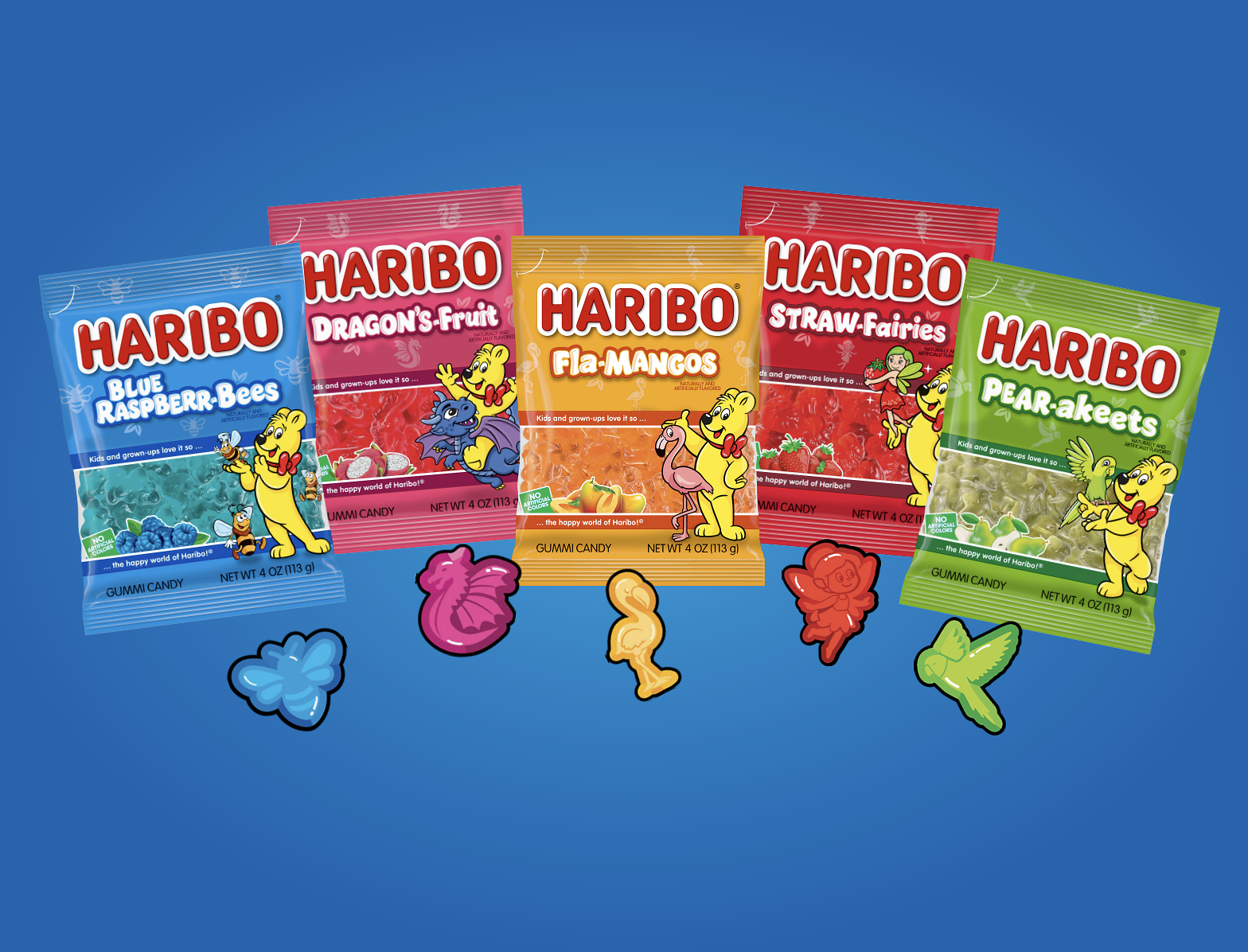
HARIBO is expanding its U.S. confectionery lineup with five new single-flavor gummy products, each pairing one fruit variety with a thematically matched shape, in an exclusive launch through Dollar Tree. The move marks a deliberate push into value retail for the Rosemont, Illinois-based gummi maker, whose global portfolio already spans 15 production facilities across 11 countries.
The Five SKUs
The new collection — Straw-Fairies, Blue Raspberr-Bees, Dragon's-Fruit, Fla-Mangos and Pear-akeets — breaks from HARIBO's traditional mixed-flavor format. Each bag contains a single shape and a single non-artificially colored gummy: fairy-shaped strawberry, bee-shaped blue raspberry, dragon-shaped dragon fruit, flamingo-shaped mango and parakeet-shaped pear. The lineup spans both familiar flavor profiles and higher-growth emerging tastes — dragon fruit and mango are among the fastest-expanding fruit flavor segments in packaged confectionery, driven by Gen Z demand for "exotic" or globally influenced varieties.
"We know there's something special about finding your favorite HARIBO treat and sometimes the best part is sharing that little moment of happiness with someone else," said Zoe Lyle, Associate Brand Manager at HARIBO. "This collection brings that playful spirit to five bold fruit flavors, giving fans of all ages new friends to meet, flavors to discover and plenty of fun to share."
Value-Channel Strategy
The Dollar Tree exclusivity is strategically significant. Value-channel confectionery has outpaced broader candy category growth over the past two years as cost-conscious consumers trade down from specialty and grocery formats. For HARIBO, which competes against Ferrara Candy, Albanese and private-label gummi brands, a Dollar Tree debut provides high foot-traffic exposure at an accessible price point and positions the SKUs as collectible impulse purchases — a mechanic reinforced by the "collect them all" messaging embedded in the launch.
The single-flavor format also addresses a structural opportunity in the gummi segment: it eliminates the "picking out favorites" behavior common with multi-flavor bags, a documented friction point in consumer research, and turns flavor preference into a standalone purchase decision. Retailers benefit from the potential for multi-unit basket attachment as shoppers select across the five varieties.
Market Context
HARIBO, founded in Bonn, Germany in 1920 and employing nearly 8,500 associates globally, has steadily broadened its U.S. footprint beyond its flagship Goldbears. The new mono-flavor line reflects wider category momentum: the U.S. gummi and chewy candy segment has seen consistent unit volume gains as better-for-you and flavor-forward innovation attracts adult consumers alongside the brand's core younger demographic. The use of non-artificial colors across all five SKUs aligns with ongoing clean-label pressure that has reshaped ingredient standards across the confectionery and snack sector.
The limited-availability framing — "collect them all before they're gone" — suggests the launch may be structured as a seasonal or promotional run rather than a permanent range extension, though HARIBO has not confirmed shelf-life duration. Operators and buyers in the value and convenience retail channel should note that early read-through on velocity data from Dollar Tree could determine whether any SKUs graduate to broader distribution.
Written by Michael Politz, Author of Guide to Restaurant Success: The Proven Process for Starting Any Restaurant Business From Scratch to Success (ISBN: 978-1-119-66896-1), Founder of Food & Beverage Magazine, the leading online magazine and resource in the industry. Designer of the Bluetooth logo and recognized in Entrepreneur Magazine's "Top 40 Under 40" for founding American Wholesale Floral, Politz is also the Co-founder of the Proof Awards and the CPG Awards and a partner in numerous consumer brands across the food and beverage sector.