Q2 By the Numbers
The Hershey Company (NYSE: HSY) reported second-quarter net sales of $2,787.3 million, a 6.6% increase versus the prior-year period, as aggressive price realization more than compensated for an approximate 8-point volume decline across most of the portfolio. Reported net income surged to $457.7 million, or $2.26 per diluted share, a 629.0% jump that largely reflects a swing from derivative mark-to-market losses in the year-ago quarter to gains in the current period. On an adjusted basis — which strips out those hedging swings and restructuring costs — diluted EPS came in at $1.90, up 57.0% year over year.
Organic, constant-currency net sales grew 3.6% in the quarter, driven by roughly 12 points of net price realization that more than offset the volume erosion attributed to elasticity effects and normal shipment variability. Adjusted gross margin expanded 350 basis points to 41.6%, supported by lower net commodity costs and productivity savings, though higher logistics expenses and unfavorable mix served as partial offsets. Adjusted operating profit of $563.5 million rose 37.3%, lifting the adjusted operating margin 450 basis points to 20.2%.
Segment Scorecard
North America Confectionery remained the dominant earnings engine, generating $2,173.6 million in segment net sales — up 4.2% — and $705.8 million in segment income, a 40.1% increase that pushed segment margin to 32.5%, up 830 basis points. The gains were powered by price realization and supply-chain productivity savings, though volume fell approximately 10 points due to elasticity and competitive innovation pressure. U.S. candy, mint and gum retail takeaway in MULO+ convenience channels rose 3.7% for the 12-week period ended July 19, 2026, though Hershey's category share declined modestly.
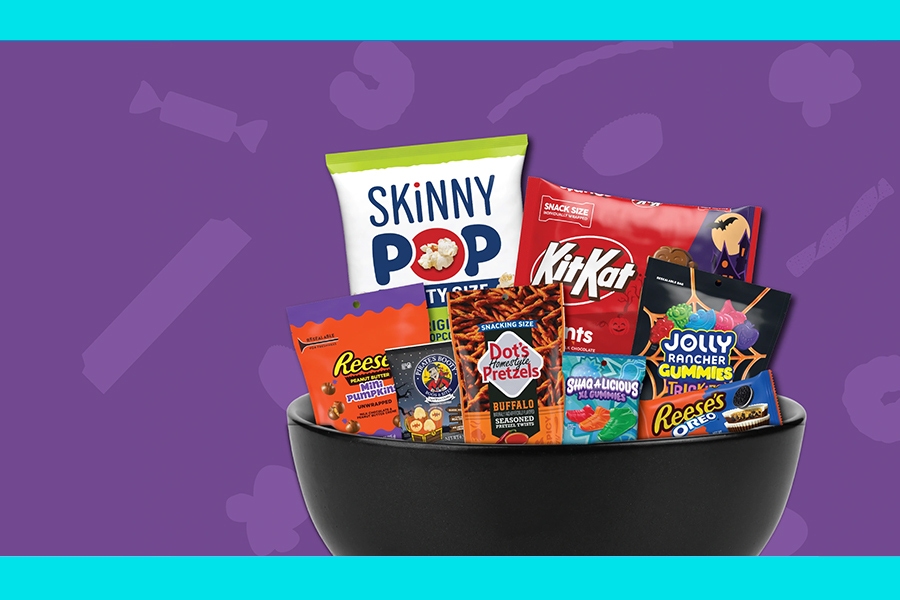
North America Salty Snacks posted the largest reported growth rate at 22.9%, with net sales of $387.8 million, though roughly 22 percentage points of that gain came from the 2025 LesserEvil acquisition. Organic growth was just 0.6%, reflecting execution challenges on multipacks and Dot's pretzels despite strong innovation trends and a 6.5% retail takeaway increase in legacy salty snacks. Segment income fell 5.9% to $62.6 million as higher logistics costs, trade investment behind new launches, and unfavorable mix compressed margin to 16.1%, down 500 basis points. The International segment swung to a $5.1 million loss — versus $19.8 million profit a year earlier — as raw material and manufacturing cost increases and stepped-up advertising outpaced 2.1% organic net sales growth.
Outlook and Strategic Context
For the full year, Hershey tightened its guidance bands, now guiding net sales growth of 4.5% to 5.0% (previously 4.0% to 5.0%) and organic growth of 3.0% to 3.5% (previously 2.5% to 3.5%). Adjusted EPS growth is forecast at 32.5% to 35.0%, implying a range of approximately $8.36 to $8.52, compared with $6.31 in 2025. The company noted the outlook excludes potential future tariff rebates. Capital expenditures are targeted at $425 million to $475 million, and the Advancing Agility & Automation Initiative is expected to deliver approximately $100 million in savings for the year.
The confectionery and snack categories remain in a broadly favorable pricing environment, though consumer elasticity is a live risk as operators and retailers across foodservice and grocery channels watch volume trends carefully. The LesserEvil integration — contributing roughly 150 basis points to reported full-year net sales growth — signals Hershey's continued push to diversify beyond its core chocolate and candy business into the fast-growing better-for-you salty snacks segment, an area that Food & Beverage Magazine has flagged as a key battleground for large CPG operators. Kirk Tanner, The Hershey Company President and Chief Executive Officer, described the first-half performance as strong and said the company enters the second half "with momentum, compelling growth plans, and increased investment behind our brands, merchandising, and innovation." The salty snacks segment's margin compression — down to 16.1% from 21.1% a year ago — will be a focal point for investors as integration costs and supply-chain investments are absorbed through the back half of the year.
Written by Michael Politz, Author of Guide to Restaurant Success: The Proven Process for Starting Any Restaurant Business From Scratch to Success (ISBN: 978-1-119-66896-1), Founder of Food & Beverage Magazine, the leading online magazine and resource in the industry. Designer of the Bluetooth logo and recognized in Entrepreneur Magazine's "Top 40 Under 40" for founding American Wholesale Floral, Politz is also the Co-founder of the Proof Awards and the CPG Awards and a partner in numerous consumer brands across the food and beverage sector.