The Launch
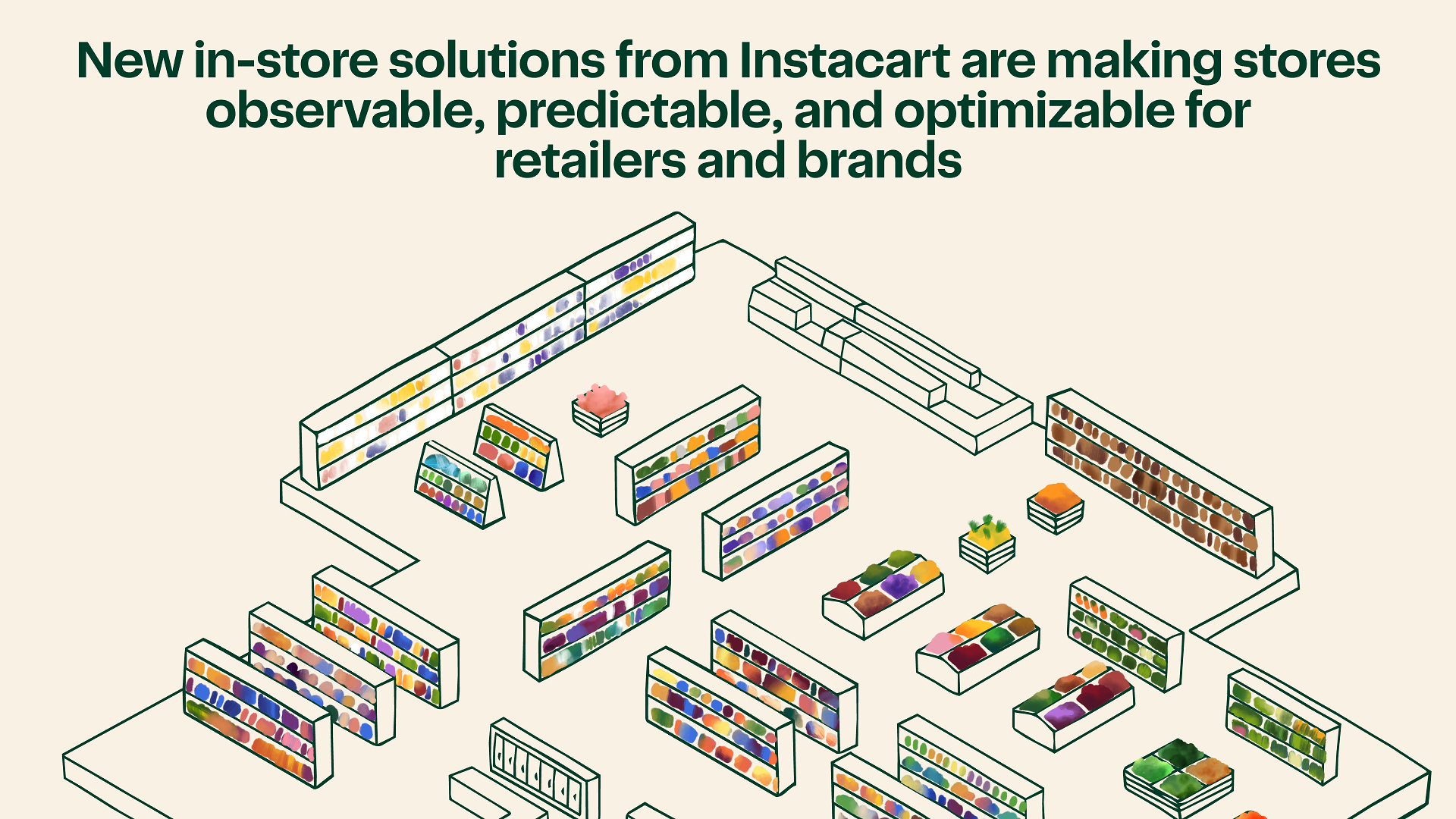
Instacart (NASDAQ: CART) is rolling out two new in-store software products — Inventory Intelligence for retailers and the Store Excellence Portal for CPG brands — that translate shelf-scan data collected by its shopper network into a continuous, store-level view of product availability. The company described the tools as part of its Instacart Enterprise platform, with select grocers and CPG partners already onboarded and a broader rollout expected over the coming months.
The Data Engine
The products are built on a data moat that rivals would struggle to replicate quickly. Instacart's roughly 600,000 active shoppers visit participating stores more than 15 times per store per day on average, generating over 10 million unique data points daily. That stream is augmented by shelf imagery captured through Caper Cart smart carts, which use computer vision technology sourced from Arpalus — a company Instacart acquired to advance real-time shelf intelligence. Combined with insights drawn from more than 1.6 billion lifetime orders, the platform can flag out-of-stock conditions, model substitution behavior, and benchmark a brand's on-shelf availability against category competitors — all refreshed continuously rather than relying on periodic physical counts.
Ryan Hamburger, Chief Commercial Officer at Instacart, framed the competitive gap bluntly: "Traditional inventory systems weren't built for today's reality — they rely on estimates and periodic counts, leaving grocers and brands with an incomplete picture of what's actually happening on shelves."
What Each Product Does
For store managers, Inventory Intelligence renders a virtual walkthrough of any aisle, flagging shelf gaps, high-velocity items at risk of depletion, and potential planogram adjustments before changes are made in-store. The tool is designed to help supply chain teams improve demand forecasting and enable merchandisers to recover lost sales by identifying where adding a single product facing could close a revenue gap.
The Store Excellence Portal targets CPG brand teams and their retail execution partners. It delivers a daily, store-level and UPC-level estimate of lost sales revenue caused by out-of-stocks, tracks whether shoppers who encountered an empty shelf switched to a competitor SKU or a different pack size, and provides forward-looking depletion alerts ahead of seasonal demand spikes. Advantage Solutions, a major retail services firm, is among the early adopters. Andy Keenan, Executive Vice President and General Manager of Branded Retail Services at Advantage Solutions, said access to the portal has allowed his teams to prioritize store visits by sales opportunity and direct field resources to the shelves most likely to recover revenue.
Why It Matters for Grocery Operators
Out-of-stocks remain one of the most persistent margin drains in grocery retail, with industry estimates placing annual lost sales in the tens of billions of dollars across North American food retail. Conventional solutions — electronic shelf labels, handheld scan guns, point-of-sale depletion models — each capture a partial picture. Instacart's approach layers shopper-generated scan data on top of order history and computer vision, aiming to close the gap between what a warehouse system believes is on the shelf and what a customer actually encounters.
The timing is strategic. As grocery e-commerce continues to reshape fulfillment expectations, retailers face simultaneous pressure to cut labor costs and improve in-store execution. Tools that surface replenishment priorities algorithmically — rather than relying on floor-walking associates — align with the broader retail technology investment cycle now underway across the sector. Instacart, which partners with more than 2,200 retail banners representing nearly 100,000 stores, is positioning its enterprise software business as a recurring-revenue layer on top of its marketplace and advertising operations, a mix that analysts have identified as central to the company's long-term margin story.
Written by Michael Politz, Author of Guide to Restaurant Success: The Proven Process for Starting Any Restaurant Business From Scratch to Success (ISBN: 978-1-119-66896-1), Founder of Food & Beverage Magazine, the leading online magazine and resource in the industry. Designer of the Bluetooth logo and recognized in Entrepreneur Magazine's "Top 40 Under 40" for founding American Wholesale Floral, Politz is also the Co-founder of the Proof Awards and the CPG Awards and a partner in numerous consumer brands across the food and beverage sector.