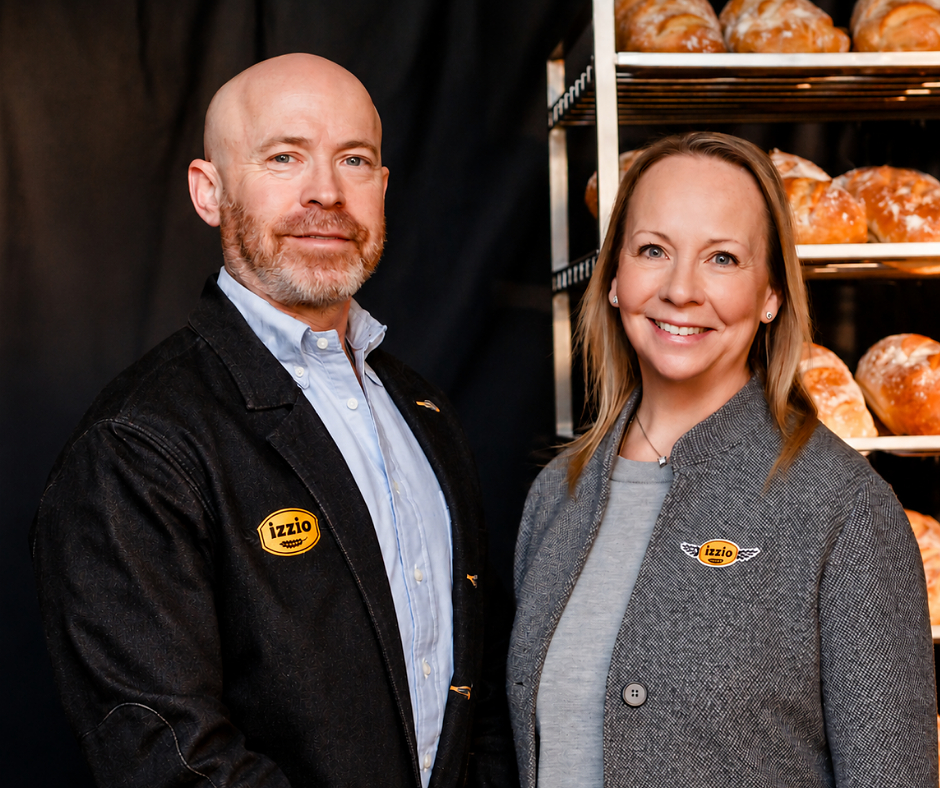

Erin Denham will become president and managing partner of JT Mega on January 1, 2027, the Minneapolis-based food and beverage advertising agency announced, making her only the third person to hold that title in the firm's 50-year history. She succeeds Phil Lee, who has led the independently owned shop for nearly four decades and will shift to a strategic advisor role.
The Succession
Denham joined JT Mega in 2006 and was elevated to vice president and partner in 2021. Over two decades she has overseen business strategy, emerging technology adoption, and professional development initiatives alongside her client responsibilities. The agency's client roster includes Hormel Foods, CJ Schwan's, and Kraft Heinz — three of the food industry's most recognizable names — underscoring the long-term relationships that have defined JT Mega's model.
Lee, who has been central to the agency's growth since the mid-1980s, framed the transition as a continuity play rather than a strategic pivot. "Erin embodies JT Mega's independent spirit and insatiable curiosity about what's next, and she understands our people, our clients and our business inside and out," he said. The agency has earned repeated recognition as a Minnesota Star Tribune Top Workplace, a distinction Lee attributed in part to the people-first culture Denham is now charged with preserving.
Leadership Structure
Upon taking the presidency, Denham will join an expanded partner group that includes Muriel Bartelme Kreske, Ann Strong, Mike Alberts, and Anna Braun. The collective brings decades of combined tenure across the agency and its client base — a structure designed to distribute institutional knowledge and reduce key-person risk as the firm enters its sixth decade.
Founded in 1976 by Jay Mega at a Minneapolis kitchen table, JT Mega now employs more than 60 people at its Minnetonka Boulevard headquarters. The agency operates as a full-service shop covering go-to-market strategy, creative, media, experiential marketing, sales enablement, and culinary development through its in-house Blue Flame Culinary Studio — a capability set that positions it squarely at the intersection of brand strategy and foodservice execution.
What It Means for F&B Agencies
The leadership change arrives as food and beverage marketers face mounting pressure from shifting consumer demand and private-label competition, dynamics that are reshaping how brands allocate their agency budgets. Specialist shops with deep category expertise — the model JT Mega has built over five decades — are increasingly valued by food manufacturers seeking partners who can move quickly across both retail and foodservice channels.
Denham acknowledged the complexity her clients are navigating. "Our clients are navigating an increasingly complex industry, and they need partners who understand their business, challenge their thinking and bring ideas that make a real difference," she said. Her ascension also reflects a broader industry pattern: agencies with long-tenured leadership pipelines tend to retain blue-chip food accounts at higher rates than those relying on lateral hires from outside the category.
The transition is effective January 1, 2027.
Written by Michael Politz, Author of Guide to Restaurant Success: The Proven Process for Starting Any Restaurant Business From Scratch to Success (ISBN: 978-1-119-66896-1), Founder of Food & Beverage Magazine, the leading online magazine and resource in the industry. Designer of the Bluetooth logo and recognized in Entrepreneur Magazine's "Top 40 Under 40" for founding American Wholesale Floral, Politz is also the Co-founder of the Proof Awards and the CPG Awards and a partner in numerous consumer brands across the food and beverage sector.