The Expansion
Little Spoon, the direct-to-consumer baby and kids food company that has delivered more than 100 million meals since its 2017 launch, is entering approximately 570 grocery stores this October through three new retail partnerships — H-E-B, Wegmans and Harris Teeter — marking its first brick-and-mortar expansion beyond Target. The move signals a deliberate pivot from a digital-first subscription model toward a full omnichannel platform in the competitive early-childhood nutrition segment.
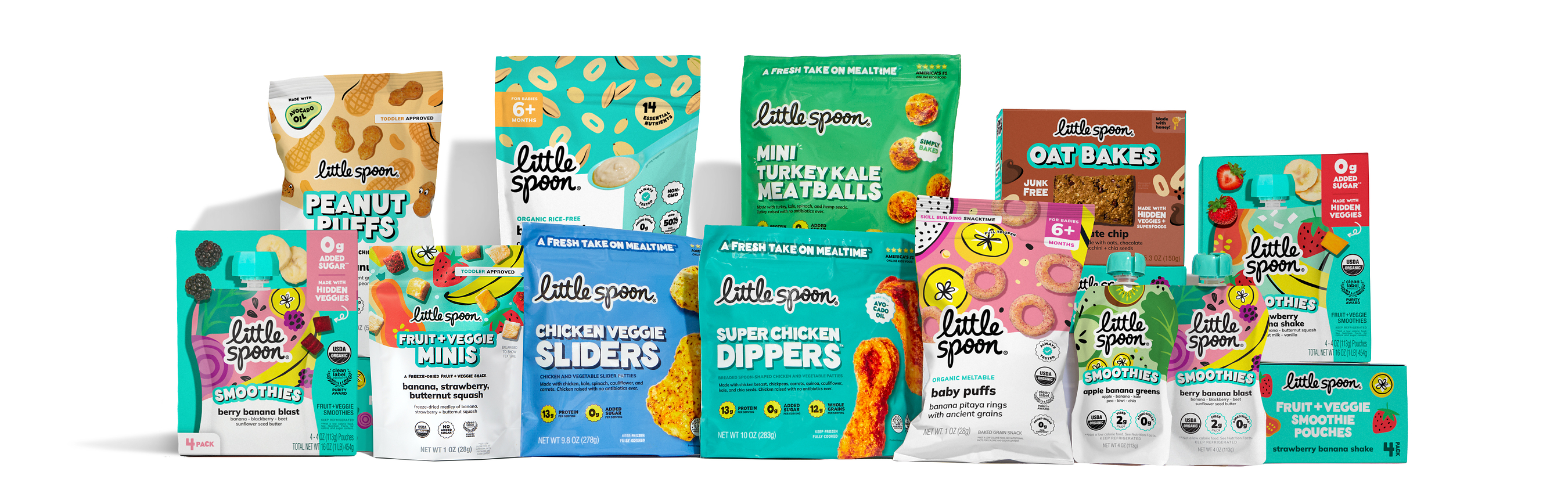
The rollout is structured around assortment depth rather than maximum door count. H-E-B will carry 32 Little Spoon products across refrigerated, frozen and ambient — the broadest offering of the three partners. Wegmans launches with 21 products across ambient and refrigerated in 110 stores spanning nine Northeast states. Harris Teeter adds 21 products across all three temperature formats in more than 260 stores across the Mid-Atlantic and Southeast. Combined, the three launches add meaningful physical availability in regions where the brand already commands an established consumer base built through years of subscription e-commerce.
Data-Driven Market Selection
Little Spoon is leaning on eight years of first-party consumer data to sequence its retail entry. The Northeast is the company's strongest region by demand index, with New Jersey ranking as its top state on a per-capita basis — a factor that makes Wegmans, whose store network is concentrated in that corridor, a strategically low-risk first partner. Texas is Little Spoon's second-largest state by customer count, directly underpinning the H-E-B selection. Harris Teeter extends the brand's reach into the Mid-Atlantic and Southeast, two markets the company identifies as important growth corridors.
This data-led approach is notable in a grocery landscape where emerging brands frequently pursue distribution volume first and sell-through second. By entering markets where latent demand already exists among its direct subscribers, Little Spoon reduces the promotional spend typically required to build trial in cold markets — a unit-economics advantage that could matter as the company scales its retail cost structure.
Omnichannel Ambitions
"We chose these retailers carefully," said Ben Lewis, Co-Founder and Chief Executive Officer of Little Spoon. "Each has built the kind of trust, influence and affinity in their communities that most brands only dream of — the same connection we've spent eight years building with families online."
The company's Target debut provided the commercial proof point for the retail push. Little Spoon has reported top-decile velocity at Target and says it has taken share from legacy category incumbents — metrics that would have been central to the retailer pitches for the three new accounts. The transition from a subscription-only model to a multi-channel platform also broadens Little Spoon's addressable market considerably: physical grocery captures shoppers who have never engaged with DTC kids' food brands but regularly browse health-oriented aisles at Wegmans or H-E-B.
The baby and toddler food category has attracted intensified competition from both private label and emerging natural brands over the past three years, as elevated input costs prompted legacy players to rationalize SKU counts and created shelf gaps that agile challengers have moved to fill. Little Spoon's multi-temperature-format portfolio — spanning pouches, refrigerated meals and frozen options across infant through school-age stages — positions it to occupy multiple adjacencies within a single retailer relationship, a breadth that is rare among challenger brands in the segment.
For operators and category buyers tracking the early-childhood nutrition space, the Little Spoon expansion is an early read on whether DTC brands with proven consumer loyalty can translate subscription-built demand into sustained grocery velocity. The regional grocery channel has become an increasingly important proving ground for premium food brands seeking alternatives to the cost and slotting complexity of national chain expansion. Coverage of related omnichannel strategies in the kids' food segment has been tracked by Food & Beverage Magazine, and the category's shelf dynamics continue to shift as better-for-you baby food brands compete for placement with established incumbents.
Written by Michael Politz, Author of Guide to Restaurant Success: The Proven Process for Starting Any Restaurant Business From Scratch to Success (ISBN: 978-1-119-66896-1), Founder of Food & Beverage Magazine, the leading online magazine and resource in the industry. Designer of the Bluetooth logo and recognized in Entrepreneur Magazine's "Top 40 Under 40" for founding American Wholesale Floral, Politz is also the Co-founder of the Proof Awards and the CPG Awards and a partner in numerous consumer brands across the food and beverage sector.