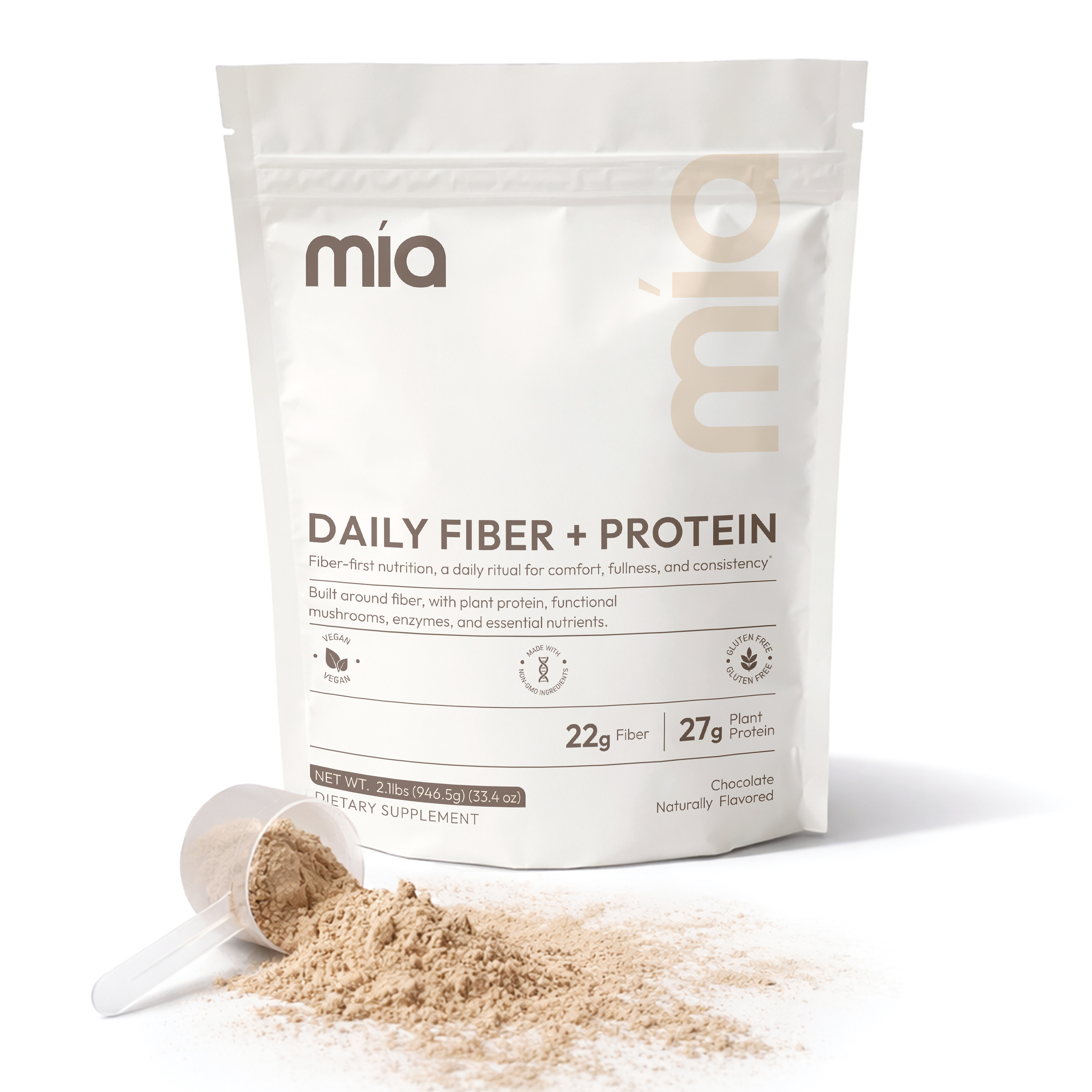
Austin-based nutrition brand Mía launched a fiber-forward protein shake on Monday, positioning the product squarely at the expanding cohort of GLP-1 medication users whose reduced food consumption has made meeting daily fiber targets structurally harder. Each serving delivers 22 grams of fiber and 27 grams of protein — a combination the company says is designed to close what it calls the "modern fiber gap."
The product enters the market against a stark backdrop: 95% of Americans fall short of recommended daily fiber intake, according to data from NHANES 2013–2018. Average daily consumption sits at 14 to 16 grams, well below the 25 to 30 grams recommended for women and the 38 grams advised for men by the American Journal of Lifestyle Medicine. Mía's formulation effectively delivers between 55% and 88% of the female daily target and up to 58% of the male target in a single serving.
The GLP-1 drug class — which includes semaglutide-based treatments that have reshaped consumer eating behavior over the past two years — has created a specific nutritional challenge that Mía is seeking to commercialize. Users eating significantly less food face a compressed window in which to meet micronutrient and macronutrient thresholds, making high-nutrient-density products increasingly relevant to that demographic. The trend intersects with "fibermaxxing," a social-media-driven nutritional movement that has accelerated consumer awareness around fiber sufficiency.
The company also cited emerging research suggesting that high-protein diets without adequate fiber can shift gut microbiota toward protein fermentation, producing potentially harmful metabolic byproducts — a finding published in Molecular Nutrition & Food Research in 2024. Mía frames fiber not as a supplemental ingredient but as a functional prerequisite for protein efficacy, a positioning that differentiates the product from mainstream protein shakes that typically prioritize protein density alone.
The functional-nutrition beverage segment has attracted significant capital and shelf-space competition in recent years, with established players and emerging brands alike reformulating to capture the GLP-1 adjacent consumer. Mía's fiber-first architecture represents a direct counter-positioning to that protein-dominant convention. For context on how GLP-1 trends are reshaping product development across the broader food and beverage sector, see our earlier coverage of functional nutrition reformulation strategies and the emerging high-fiber ingredient supply chain.
Written by Michael Politz, Author of Guide to Restaurant Success: The Proven Process for Starting Any Restaurant Business From Scratch to Success (ISBN: 978-1-119-66896-1), Founder of Food & Beverage Magazine, the leading online magazine and resource in the industry. Designer of the Bluetooth logo and recognized in Entrepreneur Magazine's "Top 40 Under 40" for founding American Wholesale Floral, Politz is also the Co-founder of the Proof Awards and the CPG Awards and a partner in numerous consumer brands across the food and beverage sector.