The Launch
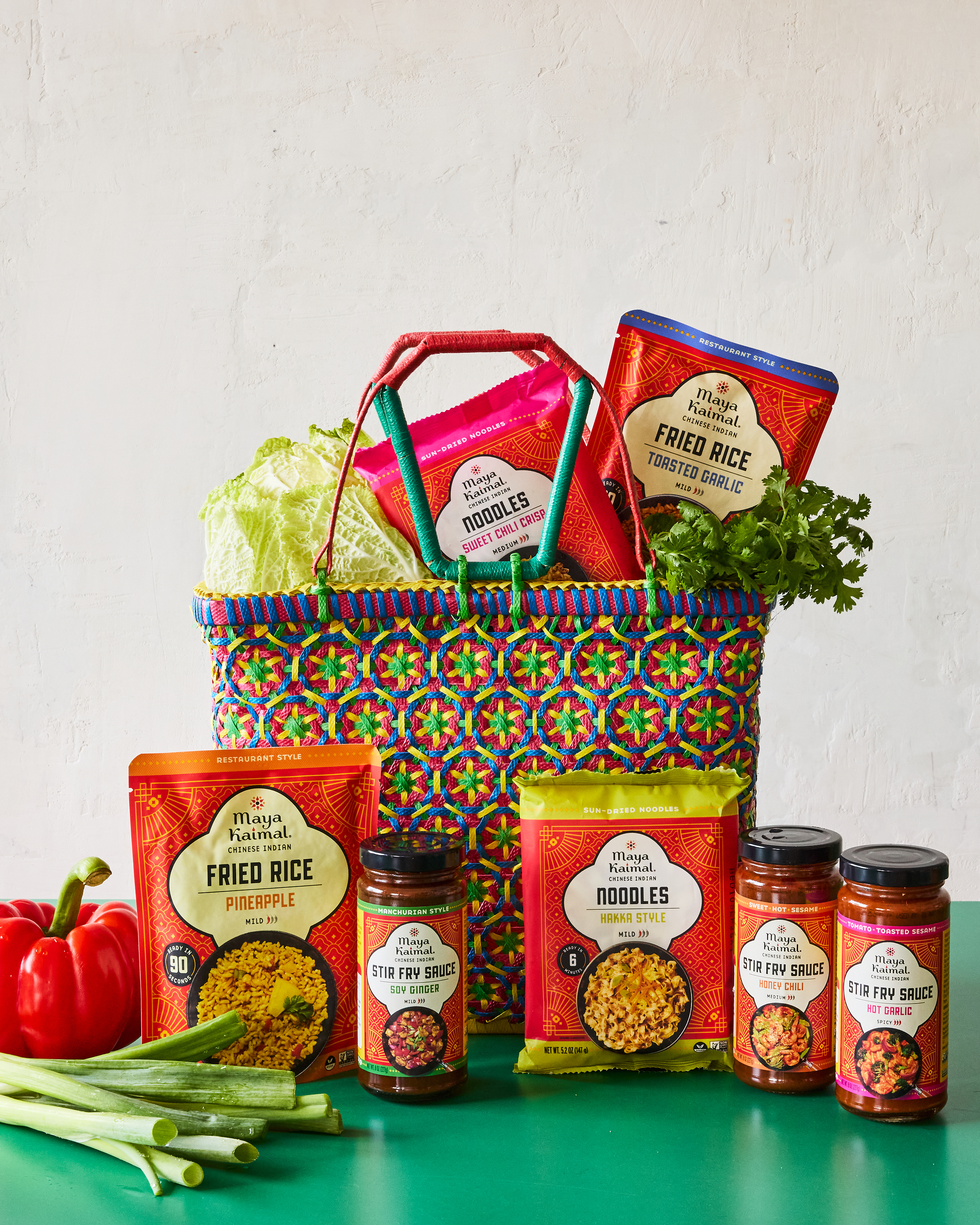
Maya Kaimal Foods is entering what it describes as an unoccupied shelf segment, rolling out seven Chinese Indian products across Whole Foods Market and Sprouts Farmers Market in a move the Rhinebeck, N.Y.-based brand says marks the first mass-market Chinese Indian line available in the United States. The lineup spans fully prepared fried rice and noodles — ready to eat as packaged — alongside customizable stir-fry sauces, giving retailers two distinct usage occasions within a single set.
Product & Retail Footprint
The seven-SKU range includes Pineapple and Toasted Garlic Fried Rice, Hakka and Sweet Chili Crisp Noodles, and three stir-fry sauces — Soy Ginger, Hot Garlic, and Honey Chili. Distribution is split by format: the fried rice and noodle SKUs are carried at Whole Foods Market nationally, while Sprouts Farmers Market carries the fried rice varieties and the full stir-fry sauce assortment. The tiered rollout positions sauces as the higher-velocity Sprouts play, likely reflecting the retailer's shopper skew toward meal-kit-adjacent formats. Maya Kaimal already distributes through Whole Foods, Amazon, Costco, and Sprouts, giving the new line immediate access to a national natural and specialty footprint without incremental door-opening costs.
Category Context
Indo-Chinese cuisine — born from Hakka Chinese immigrants who settled in Kolkata beginning in the 19th century — blends soy-forward, wok-cooked technique with Indian aromatics such as ginger, green chili, and garlic. The style is deeply embedded in Indian foodservice and home cooking but has had minimal packaged-goods representation in the U.S. market. For Maya Kaimal, the launch is a logical extension of its "East Meets East" positioning, a philosophy it field-tested with its Indian Style Chili Crisp, which layered Indian tarka technique onto the Chinese chili-crisp format and found enough traction to justify a broader cross-cultural platform. The brand claims the No. 1 rank in the Indian simmer-sauce category, a position it has used to fund adjacency moves in recent years. All products carry Non-GMO certification and are formulated without preservatives or artificial flavors — table stakes at the natural and specialty channels where the line debuts.
Founder Maya Kaimal, a former Saveur magazine editor and Julia Child Award-winning cookbook author who launched the company in 2003, framed the new line around speed and accessibility. "Chinese Indian food has been part of everyday life in India for generations and a huge source of joy for me," she said. "I can't wait for American home cooks to experience that same thrill of bold, craveable food, but in minutes."
For retailers, the proposition maps onto a broader consumer-trends shift toward global flavors with convenience credentials — a pattern tracked extensively by Food & Beverage Magazine and reflected in the strong velocity of Korean and Southeast Asian sauce SKUs over the past three years. Operators in the packaged-foods and ethnic-cuisine segment are watching whether Indo-Chinese can replicate the crossover arc that Taiwanese and Japanese formats achieved at natural retail. The stir-fry sauce format, in particular, mirrors the playbook that drove Bibigo and other Asian brands into mainstream grocery — a strategy worth monitoring as the category matures.
Written by Michael Politz, Author of Guide to Restaurant Success: The Proven Process for Starting Any Restaurant Business From Scratch to Success (ISBN: 978-1-119-66896-1), Founder of Food & Beverage Magazine, the leading online magazine and resource in the industry. Designer of the Bluetooth logo and recognized in Entrepreneur Magazine's "Top 40 Under 40" for founding American Wholesale Floral, Politz is also the Co-founder of the Proof Awards and the CPG Awards and a partner in numerous consumer brands across the food and beverage sector.