The Numbers
Red Robin Gourmet Burgers, Inc. (NASDAQ: RRGB) posted total revenues of $277.6 million for the twelve weeks ended July 12, 2026, down from $283.7 million in the year-earlier period, as a smaller company-owned restaurant base weighed on the top line. Comparable restaurant revenue rose 1.3%, reversing a 1.3% decline recorded in Q2 fiscal 2025 and marking the chain's best quarterly traffic result since Q1 2023. Guest traffic edged down just 0.2% while average check climbed 1.5%, the combination reflecting a casual dining operator carefully managing price against volume in a cost-sensitive consumer environment.
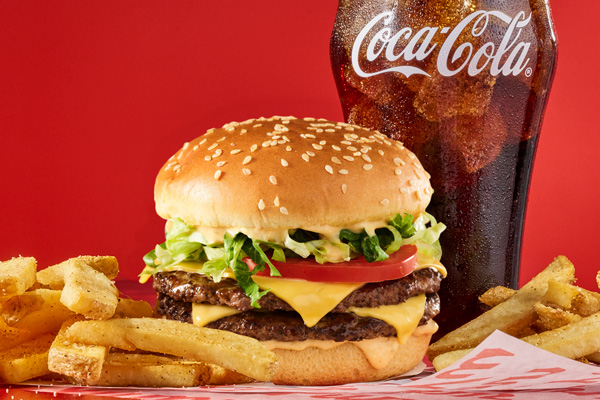
Restaurant-level operating profit came in at $40.1 million, roughly flat with the $40.5 million posted a year ago, but the margin expanded 20 basis points to 14.7% — the highest second-quarter margin for the Englewood, Colorado-based chain since 2022. Efficiency initiatives and the higher average check offset ongoing cost inflation across labor and occupancy. Adjusted EBITDA was $18.9 million for the quarter, against $22.4 million in the prior-year period, with the gap driven by a sharp increase in selling expenses tied to the company's "Big Yummm" value marketing platform. GAAP net income was $0.4 million, or $0.02 per diluted share, compared with $4.0 million, or $0.21 per diluted share, in Q2 2025. On an adjusted basis, diluted EPS was $0.12 versus $0.26 a year ago.
The Refranchising Pivot
The more consequential development for Red Robin's capital structure is the trio of refranchising transactions announced during the quarter. The company entered agreements with three experienced franchise operators to sell 116 company-owned restaurants for gross proceeds of $96.0 million, with closings expected in Q3 subject to customary conditions. Management intends to use the capital infusion to refinance existing debt — the company carried $167.2 million in outstanding credit facility borrowings as of July 12, 2026 — and to fund what President and Chief Executive Officer Dave Pace described as "long-term strategic priorities." Liquidity at quarter-end stood at approximately $47.8 million, including cash and available revolver capacity, a position that leaves limited buffer ahead of the transactions' expected close.
The move accelerates Red Robin's transition toward a more asset-light franchise model, a strategic direction increasingly common among mid-scale casual dining operators looking to shed capital intensity while preserving brand royalty streams. Franchise revenue for the quarter rose to $3.6 million from $3.2 million a year ago, a trajectory that will steepen materially once the 116 locations convert. For context on the broader casual dining refranchising trend, see our coverage of operator capital structure shifts and franchise deal activity in the foodservice sector.
Guidance and What's Next
Red Robin reaffirmed its fiscal 2026 guidance, projecting comparable restaurant revenue growth of 0.5% to 1.5%, restaurant-level operating profit of approximately 13.0%, adjusted EBITDA of $70 million to $73 million, and capital expenditures of $25 million to $30 million. Notably, the outlook excludes any financial impact from the pending refranchising transactions given timing uncertainty; management said it will update guidance once the deals close. The full-year EBITDA range implies a meaningful back-half acceleration from the $46.2 million recorded through the first 28 weeks of fiscal 2026, a target that depends on the marketing investment behind the Big Yummm platform converting to sustained traffic gains. Pace characterized the Q2 results as evidence that the company's "First Choice" turnaround plan is delivering, citing the three-year traffic-trend milestone as a signal that operational and hospitality improvements are gaining traction with guests.
Written by Michael Politz, Author of Guide to Restaurant Success: The Proven Process for Starting Any Restaurant Business From Scratch to Success (ISBN: 978-1-119-66896-1), Founder of Food & Beverage Magazine, the leading online magazine and resource in the industry. Designer of the Bluetooth logo and recognized in Entrepreneur Magazine's "Top 40 Under 40" for founding American Wholesale Floral, Politz is also the Co-founder of the Proof Awards and the CPG Awards and a partner in numerous consumer brands across the food and beverage sector.