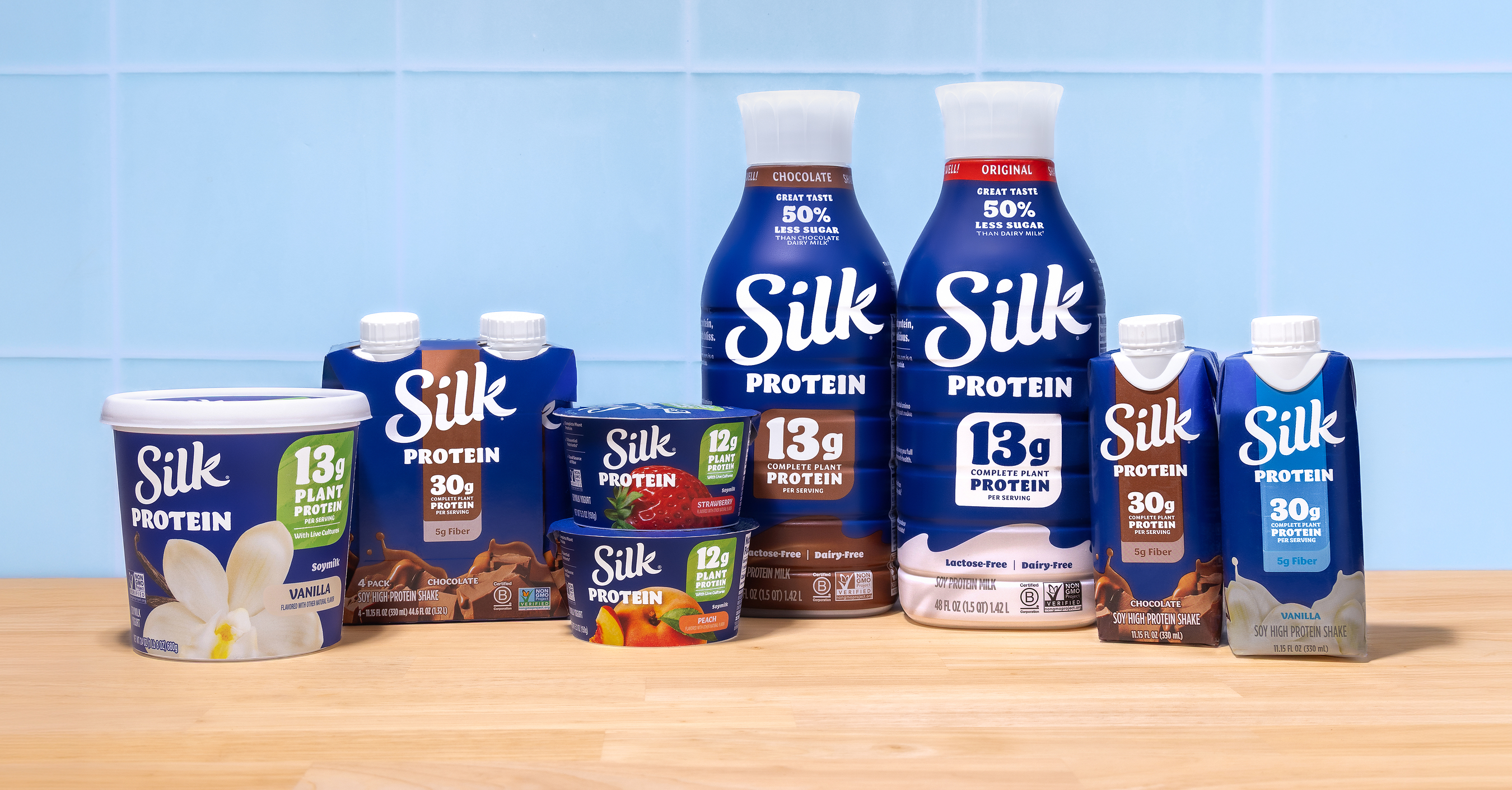
Danone USA is rolling out two new product lines under its Silk brand this month — Silk Protein Yogurt and Silk Protein Shakes — targeting a rapidly growing consumer segment that demands both plant-based credentials and substantive macronutrient profiles. The launches extend Silk's existing protein platform, adding ready-to-drink and refrigerated dairy-alternative formats to major grocery stores nationwide.
The Products
The Silk Protein Yogurts deliver a minimum of 12 grams of protein per serving, while the ready-to-drink Silk Protein Shakes clock in at 30 grams per serving — benchmarks that position both products competitively against conventional dairy-based protein alternatives on grocery shelves. Both are formulated with complete plant protein, a designation indicating the presence of all nine essential amino acids, and carry a good-source-of-fiber claim. Neither contains artificial colors, flavors, or sweeteners, attributes that have become near-standard in the better-for-you segment.
Why It Matters
The timing is deliberate. Plant-based food and beverage sales have faced volume headwinds in recent years as early adopters churned and mainstream consumers proved reluctant to trade familiar taste profiles for functional claims alone. Danone's strategy with Silk appears to address that friction directly: by leading with protein quantity — a metric that resonates with consumers already engaged in high-protein dietary patterns — rather than leading with the plant-based identity. The 30-gram protein count in the RTD shakes places Silk in direct competition with incumbent sports-nutrition brands, a category that has seen sustained velocity gains in the grocery channel.
The fiber inclusion adds a secondary functional hook. Gut-health positioning has emerged as one of the most durable consumer trends in packaged food, and combining protein and fiber in a single, shelf-stable or refrigerated product reduces the purchase decision complexity for shoppers trying to meet multiple nutritional goals. For grocery retailers, the dual-benefit positioning also opens adjacency placement opportunities — in both the plant-based dairy set and the functional beverage aisle — which can improve total distribution points per SKU.
Market Positioning
Danone has been methodical in rebuilding Silk's premium credentials following broader category softness. The new launches align with industry reporting on functional dairy-alternative innovation and complement the operator-facing trend toward high-protein foodservice formats that has accelerated post-pandemic. For Danone's North American portfolio, which has leaned into science-backed nutrition positioning across brands including Activia and Two Good, Silk Protein represents a logical extension that targets the breakfast and snacking occasions simultaneously. National rollout through major grocery chains beginning in July gives the products broad retail exposure ahead of the back-to-school season, a period historically associated with renewed consumer focus on nutritional routine.
Written by Michael Politz, Author of Guide to Restaurant Success: The Proven Process for Starting Any Restaurant Business From Scratch to Success (ISBN: 978-1-119-66896-1), Founder of Food & Beverage Magazine, the leading online magazine and resource in the industry. Designer of the Bluetooth logo and recognized in Entrepreneur Magazine's "Top 40 Under 40" for founding American Wholesale Floral, Politz is also the Co-founder of the Proof Awards and the CPG Awards and a partner in numerous consumer brands across the food and beverage sector.