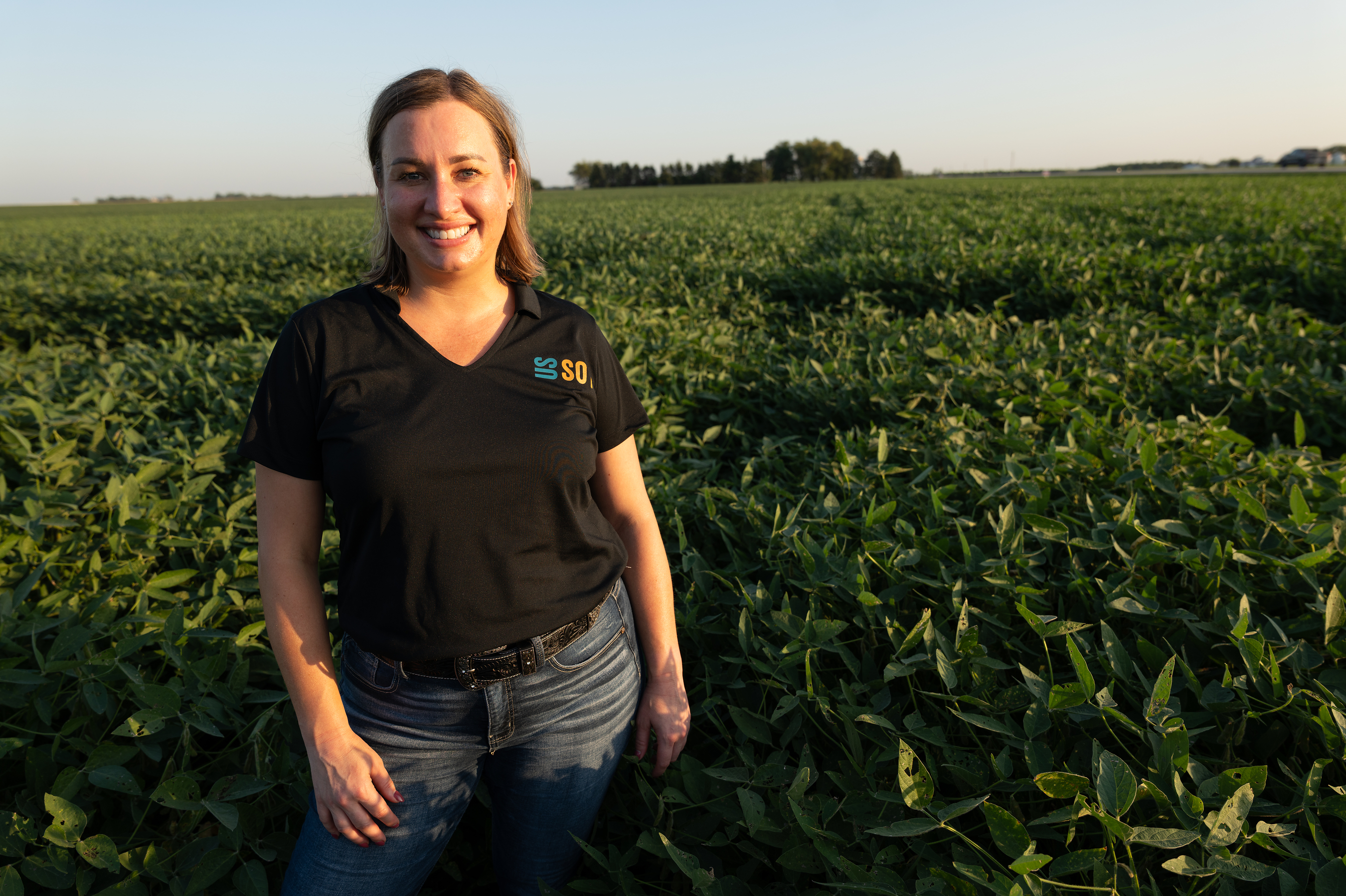
Courtney Knupp assumed the chief executive role at the United Soybean Board on Oct. 1, 2026, becoming the first leader of the national Soy Checkoff to arrive directly from a senior White House advisory post. The USB board of farmer-leaders ratified her appointment in July after a search that spanned agriculture policy, trade, and market-development backgrounds.
Her Policy Pedigree
Knupp's most recent position was director of global supply chain at the National Security Council, where she coordinated federal policy to strengthen the resilience of U.S. agriculture and food sectors — work that placed her at the intersection of geopolitical risk and commodity markets. Prior to that, she held roles at the National Pork Board, the U.S. Soybean Export Council, and the U.S. Department of Agriculture, accumulating close to two decades of experience in international trade, public policy, and market development. She grew up on her family's soybean farm in Iowa and holds a bachelor's degree in agricultural business and international agriculture from Iowa State University.
Demand Diversification as Priority
In her opening months, Knupp has signaled a strategy centered on broadening end-market demand for U.S. soybeans. The Soy Checkoff's established channels — animal feed, soybean oil, and biofuels — remain the volume foundation, but Knupp has indicated she intends to place what she called "calculated bets" on emerging demand pools, without specifying target segments or investment figures at this stage. USB's 77 farmer-leaders oversee checkoff funds allocated across research, promotion, and education spanning food, feed, fuel, industrial uses, exports, and sustainable production. The organization works in partnership with more than 30 Qualified State Soybean Boards, and Knupp plans early listening sessions with those state leaders and USB staff.
What It Means for the Sector
The leadership transition carries implications beyond internal governance. The Soy Checkoff functions as the primary industry-funded vehicle for building soybean demand both domestically and in export markets, making its CEO a de facto ambassador for U.S. soy in food-ingredient, foodservice, and industrial-processing supply chains. Knupp's NSC background adds a supply-chain resilience lens that could sharpen USB's positioning as buyers in the food and beverage sector scrutinize the traceability and geopolitical stability of their oilseed sourcing. The USDA Agricultural Marketing Service retains oversight of the checkoff under the federal Soybean Promotion, Research and Consumer Information Act.
"Taking this job is really the culmination of bringing all my experience together to work most effectively for farmers," Knupp said. "That's truly the mission."
USB Chair Brent Gatton cited her "energy and vision" as reasons for farmer-leader confidence heading into what the board describes as a period of expanding opportunity for U.S. soy. For trade coverage of soybean ingredient trends shaping food formulation, see our ingredients and supply chain section. Broader leadership transitions in agricultural checkoff organizations have been tracked in our agribusiness news coverage.
Written by Michael Politz, Author of Guide to Restaurant Success: The Proven Process for Starting Any Restaurant Business From Scratch to Success (ISBN: 978-1-119-66896-1), Founder of Food & Beverage Magazine, the leading online magazine and resource in the industry. Designer of the Bluetooth logo and recognized in Entrepreneur Magazine's "Top 40 Under 40" for founding American Wholesale Floral, Politz is also the Co-founder of the Proof Awards and the CPG Awards and a partner in numerous consumer brands across the food and beverage sector.