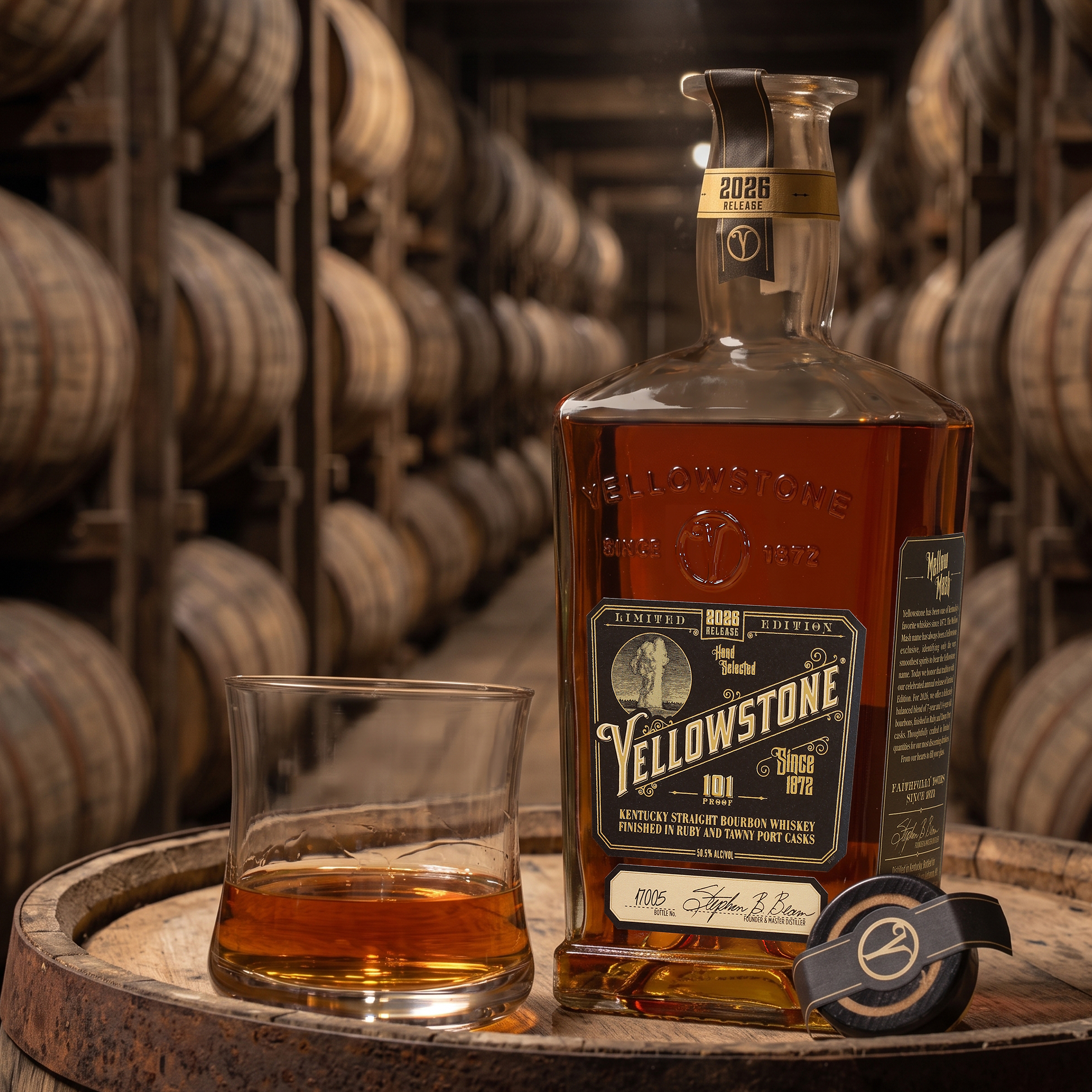
Yellowstone Bourbon has unveiled its 2026 Limited Edition expression, the eleventh consecutive annual release in a series that has become a reliable bellwether for small-batch premiumisation in the U.S. spirits market. Master Distiller Stephen Beam crafted the bottling as a blend of 7- and 14-year-old Kentucky straight bourbons, each finished separately in Ruby and Tawny Port casks before being married and bottled at 101 proof.
The Liquid & Process
The dual-cask finishing strategy — running younger and older distillate through different port-wine barrels before blending — reflects a broader industry technique aimed at adding complexity without sacrificing bourbon's legal grain-bill and aging requirements. Ruby Port casks typically impart brighter red-fruit character, while Tawny Port wood contributes dried-fruit and oxidative notes; marrying the two creates a layered profile that appeals to both whiskey traditionalists and crossover wine consumers, a demographic that has driven steady volume growth in the finished-bourbon subcategory over the past three years.
Market Context
The U.S. premium and super-premium bourbon segment has sustained elevated consumer demand even as broader spirits category growth moderated through 2024 and 2025. Limited annual releases — authenticated by vintage-year branding and low allocated volume — command retail premiums that bulk standard-age statements cannot replicate, making them a high-margin lever for distillers navigating tighter on-premise conditions. Yellowstone's series, now in its 11th year, has established a collector-market track record that supports secondary resale activity, indirectly reinforcing brand equity for the core lineup.
The 2026 expression draws its visual identity from the light and shadow of the Grand Canyon of Yellowstone National Park, continuing the brand's practice of anchoring each release in a distinct natural landmark narrative — a storytelling approach that has become standard practice among craft-positioned Kentucky producers seeking shelf differentiation in an increasingly crowded allocated-bourbon tier.
For trade buyers and on-premise operators, port-finished bourbons occupy a useful position on cocktail and neat-pour menus: the wine-cask influence lowers the barrier for guests transitioning from fortified wine categories, while the 101-proof bottling strength preserves structure for classic highball and stirred applications. Retailers in the allocated spirits channel will likely position the 2026 Limited Edition alongside comparable finished expressions from competing distilleries, where price-per-bottle comparisons and proof points drive purchase decisions among informed collectors.
Coverage of broader premiumisation trends in the domestic whiskey market can be found in our spirits and craft beverage sector reporting and in our ongoing limited-edition and allocated release tracker.
Written by Michael Politz, Author of Guide to Restaurant Success: The Proven Process for Starting Any Restaurant Business From Scratch to Success (ISBN: 978-1-119-66896-1), Founder of Food & Beverage Magazine, the leading online magazine and resource in the industry. Designer of the Bluetooth logo and recognized in Entrepreneur Magazine's "Top 40 Under 40" for founding American Wholesale Floral, Politz is also the Co-founder of the Proof Awards and the CPG Awards and a partner in numerous consumer brands across the food and beverage sector.