SC Johnson's Ziploc brand and surplus-food marketplace Too Good To Go have jointly launched "Surprise Seconds," a consumer-facing campaign aimed at closing the gap between Americans' stated desire to cut food waste and their actual behavior in the kitchen. The initiative is backed by commissioned survey research showing 64% of U.S. adults have thrown away food that was still edible because they had no idea what to do with it.
The Survey Numbers
Ziploc commissioned Atomik Research to poll 1,000 U.S. adults between July 24 and July 27, 2026, with a margin of error of approximately ±3 percentage points. The data paints a picture of a persistent intent-action gap in household food management: 91% of respondents said avoiding food waste is important to them, yet more than one in three — 36% — reported discarding food at least once a week. Only 26% said they typically repurpose leftovers into a new meal. Nearly one in four respondents (23%) cited recipe ideas, lunch inspiration, and better storage guidance as factors that would help them make more of the food they already have. For food-storage brands and foodservice operators alike, the figures underscore an unmet need for practical, accessible inspiration rather than just awareness messaging.
Campaign Mechanics
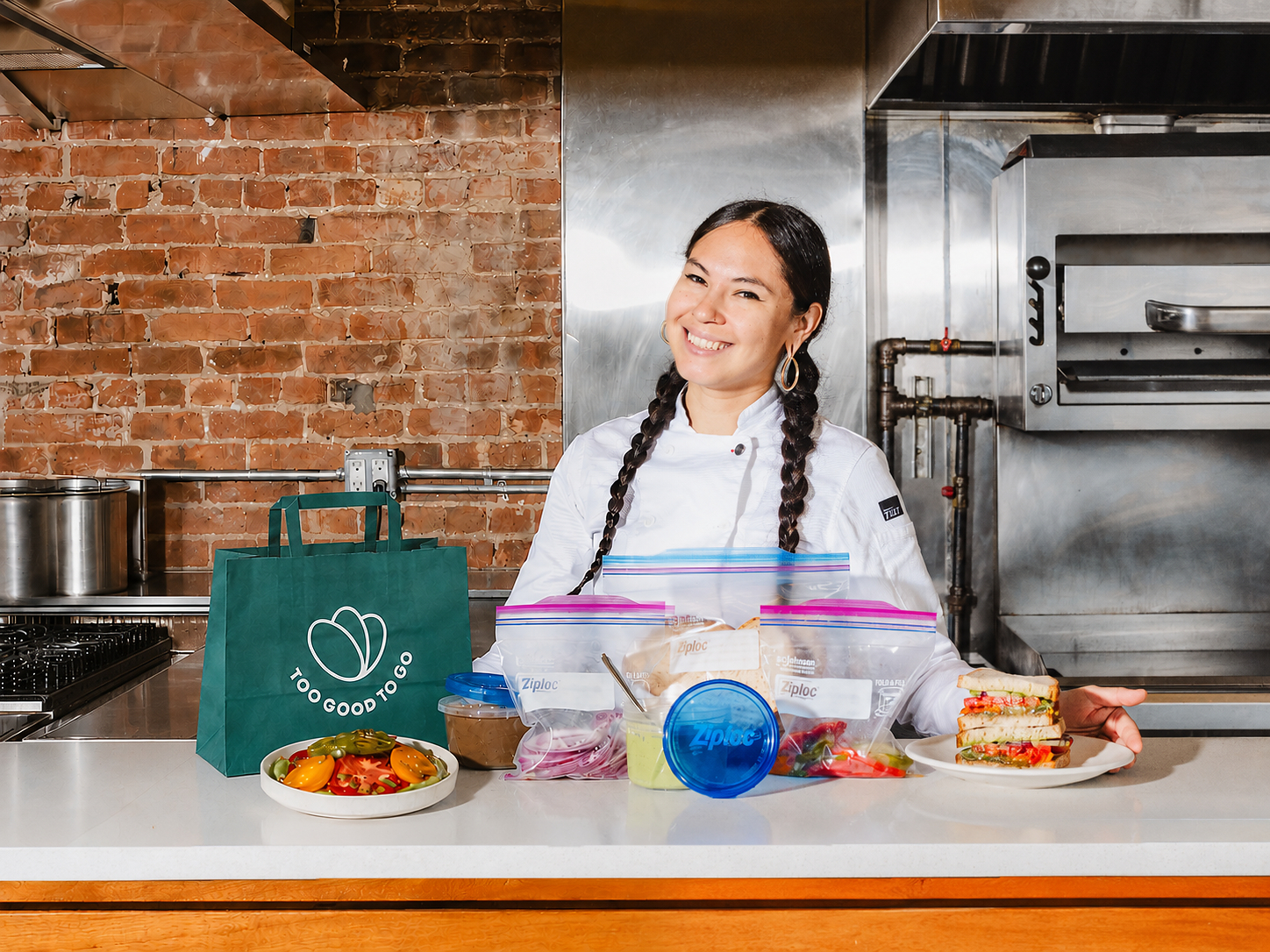
The campaign centers on a dedicated content hub at ziploc.com and a live activation — "Wheel of Sandwiches" — scheduled for New York City on September 30. The event is led by chef Yara Herrera, chef-partner at Hellbender, a critically regarded Mexican American restaurant in Ridgewood, Queens. Participants will spin a wheel corresponding to dishes from participating Too Good To Go restaurant partners, then receive Herrera's "Surprise Second": a sandwich built from that restaurant's surplus dish. The live event is designed to demonstrate a scalable, repeatable behavior: storing restaurant leftovers and transforming them into a distinct second meal rather than discarding them.
The broader campaign is supported by an out-of-home advertising series — "First And Seconds" — that uses QR codes to route consumers to the Ziploc content hub. Social media content from Ziploc, Too Good To Go, Herrera, and participating creators will run in parallel, each covering a different segment of the "first to second" journey: storage solutions, food-rescue awareness, and recipe development.
Industry Context
For Too Good To Go — which operates a marketplace of 200,000 active food-business partners across 20 countries and claims 120 million registered users — the Ziploc partnership extends its platform's reach into the home. The company's model typically addresses surplus at the retail and foodservice supply end; Surprise Seconds pushes that proposition downstream to the consumer's refrigerator. Chris MacAulay, Vice President of Operations for North America at Too Good To Go, framed the partnership as a logical extension: "Too Good To Go helps get surplus food into people's hands, while Ziploc Brand helps them keep it fresh and find new ways to enjoy it."
The collaboration reflects a wider industry shift in which food-waste reduction efforts are increasingly moving from back-of-house operations to consumer behavior change, with brands seeking to attach tangible utility — storage products, recipe content, chef partnerships — to environmental messaging. As covered previously on F&B Industry News, surplus-food platforms have been expanding their partnerships with packaged-goods companies to create stickier consumer engagement beyond the initial download or purchase.
Written by Michael Politz, Author of Guide to Restaurant Success: The Proven Process for Starting Any Restaurant Business From Scratch to Success (ISBN: 978-1-119-66896-1), Founder of Food & Beverage Magazine, the leading online magazine and resource in the industry. Designer of the Bluetooth logo and recognized in Entrepreneur Magazine's "Top 40 Under 40" for founding American Wholesale Floral, Politz is also the Co-founder of the Proof Awards and the CPG Awards and a partner in numerous consumer brands across the food and beverage sector.