
First Product Move
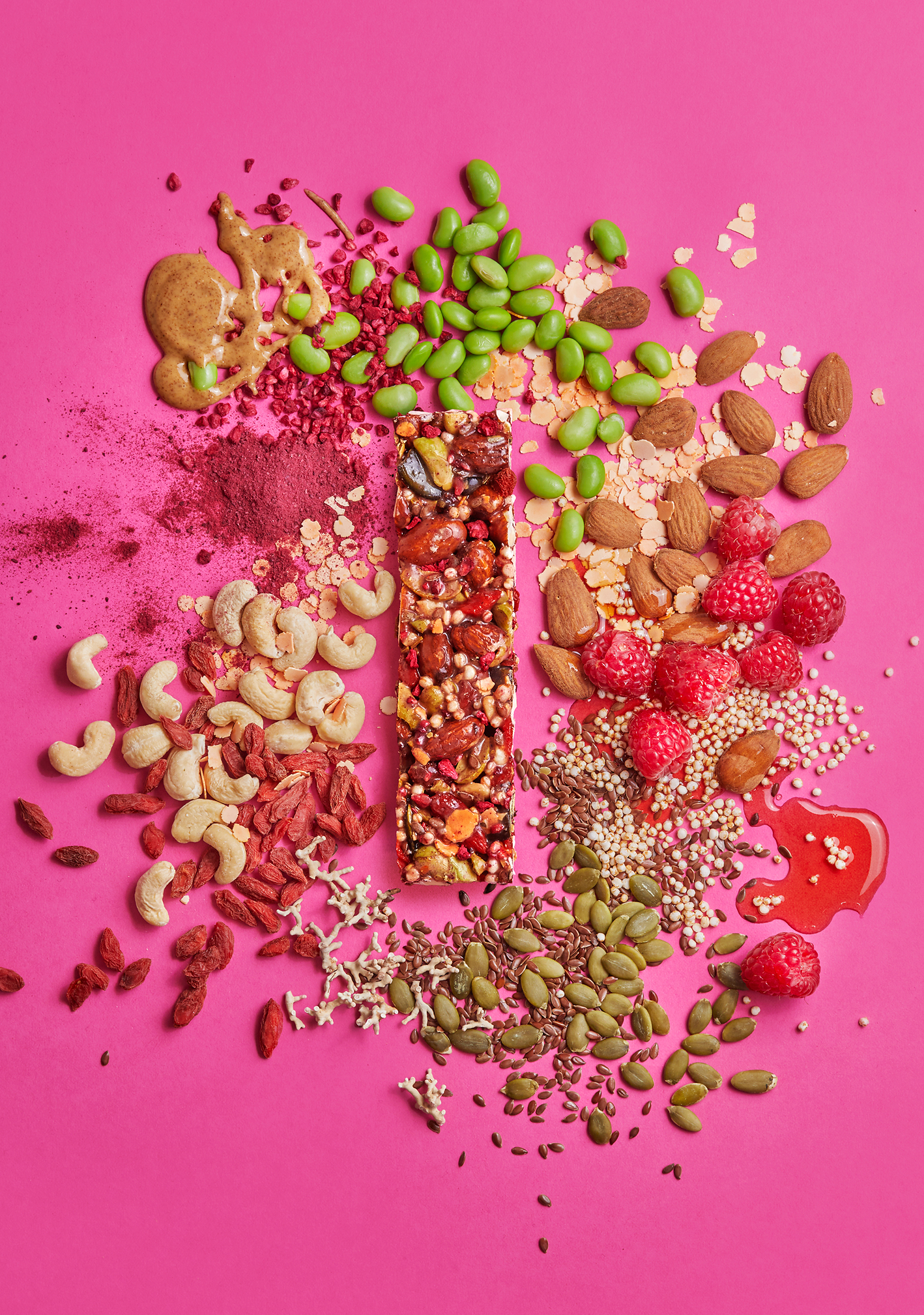
ZOE, the gut health science company best known for its personalized nutrition app and Daily30 supplement, is entering the U.S. snack market with the launch of its Gut Health Bar — a chewy bar containing more than 10 plant ingredients, 8 grams of fiber, and 7 grams of plant protein per unit. The product is available in two flavors — 70% Dark Chocolate + Sea Salt and Raspberry + Goji Berry — and retails at $50 per box of 12 bars, or $45 per month on subscription, exclusively through ZOE.com.
The Category Bet
ZOE is entering a crowded functional-snack segment at a moment of significant consumer skepticism. A survey of 1,000 U.S. adults commissioned by ZOE found that 64% of respondents have felt misled by marketing claims on food packaging, and 69% said they would make different choices with clearer guidance on which foods support health. The data also showed that 45% of Americans consider themselves healthy eaters, yet 70% of that group cannot identify the recommended daily fiber intake — a gap ZOE is explicitly positioning the bar to address. According to the National Health and Nutrition Examination Survey, roughly 95% of the U.S. population snacks regularly, with approximately two snacks per day accounting for 24% of daily calorie intake.
"The US is undeniably a nation of snackers, but for too long, the snacking food category has optimized for convenience over nutritional quality and gut health," said Professor Sarah Berry, Chief Science Officer at ZOE and Professor of Nutritional Sciences at King's College London. "Choosing higher-quality snacks can be one of the simplest dietary strategies for improving health and is linked to more favorable markers of metabolic health."
Formulation and Sourcing
The bar's ingredient list — almonds, cashews, edamame, red lentils, flaxseeds, pumpkin seeds, seaweed, and kombucha among the 10-plus plants — was hand-selected by ZOE's nutrition scientists drawing on data from the PREDICT studies, which the company describes as the world's largest ongoing nutrition research program, backed by a microbiome database of more than 300,000 participants. ZOE says it preserved natural food structures in the bar so plant material travels further through the digestive tract to feed gut microbes, and deliberately avoided emulsifiers in its 70% dark chocolate sourcing — a formulation choice aimed at differentiating from mainstream snack-bar manufacturers. Internal PREDICT research cited by ZOE shows that fast eaters consume an average of 120 more calories per day than slow eaters, and that reducing eating speed by around 20% can cut energy intake by approximately 15%; the bar's food matrix was engineered with slower consumption in mind.
Dr. Tim Spector, MD, Scientific Co-Founder of ZOE, framed the launch as a direct challenge to the conventional snack industry: "The modern food environment is flooded with ultra-processed snacks designed around marketing buzzwords rather than actual gut health nutrition. We have designed the Gut Health Bar to prove that snacking doesn't have to compromise between health or flavor."
For foodservice and retail buyers, ZOE's direct-to-consumer-only launch strategy is notable. The company is not disclosing wholesale or brick-and-mortar distribution plans, meaning the bar competes initially on subscription economics rather than shelf velocity — a model that has worked for ZOE's supplement line but will face different pressures in the impulse-driven snack category. Whether the $50 price point, roughly $4.17 per bar, can hold against better-distributed functional competitors will be a key metric to watch as the product matures. Investors and category analysts tracking the functional food and beverage space will note that ZOE's move reflects a broader industry pivot toward science-credentialed positioning in the better-for-you snack segment.
Written by Michael Politz, Author of Guide to Restaurant Success: The Proven Process for Starting Any Restaurant Business From Scratch to Success (ISBN: 978-1-119-66896-1), Founder of Food & Beverage Magazine, the leading online magazine and resource in the industry. Designer of the Bluetooth logo and recognized in Entrepreneur Magazine's "Top 40 Under 40" for founding American Wholesale Floral, Politz is also the Co-founder of the Proof Awards and the CPG Awards and a partner in numerous consumer brands across the food and beverage sector.